
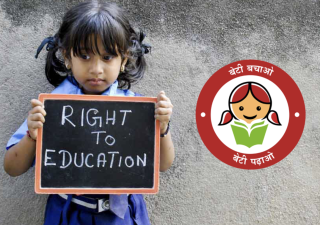
Beti Bachao Beti Padhao (BBBP), launched on 22 January 2015, was designed to address the declining Child Sex Ratio and wider issues of girls’ and women’s empowerment across the life cycle. The scheme has evolved from a policy initiative into a national movement involving government agencies, media, civil society and the public. A recent third-party evaluation of Ministry of Women and Child Development schemes for Financial Years 2019 to 2024 found that the SAMBAL vertical of Mission Shakti, including BBBP, remains highly relevant and effective in tackling key gender challenges through integrated and data-driven services.
Scheme Objective and Evolution
BBBP was introduced to improve the Child Sex Ratio and promote survival, protection and education of the girl child. Over time, it expanded beyond awareness generation to include community mobilisation, behaviour change and convergence with other welfare measures. The scheme is now linked with broader gender equality goals under Mission Shakti.
Key Findings of the Evaluation
The evaluation used a pragmatic mixed-methods approach, combining primary and secondary research. It assessed implementation, relevance and outcomes across selected schemes. The study concluded that the SAMBAL vertical, which includes BBBP, is effective in delivering integrated support for gender-related challenges. It brought into light the importance of coordinated service delivery and evidence-based planning.
Recent Indicators on Girls’ Welfare
- Sex Ratio at Birth at the national level improved from 918 in 2014-15 to 929 in 2024-25, as per HMIS data.
- Gross enrolment ratio of girls at the secondary level increased from 75.51% in 2014-15 to 80.2% in 2024-25, as per UDISE data.
- These trends indicate gradual progress in both birth outcomes and school participation for girls.
Significance for Gender Policy
BBBP remains important for addressing deep-rooted gender bias, improving access to education and strengthening institutional support for women and girls. The scheme’s performance is relevant for policy design, monitoring outcomes and linking demographic indicators with social development goals.
Last Modified: April 27, 2026