
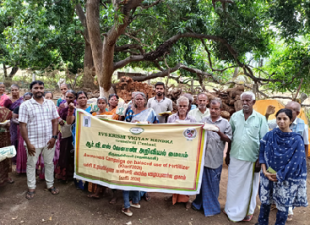
The Indian Council of Agricultural Research (ICAR) has launched a comprehensive nationwide awareness campaign on the balanced use of fertilisers ahead of the Kharif 2026 cropping season. Coordinated through its extensive network of Krishi Vigyan Kendras (KVKs), Agricultural Technology Application Research Institutes (ATARIs), and specialized research bodies, the initiative aims to protect long-term soil health and enhance crop productivity. By promoting soil test-based nutrient applications and integrated nutrient management strategies, the campaign educates farmers to reduce their over-reliance on chemical inputs, optimize input costs, and ensure sustainable food security.
Core Objectives and Institutional Framework
The multi-state campaign addresses the core vulnerabilities of over-fertilization and declining soil organic matter.
Scientific Advisory and On-Field Delivery
- Institutional Coordination: The campaign is led by ICAR New Delhi and executed through regional hubs like the Central Research Institute for Dryland Agriculture (CRIDA) in Hyderabad and the Indian Institute of Soil Science (IISS) in Bhopal.
- Mera Gaon Mera Gaurav (MGMG): Scientists leverage this flagship village-adoption program to conduct direct field camps, farmer-scientist interactions, and localized training modules across agrarian pockets.
- Digital Extension Infrastructure: Alongside physical contact, KVK networks utilize WhatsApp groups, community radio, and social media platforms to push scientific advisories and technical data to lakhs of farmers simultaneously.
Core Focus Areas of the Drive
- Soil Test-Based Management: Training farmers on correct soil sampling methods to systematically diagnose macro and micronutrient deficiencies before sowing.
- Curbing Urea Dependency: Dissuading farmers from the indiscriminate application of subsidized urea, which disrupts the natural nutrient equilibrium of agricultural tracts.
- Crop Diversification Interventions: Encouraging a shift away from continuous, water-intensive monoculture systems like repetitive rice cultivation toward legume and pulse crop integration.
The 4R Nutrient Stewardship Framework
The scientific backbone of the campaign relies on the globally recognized 4R stewardship principles to improve nutrient use efficiency (NUE).
| Principle | Technical Definition & Campaign Application |
| Right Source | Matching the specific fertiliser type to the precise nutrient deficiencies identified during soil testing. |
| Right Rate | Assessing the exact quantity needed to avoid under-fertilization or toxic, cost-inflating over-application. |
| Right Time | Synchronizing fertiliser application with the biological growth stages when crops have the highest nutrient demand. |
| Right Place | Applying nutrients directly where the plant roots can readily absorb them, minimizing losses via runoff or leaching. |
Integrated Nutrient Management (INM) Alternatives
To reduce the heavy consumption of chemical fertilisers, ICAR is actively promoting a blended basket of eco-friendly biological and organic alternatives.
Biological and Organic Supplements
- Bio-fertilisers: Deploying living microorganisms such as Rhizobium, Azotobacter, and Phosphate Solubilizing Bacteria (PSB) through standard seed treatment demonstrations.
- Green Manuring: Cultivating fast-growing leguminous crops like sunn hemp (Crotalaria juncea) and dhaincha (Sesbania aculeata) that are ploughed back into the soil to naturally enrich nitrogen levels.
- Vermicomposting and FYM: Promoting the structured recycling of Farmyard Manure (FYM) and livestock-based waste to improve soil structure and water retention capacities.
Precision Agriculture Techniques
- Nano-Fertilisers: Introducing advanced formulations such as Nano Urea and Nano Sulphur to drastically lower conventional bulk volume handling and environmental discharge.
- Targeted Application: Utilizing micro-irrigation systems and fertigation blocks to deliver dissolved plant nutrients directly to the root zones, eliminating atmospheric volatilization losses.
Environmental and Economic Impacts of Imbalanced Fertiliser Use
Continuous, unscientific application of chemical inputs induces several secondary issues across agricultural ecosystems.
Soil Degradation Dynamics
- Alkalinity and EC Elevation: Industrial floriculture and heavy crop testing show that continuous chemical overdosing elevates soil alkalinity and electrical conductivity (EC) parameters, rendering vital micronutrients chemically locked and unavailable to plants.
- Acidification and Compaction: Heavy nitrogenous loading kills beneficial soil microflora, causing the physical compaction of topsoil layers and reducing aeration.
Ecological Consequences
- Groundwater Contamination: Nitrate leaching from surplus nitrogenous fertilisers poses a severe pollution threat to local drinking water tables.
- Eutrophication: Nutrient-rich runoff entering surrounding freshwater streams and lakes triggers rapid algal blooms, depleting dissolved oxygen levels and choking aquatic life.
IASPOINT Booster Facts for UPSC
- The Ideal NPK Ratio: Agronomic science recommends an ideal Nitrogen-Phosphorus-Potassium (NPK) application ratio of 4:2:1 for Indian soils. Due to heavily skewed subsidies, the actual consumption ratio has historically deviated to highly imbalanced levels, sometimes exceeding 6:2.4:1.
- Khet Bachao Abhiyan: Aligned with the campaign, the Union Ministry of Agriculture and Farmers Welfare announced the “Save the Farm Campaign” to run intensively nationwide for 15 days starting June 1st, deploying scientists directly to villages.
- Krishi Vigyan Kendras (KVKs): First established in 1974 at Puducherry under Tamil Nadu Agricultural University, KVKs act as the vital frontline agricultural extension centers funded entirely by the Central Government via ICAR.
- Soil Health Card Scheme: Launched by the Government in 2015, this scheme provides crop-wise nutrient recommendations to farmers every two years, assessing 12 key soil parameters including macro-nutrients, micro-nutrients, physical parameters (pH, EC), and Organic Carbon (OC).
- PM-PRANAM Scheme: The “Program for Restoration, Awareness, Nourishment and Amelioration of Mother Earth” incentivizes states and Union Territories to promote alternative fertilisers and reduce the overall consumption of chemical alternatives.