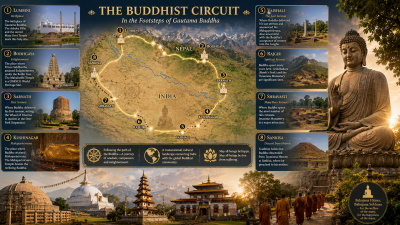
The Buddhist Circuit refers to the sacred geography tracing the life and spiritual journey of Gautama Buddha. In the context of Indian art, culture, and heritage, this circuit...
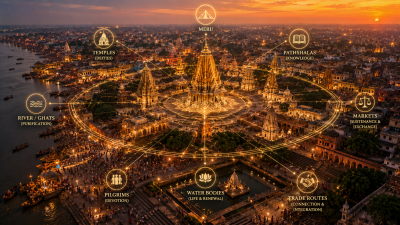
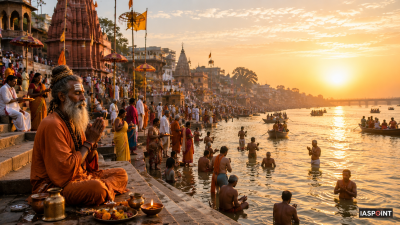
In the framework of Indian sacred geography, certain urban centers are designated as Tirtha-Nagaris—cities that serve as permanent "crossing places" between the mundane and the divine. These cities...
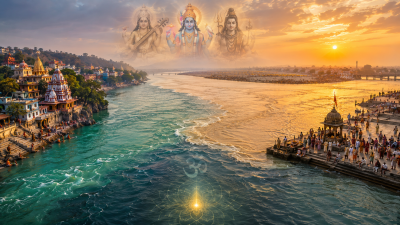
In Indian sacred geography, the term Sangam (derived from the Sanskrit Sam-gam, meaning "to flow together") refers to the confluence of two or more rivers. These junctions are...
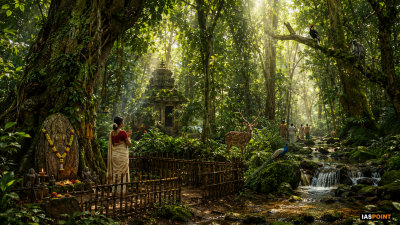
Sacred Groves, known as Pavitra Vana or Devrai, are patches of virgin forest or natural vegetation dedicated to local deities or ancestral spirits. In the framework of Indian...
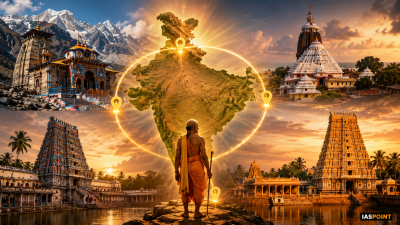
The Char Dham (meaning "Four Abodes") represents a grand pilgrimage circuit defined by the four cardinal directions of the Indian subcontinent. Unlike the "Chota Char Dham" of Uttarakhand,...
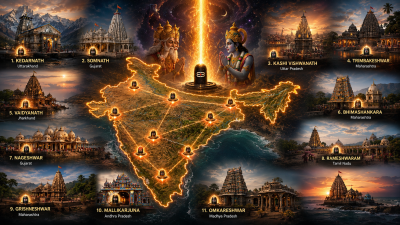
In the sacred geography of India, the Jyotirlinga (meaning "Linga of Light") represents the supreme, formless reality of Shiva. Unlike regular Shiva Lingas, which are man-made or established...
The Shakti Peethas represent the most significant shrines dedicated to the Goddess (Shakti) in the Indian subcontinent. In the context of sacred geography, they form a "Goddess-centric" map...
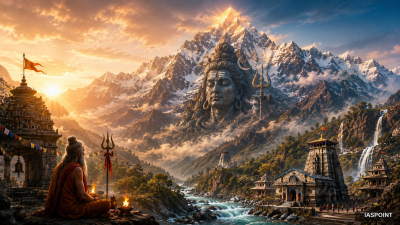
The Himalayas, stretching across the northern frontiers of India, are revered as Devabhumi (Land of the Gods). In Indian art, culture, and heritage, this mountain range is not...
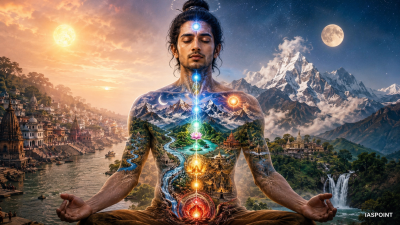
In Indian sacred geography and cultural landscapes, the human body is not viewed merely as a biological entity but as a microcosm of the universe (Pindande Brahmanande). This...
The term Tirtha originates from the Sanskrit root tr, meaning "to cross over" or "to ford." In the context of Indian sacred geography, a Tirtha represents a "crossing...