
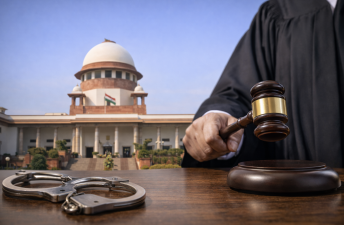
Recent news marks the Supreme Court’s strong reaction to a Class eight textbook by NCERT. The book’s treatment of the judiciary was found objectionable. The Court has shelved the book and appointed a new committee of legal experts to decide on suitable content for students. This incident brings focus to the judiciary’s power of contempt and its role in upholding judicial dignity and public trust.
About Contempt of Court
Contempt of court protects the judiciary’s authority. It has two types – civil contempt, for disobeying court orders; and criminal contempt, for actions that obstruct justice or harm the court’s reputation. Criminal contempt includes scandalising the court by hostile criticism that lowers public confidence. It is not about protecting judges’ egos but about preventing false and damaging impressions about the judiciary. This power ensures the judiciary remains respected and effective in a democracy.
Judiciary and Public Trust
Judges derive power not from force but from public faith. Courts depend on respect earned through fair and fearless judgments. Repeated negative reports can erode this trust and weaken judicial authority. Past Chief Justices have emphasised restraint in using contempt powers and welcomed criticism that aims to improve the system. The judiciary must balance protecting its dignity with upholding freedom of speech and academic freedom.
Limits and Responsibilities in Criticism
Criticism must be factual, fair and not motivated by malice. Reckless or ill-intentioned attacks on the judiciary can harm its ability to deliver justice and check the legislature and executive. Judicial review is important power that maintains accountability and good governance. Courts must protect this power by ensuring their image is not unfairly tarnished, while also allowing space for constructive criticism.
Judicial Challenges and Reforms
The judiciary faces issues like infrastructure gaps, manpower shortages and corruption. Impeachment processes are slow and politicised. Internal inquiries and transfers have limited effect on judicial misconduct. New deterrents and remedies are needed to maintain integrity. Honest judges form the majority and deserve a system that supports their work and enhances public confidence. Educational content about the judiciary must reflect these realities.
Topics for Prelims:
Contempt of Court
- Two types – civil (disobedience) and criminal (obstruction/scandalising).
- Criminal contempt protects judicial authority and public confidence.
- Not meant to protect judges’ personal pride.
- Requires cautious and wise exercise by courts.
- Supports rule of law and democratic governance.
Judiciary and Public Trust
- Judicial power rests on public faith, not force.
- Respect earned by quality judgments and fairness.
- Excessive use of contempt can backfire.
- Judges accept fair criticism to improve justice delivery.
- Judicial review checks legislature and executive excesses.
Judicial Challenges
- Corruption exists but is limited.
- Impeachment is lengthy and politicised.
- Internal inquiries often ineffective alone.
- Need for stronger deterrents and reforms.
- Infrastructure and manpower shortages affect justice delivery.
Questions for Mains:
- Critically analyse the role of contempt of court in maintaining judicial authority and public trust in India. [GS-II-Constitution of India & Polity]
- Comment on the balance between freedom of speech and judicial dignity in a democratic society, with suitable examples. [GS-II-Constitution of India & Polity]
- Explain the challenges faced by the Indian judiciary in combating corruption and ensuring accountability, and suggest reforms for strengthening judicial integrity. [GS-II-Governance]
- What are the functions and significance of judicial review in India? How does public perception influence the effectiveness of judicial review? [GS-II-Constitution of India & Polity]
Answer Hints:
1. Critically analyse the role of contempt of court in maintaining judicial authority and public trust in India. [GS-II-Constitution of India & Polity]
- Contempt of court has two types – civil (disobedience of court orders) and criminal (obstruction of justice or scandalising judiciary).
- Criminal contempt protects the judiciary’s authority by preventing false or malicious criticism that lowers public confidence.
- It is not meant to shield judges’ personal egos but to uphold the institution’s dignity essential for judicial power.
- Judiciary exercises contempt power cautiously to balance respect for courts and freedom of expression.
- Public trust is the real substratum of judicial power, enabling courts to function effectively in a democracy.
- Excessive or arbitrary use of contempt can backfire, eroding trust rather than protecting it.
2. Comment on the balance between freedom of speech and judicial dignity in a democratic society, with suitable examples. [GS-II-Constitution of India & Polity]
- Freedom of speech is fundamental but must be balanced against protecting judiciary’s dignity to maintain public confidence.
- Judicial criticism must be factual, fair, and not motivated by malice or recklessness.
- Examples – CJI S.P. Bharucha’s broad shoulders approach accepting criticism without contempt action; Lord Denning’s emphasis on not fearing criticism.
- Contempt law should not be used to suppress fair and constructive criticism or academic freedom.
- Judiciary’s restraint in using contempt powers preserves democratic values and rule of law.
- Unfounded attacks can weaken judicial authority and hamper justice delivery, threatening democratic checks and balances.
3. Explain the challenges faced by the Indian judiciary in combating corruption and ensuring accountability, and suggest reforms for strengthening judicial integrity. [GS-II-Governance]
- Judicial corruption exists but is limited; even one corrupt judge damages the judiciary’s image.
- Impeachment process is lengthy, politicised, and ineffective in timely action against corrupt judges.
- Internal (in-house) inquiries and transfers have limited impact and may only relocate the problem.
- Infrastructure and manpower shortages affect judicial efficiency and transparency.
- Need for stronger deterrents, transparent mechanisms, and quicker accountability procedures.
- Reforms could include better oversight, ethical codes, technological support, and education on judicial ethics.
4. What are the functions and significance of judicial review in India? How does public perception influence the effectiveness of judicial review? [GS-II-Constitution of India & Polity]
- Judicial review allows courts to invalidate laws and executive actions violating the Constitution.
- It ensures accountability, transparency, and protects fundamental rights against legislative or executive excess.
- Acts as a check on abuse of power by the legislature and executive, preserving constitutional supremacy.
- Public perception and trust in judiciary’s impartiality are crucial for acceptance and effectiveness of judicial review.
- Negative or motivated criticism can erode public confidence, weakening judicial authority and review power.
- Judiciary’s fair, fearless judgments and integrity sustain public faith, reinforcing judicial review’s role in democracy.