
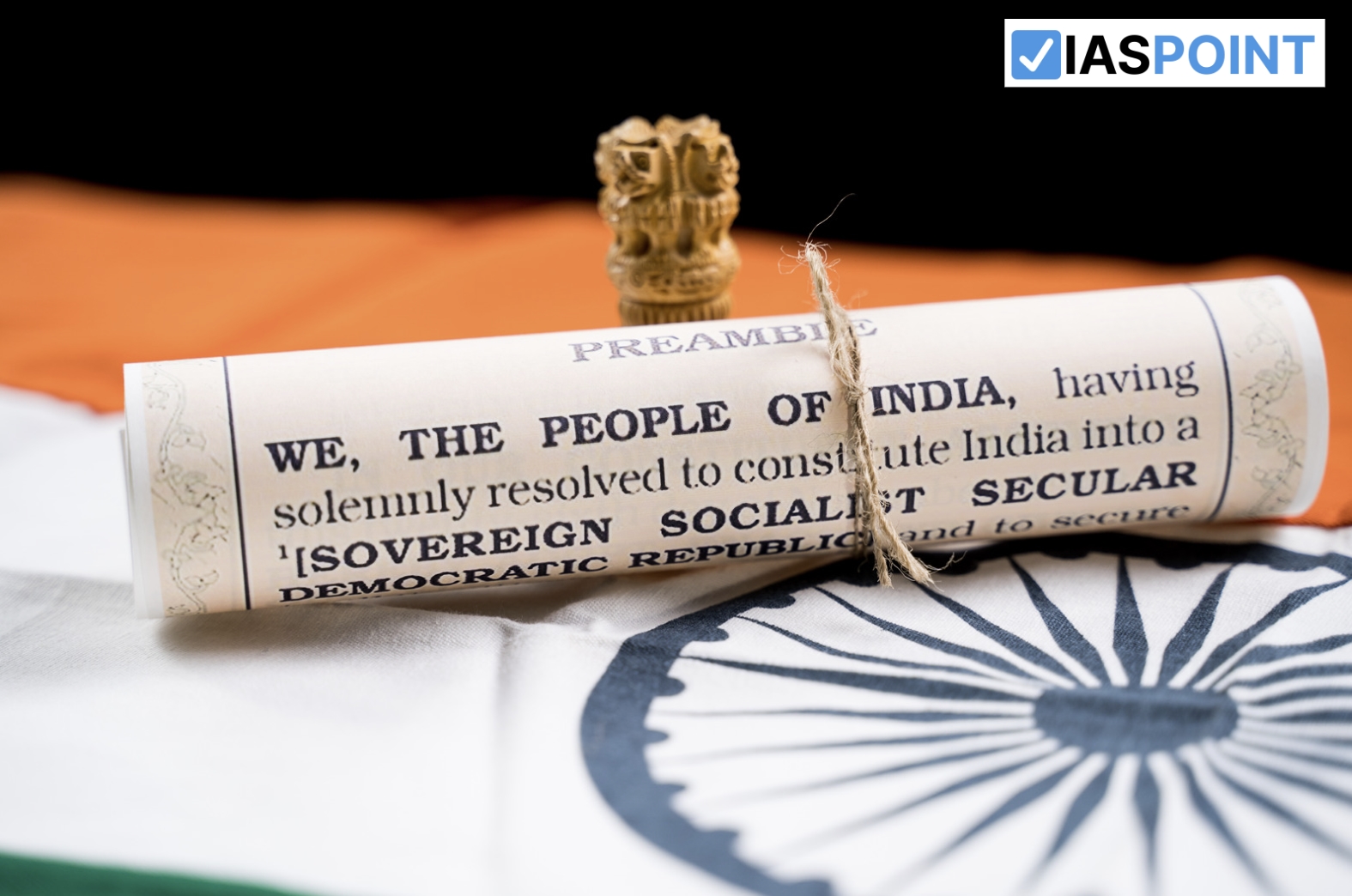

The idea of a Constituent Assembly was first proposed in 1934 by M.N. Roy, a prominent figure in the communist movement and a proponent of radical democratism. In 1935, the Indian National Congress (INC) officially demanded such an assembly to frame a Constitution for India. By 1938, Jawaharlal Nehru declared that the Constitution of a free India must be created without external interference and based on adult franchise. The British government, through the August Offer of 1940, accepted the principle of a Constituent Assembly. In 1942, Sir Stafford Cripps presented a draft plan for an independent Constitution after World War II, but it was rejected by the Muslim League, which demanded separate Assemblies. Finally, the Cabinet Mission of 1946 proposed a framework for the Assembly, rejecting the concept of separate Constituent Assemblies but providing a plan acceptable to major stakeholders.
Composition of the Constituent Assembly
The Constituent Assembly was constituted in November 1946 under the Cabinet Mission Plan. It was designed to have 389 members, with 296 seats allocated to British Indian provinces and 93 seats to princely states. Seats were distributed based on population, with roughly one seat per million people. Within British provinces, representation was further divided among Muslims, Sikhs, and the general category as per population proportions. Members representing provinces were indirectly elected by provincial assemblies, using proportional representation via a single transferable vote. Representatives of princely states were nominated by their rulers. Although elections were held for British provinces, resulting in 208 seats for the INC, 73 for the Muslim League, and 15 for others, princely states initially refrained from participating. Despite its indirect election process, the Assembly represented all major sections of Indian society, including minorities and women.
Working of the Constituent Assembly
The Constituent Assembly held its first meeting on December 9, 1946, with 211 members attending due to a boycott by the Muslim League. Dr. Sachchidanand Sinha, the oldest member, served as the temporary President. On December 11, 1946, Dr. Rajendra Prasad was elected as President, and H.C. Mukherjee as Vice-President. Sir B.N. Rau was appointed as the Constitutional Advisor. The Assembly began its deliberations amidst significant challenges, including the Muslim League’s insistence on the creation of Pakistan.
Objectives Resolution
On December 13, 1946, Jawaharlal Nehru introduced the Objectives Resolution, outlining the Assembly’s vision for an independent and sovereign India. It declared India’s intent to become a sovereign republic, ensuring justice, equality, and freedom to its citizens, while safeguarding the rights of minorities and backward classes. The resolution emphasized territorial integrity and India’s role in promoting global peace. It was unanimously adopted on January 22, 1947, and later became the philosophical foundation for the Constitution, with its modified version forming the Preamble.
Impact of the Indian Independence Act (1947)
The Indian Independence Act of 1947 transformed the Constituent Assembly into a fully sovereign body. It empowered the Assembly to frame a Constitution without external oversight and to abrogate or amend existing British laws related to India. The Assembly also assumed legislative functions, becoming the Dominion Legislature of India. These two roles were performed on separate days under different presidencies—Dr. Rajendra Prasad for Constitution-making and G.V. Mavlankar for legislative sessions. After the partition of India, the Assembly’s membership was reduced from 389 to 299, reflecting changes in territorial boundaries.
Functions Beyond Constitution-Making
The Constituent Assembly performed several additional roles, such as:
- Ratifying India’s membership in the Commonwealth in May 1949.
- Adopting the national flag on July 22, 1947.
- Approving the national anthem and song on January 24, 1950.
- Electing Dr. Rajendra Prasad as the first President of India on January 24, 1950.
Committees of the Constituent Assembly
The Assembly formed various committees to handle specific aspects of Constitution-making. Major committees included:
- Drafting Committee: Chaired by Dr. B.R. Ambedkar, it was responsible for preparing the draft Constitution.
- Union Powers Committee and Union Constitution Committee: Chaired by Jawaharlal Nehru.
- Provincial Constitution Committee and Advisory Committee on Fundamental Rights: Chaired by Sardar Patel. Other committees dealt with procedural rules, linguistic provinces, and financial provisions, ensuring comprehensive deliberations on diverse issues.
Drafting Committee
Among all committees, the Drafting Committee, established on August 29, 1947, was the most significant. Chaired by Dr. B.R. Ambedkar, the committee prepared the draft Constitution, which was published in February 1948. Public feedback was solicited, leading to a revised draft in October 1948. The committee completed its work in under six months, sitting for 141 days.
| Type of Committee | Name of Committee | Chairperson |
| Major Committees | Union Powers Committee | Jawaharlal Nehru |
| Union Constitution Committee | Jawaharlal Nehru | |
| Provincial Constitution Committee | Sardar Patel | |
| Drafting Committee | Dr. B.R. Ambedkar | |
| Advisory Committee on Fundamental Rights and Minorities | Sardar Patel | |
| – Fundamental Rights Sub-Committee | J.B. Kripalani | |
| – Minorities Sub-Committee | H.C. Mukherjee | |
| Rules of Procedure Committee | Dr. Rajendra Prasad | |
| States Committee (Negotiating with States) | Jawaharlal Nehru | |
| Steering Committee | Dr. Rajendra Prasad | |
| Minor Committees | Committee on the Functions of the Constituent Assembly | G.V. Mavalankar |
| Order of Business Committee | Dr. K.M. Munshi | |
| House Committee | B. Pattabhi Sitaramayya | |
| Ad-hoc Committee on the National Flag | Dr. Rajendra Prasad | |
| Special Committee to Examine the Draft Constitution | Alladi Krishnaswamy Ayyar | |
| Credentials Committee | Alladi Krishnaswamy Ayyar | |
| Finance and Staff Committee | A.N. Sinha | |
| Hindi Translation Committee | Not Specified | |
| Urdu Translation Committee | Not Specified | |
| Press Gallery Committee | Not Specified | |
| Committee to Examine the Effect of Indian Independence Act of 1947 | Not Specified | |
| Committee on Chief Commissioners’ Provinces | Not Specified | |
| Commission on Linguistic Provinces | Not Specified | |
| Expert Committee on Financial Provisions | Not Specified | |
| Ad-hoc Committee on the Supreme Court | Not Specified | |
| Drafting Committee | Drafting Committee Members | |
| – Dr. B.R. Ambedkar (Chairman) | ||
| – N. Gopalaswamy Ayyangar | ||
| – Alladi Krishnaswamy Ayyar | ||
| – Dr. K.M. Munshi | ||
| – Syed Mohammad Saadullah | ||
| – N. Madhava Rau (Replaced B.L. Mitter) | ||
| – T.T. Krishnamachari (Replaced D.P. Khaitan) |
Enactment of the Constitution
The final draft of the Constitution was introduced on November 4, 1948, and underwent rigorous deliberation. The second reading involved clause-by-clause consideration, during which 7653 amendments were proposed, with 2473 being discussed. The Assembly adopted the Constitution on November 26, 1949, when it was signed by 284 members. The Constitution originally contained 395 Articles and 8 Schedules. Dr. B.R. Ambedkar, hailed as the “Father of the Indian Constitution,” played a central role in its drafting and deliberation.
Enforcement of the Constitution
While some provisions, such as those related to citizenship and elections, came into effect on November 26, 1949, the Constitution’s major parts were enforced on January 26, 1950. This date was chosen to commemorate the 1930 declaration of Purna Swaraj. With its enforcement, India became a republic, and the Constituent Assembly transitioned into the Provisional Parliament until the first general elections in 1951-52.
Criticism of the Constituent Assembly
The Assembly faced several criticisms:
- Not Representative: Members were indirectly elected and lacked a mandate from universal adult franchise.
- British Influence: Critics argued the Assembly was not sovereign as it was created under British authority.
- Time Consuming: It took nearly three years to draft the Constitution, far longer than other countries, like the U.S.
- Congress Dominance: The Assembly was perceived as a Congress-dominated body, marginalizing other perspectives.
- Lawyer-Politician Bias: The Assembly’s composition, dominated by legal experts and politicians, led to a bulky and complex Constitution.
- Hindu Majority: Critics alleged that the Assembly disproportionately represented the Hindu majority.
Despite its criticisms, the Constituent Assembly succeeded in creating a comprehensive and enduring Constitution, drawing inspiration from global experiences and grounded in Indian realities.


