
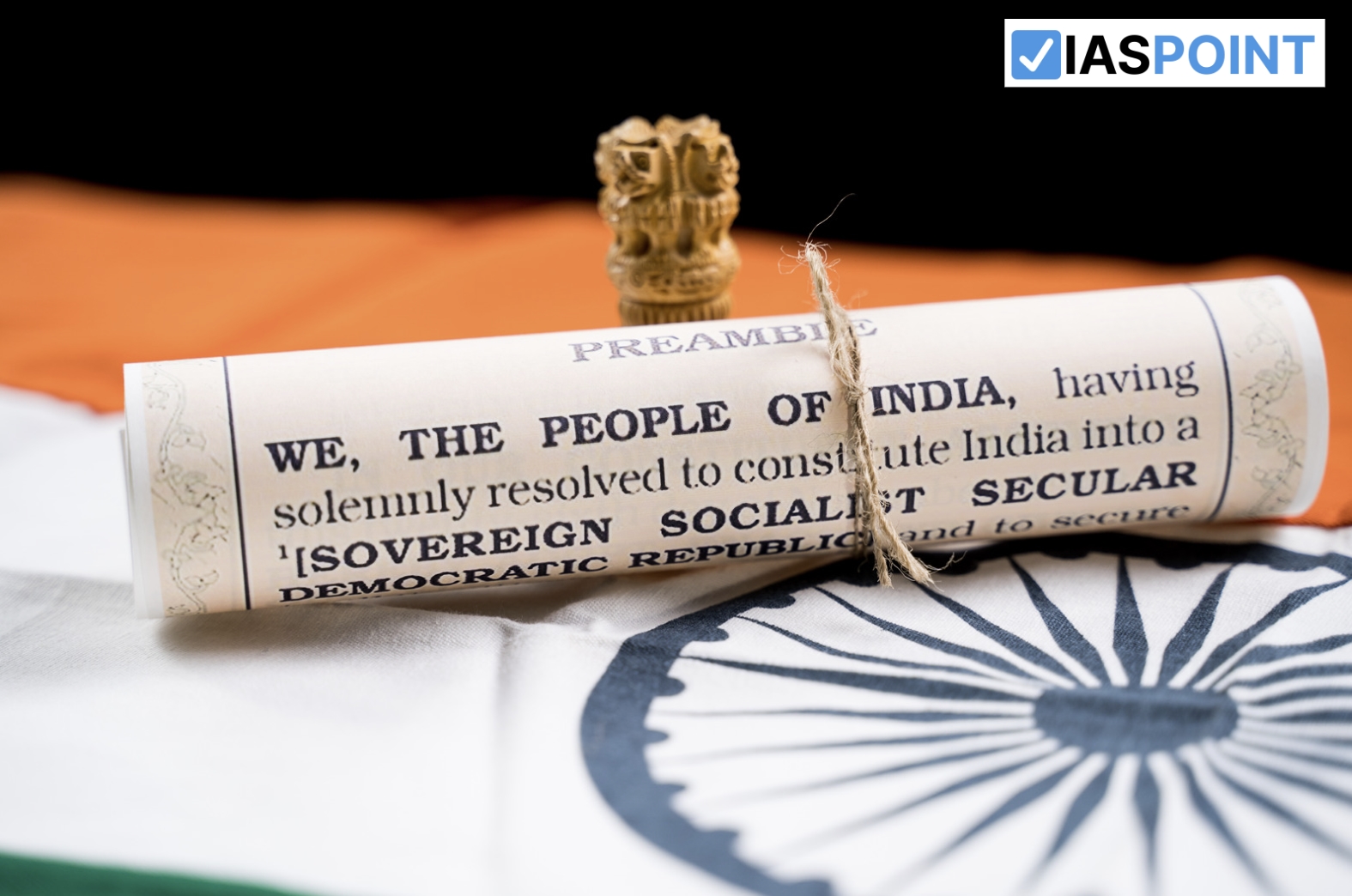

The Vice President of India is the second-highest constitutional office in the country, following the President. The Vice President serves as the ex-officio Chairman of the Rajya Sabha, the upper house of Parliament.
Constitutional Provisions
The Vice President’s role is defined in Articles 63 to 71 of the Constitution of India. These articles outline the election process, eligibility criteria, powers, and removal procedures for the Vice President.
- Article 63: Establishes the position of the Vice President.
- Article 64: Designates the Vice President as the ex-officio Chairman of the Rajya Sabha.
- Article 65: Allows the Vice President to act as President during vacancies or absences.
- Article 66: Details the election process of the Vice President.
- Article 67: States the term of office for the Vice President.
- Article 68: Covers the timing for elections to fill vacancies.
- Article 69: Mandates the oath of office for the Vice President.
- Article 70: Discusses the discharge of presidential functions in contingencies.
- Article 71: Addresses disputes relating to the election of the President or Vice President.
Election Process
The Vice President is elected indirectly by an electoral college comprising the elected and nominated members of both Houses of Parliament. Unlike the President’s election, state legislative assemblies do not participate.
- The election follows the system of proportional representation using a single transferable vote.
- A Returning Officer oversees the election process.
- Voting is conducted via secret ballot.
Eligibility Criteria
To be eligible for the office of Vice President, a candidate must meet specific requirements:
- Must be a citizen of India.
- Must be at least 35 years of age.
- Must be qualified to be elected as a member of the Rajya Sabha.
- Must not hold any office of profit under the government or local authorities.
Tenure and Resignation
The Vice President serves a term of five years. However, they can resign at any time by submitting a resignation letter to the President.
- Vacancies may arise from resignation, removal, death, or disqualification.
- In case of a vacancy, an election must be held within six months.
Powers and Functions
The Vice President has several key responsibilities and powers:
- Acts as the ex-officio Chairman of the Rajya Sabha.
- Presides over Rajya Sabha sessions, maintaining order and decorum.
- Has the casting vote in case of a tie.
- Acts as President in the event of a vacancy, for a maximum of six months.
Comparison with the US Vice President
The role of the Vice President in India is similar to that in the United States but differs in powers and functions:
- In the US, the Vice President automatically assumes the presidency upon vacancy.
- In India, the Vice President acts temporarily until a new President is elected.
Removal from Office
The Vice President can be removed from office without formal impeachment. The process involves:
- A resolution must be passed by a majority in the Rajya Sabha and agreed to by the Lok Sabha.
- At least 14 days’ notice is required before introducing the resolution.
Significance of the Office
The Vice President plays a vital role in maintaining the constitutional framework of India. Their responsibilities include:
- Presiding over the Rajya Sabha and ensuring adherence to parliamentary rules.
- Acting as a stabilising force in the government.
- Facilitating discussions and decision-making in the upper house of Parliament.
Historical Context
The post of Vice President was established in 1950 with the adoption of the Constitution.
- Dr. Sarvepalli Radhakrishnan was the first Vice President, serving from 1952 to 1962.
- Since then, there have been 13 Vice Presidents, with several going on to become President.
Current Vice President
As of now, Muppavarapu Venkaiah Naidu serves as the Vice President. He took office on 11 August 2017 and also holds the position of Chairman of the Rajya Sabha.
Salary and Benefits
The Vice President’s salary is determined by Parliament. Currently, it stands at ₹1.25 lakh per month. Additional allowances and privileges are provided. Upon retirement, the Vice President is entitled to a pension equivalent to half their salary.


