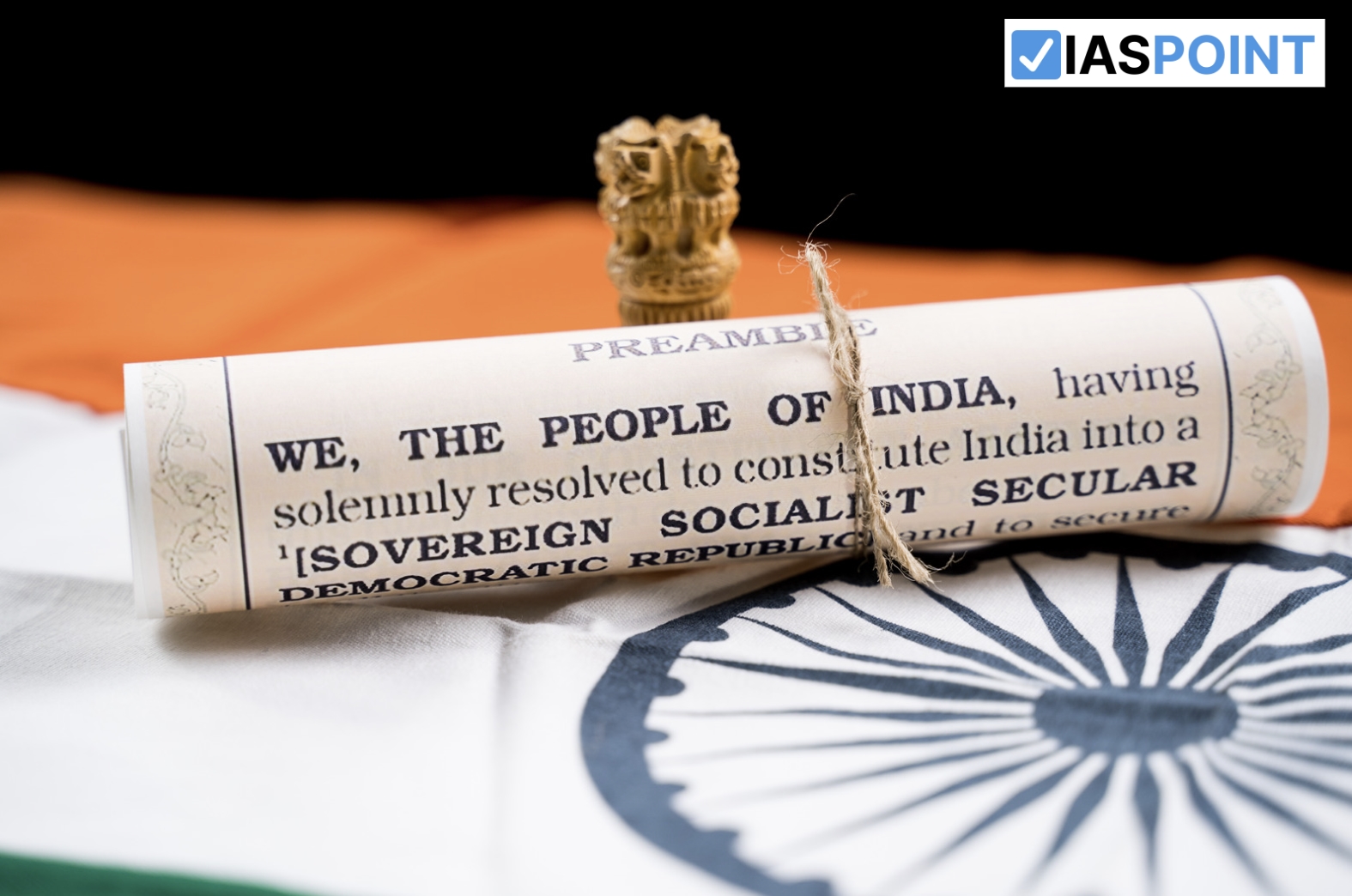
Indian Polity & Constitution for UPSC Prelims

I. Foundational Concepts of Indian Polity

  1. Evolution of Constitutional Framework
  2. Making of the Constitution
  3. Philosophy of the Constitution
  4. Key Features of the Indian Constitution
  5. Preamble: Vision and Ideals
  6. The Union and Its Territory
  7. Citizenship: Provisions and Policies

II. Fundamental Rights, Duties, and Principles

  1. Fundamental Rights: Scope and Limitations
  2. Directive Principles of State Policy
  3. Fundamental Duties of Citizens
  4. Doctrine of Basic Structure
  5. Constitutional Amendments

III. Central Government

  1. President: Powers and Functions
  2. Vice-President: Role and Responsibilities
  3. Prime Minister: Role and Powers
  4. Union Council of Ministers
  5. Cabinet Committees

IV. State Government

  1. Governor: Role and Powers
  2. Chief Minister: Executive Head of the State
  3. State Council of Ministers
  4. State Legislatures: Composition and Functions

V. Local Governance

  1. Panchayati Raj System
  2. Urban Local Bodies: Municipalities and Corporations

VI. Parliamentary System and Processes

  1. Indian Parliament: Structure and Powers
  2. Parliamentary Committees: Roles and Relevance
  3. Indian Parliamentary Group (IPG)

VII. Federalism and Inter-Governmental Relations

  1. India’s Quasi-Federal System
  2. Centre-State Relations
  3. Inter-State Relations
  4. Emergency Provisions

VIII. Judiciary

  1. Supreme Court: Powers and Jurisdiction
  2. High Courts: Role and Structure
  3. Subordinate Courts

IX. Judicial Mechanisms

  1. Judicial Review
  2. Judicial Activism
  3. Public Interest Litigation (PIL)

X. Alternative Dispute Resolution

  1. Tribunals: Scope and Authority
  2. Consumer Forums
  3. Lok Adalats and Alternative Mechanisms

XI. Union Territories and Special Provisions

  1. Administration of Union Territories
  2. Scheduled and Tribal Areas

XII. Constitutional Bodies

  1. Election Commission of India
  2. Union Public Service Commission (UPSC)
  3. State Public Service Commissions
  4. Finance Commission
  5. Goods and Services Tax (GST) Council
  6. Comptroller and Auditor General (CAG)
  7. Attorney General of India
  8. Advocate General of States

XIII. Special Commissions

  1. National Commission for Scheduled Castes
  2. National Commission for Scheduled Tribes
  3. National Commission for Backward Classes
  4. Special Officer for Linguistic Minorities

XIV. Non-Constitutional Bodies

  1. NITI Aayog: Policy Think Tank
  2. Central Vigilance Commission (CVC)
  3. Central Bureau of Investigation (CBI)
  4. Lokpal and Lokayuktas
  5. National Human Rights Commission (NHRC)
  6. State Human Rights Commissions
  7. National Commission for Women (NCW)
  8. National Commission for Protection of Child Rights
  9. National Commission on Minorities
  10. Central and State Information Commissions

XV. Political Dynamics and Elections

  1. Political Parties: National and Regional
  2. Coalition Governments: Evolution and Impact
  3. Electoral Process and Laws
  4. Electoral Reforms and Innovations
  5. Anti-Defection Law
  6. Voting Behavior and Trends
  7. EVMs and Election Technology

XVI. Societal Structures and Advocacy

  1. Pressure Groups and Their Influence
  2. Non-governmental Organizations (NGOs)

XVII. Cooperative Societies and Public Administration

  1. Cooperatives and Cooperative Movement

XVIII. Public Administration

  1. Public Services: Recruitment and Administration

XIX. Languages and Special Provisions

  1. Official Language and Regional Language Policies
  2. Special Provisions for Certain States and Classes

XX. Miscellaneous Topics

  1. National Integration and Unity
  2. Foreign Policy Principles and Challenges
  3. Landmark Judicial Verdicts
  4. Significant Doctrines in Indian Law
  5. Constitutions of Other Nations: A Comparative Study
  6. Rights and Liabilities of the Government

Important Amendments to the Constitution of India

Important Amendments to the Constitution of India

The Constitution of India is a dynamic document that can be amended to address evolving societal needs. As of January 2025, there have been 106 amendments to the Constitution. These amendments reflect changes in governance and rights within India.

Constitutional Amendment Process

The process for amending the Constitution is outlined in Article 368. Amendments can be initiated in either house of Parliament. The bill must be passed by a Special Majority, which requires more than 50% of the total membership and two-thirds of those present and voting. Some amendments also require ratification by half of the state legislatures.

Types of Amendments

There are three primary types of amendments:

  • Simple Majority: Changes can be made with a simple majority of those present and voting.
  • Special Majority: Requires a majority of the total membership and two-thirds of those present.
  • Special Majority with State Ratification: Necessary for amendments affecting the federal structure, requiring consent from half of the state legislatures.

Basic Structure Doctrine

The Basic Structure Doctrine asserts that certain fundamental features of the Constitution cannot be altered or destroyed by amendments. This principle emerged from the Supreme Court’s ruling in the Kesavananda Bharati case (1973). It acts as a safeguard against arbitrary changes.

Significant Amendments

The following are notable amendments that have shaped the Constitution of India:

1st Amendment Act, 1951

– Introduced the Ninth Schedule to protect certain laws from judicial review. – Empowered states to make special provisions for backward classes.

24th Amendment Act, 1971

– Affirmed Parliament’s power to amend any part of the Constitution. – Made presidential assent compulsory for Constitutional Amendment Bills.

42nd Amendment Act, 1976

– Known as the “Mini-Constitution,” it added the words “socialist,” “secular,” and “integrity” to the Preamble. – Introduced Fundamental Duties for citizens.

44th Amendment Act, 1978

– Replaced “internal disturbance” with “armed rebellion” regarding national emergencies. – Made the right to property a legal right instead of a fundamental right.

61st Amendment Act, 1988

– Lowered the voting age from 21 to 18 years for Lok Sabha and Assembly elections.

73rd and 74th Amendment Acts, 1992

– Granted constitutional status to Panchayati Raj institutions and urban local bodies. – Established a three-tier system for local governance.

86th Amendment Act, 2002

– Made elementary education a fundamental right for children aged 6 to 14 years.

101st Amendment Act, 2016

– Introduced the Goods and Services Tax (GST) to unify indirect taxation.

106th Amendment Act, 2023

– Reserved one-third of the seats for women in Lok Sabha and State Legislative Assemblies.

Criticism of the Amendment Procedure

The amendment process has faced criticism for several reasons:

  • Lack of a special body for constitutional amendments.
  • Parliament holds power without sufficient checks.
  • Absence of a joint sitting provision can lead to deadlock.

Leave a Reply

Your email address will not be published. Required fields are marked *

Archives