
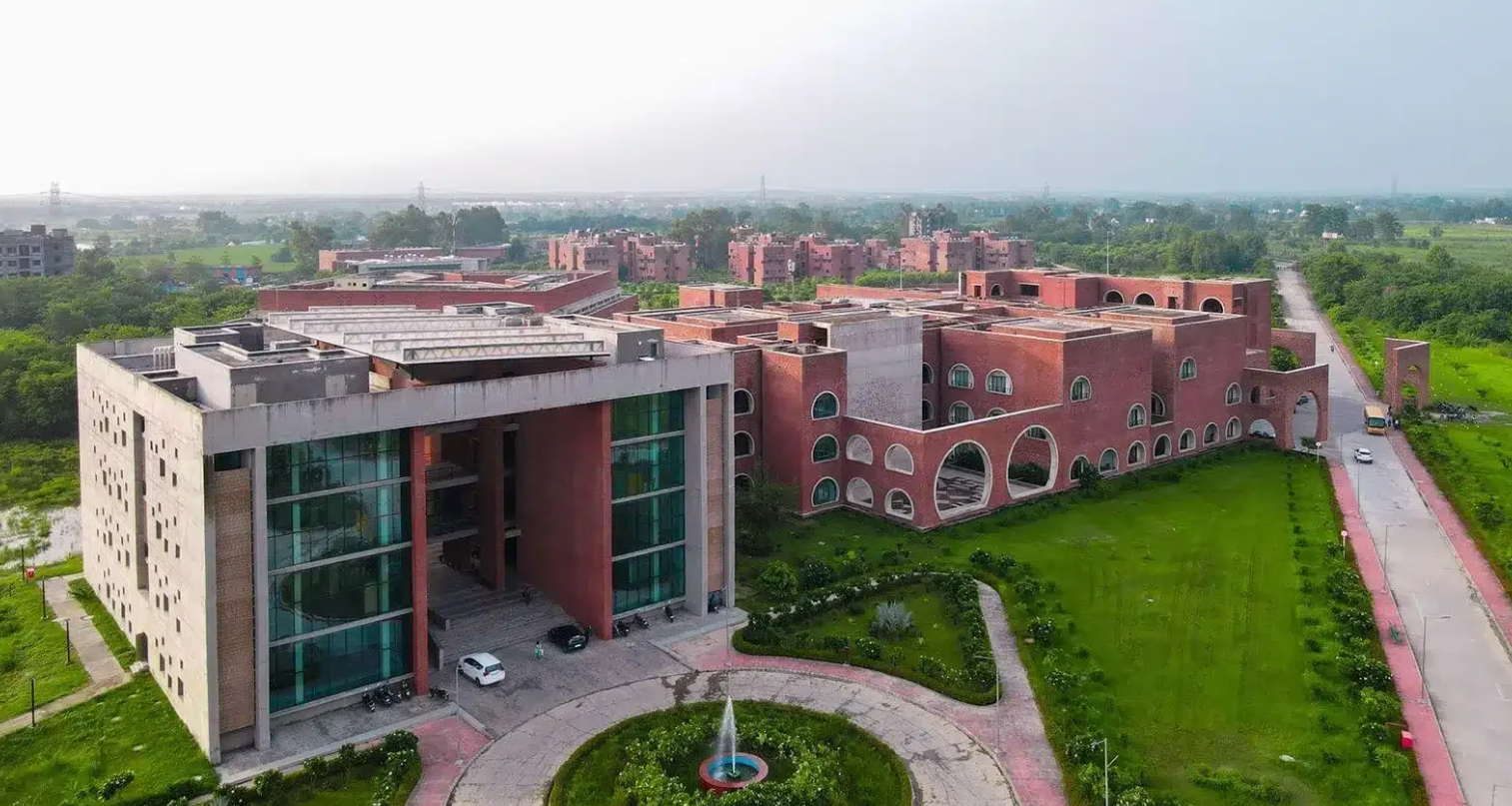
The Indian National Space Promotion and Authorization Center (IN-SPACe) is an independent, single-window nodal agency functioning as an autonomous body under the Department of Space (DOS). Established as part of the structural space sector reforms approved by the Union Cabinet in June 2020, its primary institutional mandate is to permit, regulate, promote, and oversee space activities undertaken by Non-Governmental Entities (NGEs), which include private industries, start-ups, and academic research institutions.
Organizational Structure and Directorates
IN-SPACe operates independently of the Indian Space Research Organisation (ISRO) to prevent conflict of interest, serving as a distinct regulatory interface between the state and private enterprises. The agency is headquartered in Bopal, Ahmedabad, Gujarat, and executes its responsibilities through three dedicated operational Directorates:
- Promotion Directorate (PD): Tasked with expanding India’s share in the global space economy by handholding startups, facilitating access to risk capital, and fostering industry-academia collaboration.
- Technical Directorate (TD): Evaluates the technical feasibility of private space missions, assesses structural design requirements, and manages the sharing of ISRO’s test facilities and laboratories.
- Program Management and Authorization Directorate (PMAD): Operates as the formal regulatory authority issuing licenses, security clearances, and operational permits for space systems launch and satellite operations.
Functional Mandates and Powers
- Regulatory Authorization: Evaluates and authorizes the building of launch vehicles, satellites, and the deployment of space-based services by private players.
- Infrastructure Sharing: Facilitates the sharing of advanced technical infrastructure, launch pads, and tracking facilities under the control of DOS and ISRO on a commercial cost basis.
- New Facility Setup: Approves the establishment of new space infrastructure and specialized manufacturing units by private sector actors within Indian territory.
- Inter-Agency Coordination: Integrates and coordinates demands between private space tech providers and government line ministries requiring satellite telemetry, data imagery, and communication channels.
The Private Space Sector Ecosystem in India
Indian Space Policy 2023: The Modern Roadmap
The Indian Space Policy 2023 institutionalized the roles of different state and commercial entities to completely transition the sector from a government-monopolized domain into an open commercial marketplace. The policy defines a clear division of labor across four key pillars:
- ISRO: Focuses strictly on advanced Research and Development (R&D), frontier scientific explorations, deep-space missions, and pioneering human spaceflight programs (e.g., Gaganyaan).
- IN-SPACe: Acts as the single-window regulatory authority, promoter, and clearing house for all private sector space operations.
- NewSpace India Limited (NSIL): Functions as the commercial arm of DOS, responsible for commercializing technologies developed by ISRO, manufacturing launch vehicles through industry consortia, and handling global commercial launch services.
- Non-Government Entities (NGEs): Empowered to carry out end-to-end space activities including building rockets, owning and operating communication constellations, and deploying downstream application software.
Policy Enablers: FDI and Liberalization Reforms
The Government of India amended the Foreign Direct Investment (FDI) policy for the space sector to provide frictionless access to global venture capital. The liberalized thresholds are structured based on the technology sub-sector:
| Space Sector Activity Segment | Automatic Route Limit | Government Route Requirement |
| Manufacturing of Satellite Components, Sub-systems, and Ground/User Segments | Up to 100% | Beyond 100% (Not applicable) |
| Launch Vehicles, Associated Systems, Subsystems, and Creation of Spaceports | Up to 49% | Beyond 49% |
| Satellites Manufacturing, Data Operations, and Satellite Ground Stations | Up to 74% | Beyond 74% |
Key Start-ups and Technological Milestones
The private space ecosystem has matured rapidly, shifting from component suppliers to full-stack aerospace operators executing independent orbital missions:
- Skyroot Aerospace: Successfully launched India’s first privately developed sub-orbital rocket, Vikram-S, under Mission Prarambh in November 2022. The company is advancing towards the orbital launch of its multi-stage solid propulsion vehicle, Vikram-I.
- Agnikul Cosmos: Successfully executed the flight of Agnibaan SOrTeD (Sub-Orbital Technological Demonstrator) from India’s first private launchpad, Dhanush, located at Sriharikota. The mission showcased the world’s first flight of a single-piece, 3D-printed semi-cryogenic engine using liquid oxygen and kerosene.
- Pixxel: Developed and deployed highly advanced indigenous hyperspectral imaging satellites (such as Shakuntala and Anand), providing data-rich imagery for agricultural monitoring, mining tracking, and environmental surveillance.
- GalaxEye: Successfully launched Mission Drishti, deploying India’s first private multi-sensor imaging satellite equipped with proprietary Optical and Synthetic Aperture Radar (SAR) payloads to achieve all-weather, day-and-night observation capabilities.
- Dhruva Space: Specializes in modular satellite platforms, deployment systems, and ground station operations, providing end-to-end small satellite institutional setups.
Economic Valuation and Growth Projections
The economic transformation driven by policy liberalization is targeted to shift India’s position in the global space marketplace through intense scaling:
- Current Global Share: India’s space economy is valued at approximately 8 to 9 billion USD, which represents roughly 2% to 3% of the global space industry.
- Decadal Target: Driven by the surge in private startup capital and the manufacturing shift, the domestic space economy is projected to expand to 40 to 45 billion USD over the next decade.
- Economic Multiplier Effect: Independent industrial assessments show a multiplier effect of 2.54 USD generated in the wider Indian economy for every single dollar directly earned by the domestic space industry.
Analytical Significance and Core Challenges
Strategic Rationale for Space Liberalization
- Alleviating ISRO’s Operational Load: Transferring routine manufacturing, satellite fabrication, and launch operations (such as the Polar Satellite Launch Vehicle production) to the private sector frees ISRO to channel resources into pure scientific research and planetary exploration.
- Capturing Global Commercial Demand: The global demand for small satellite launches is surging. Private firms with agile, mass-produced small satellite launch vehicles can capture a significant chunk of the low Earth orbit (LEO) commercial deployment market.
- Mitigating Brain Drain: An expanding commercial aerospace ecosystem creates high-skilled deep-tech employment domestically, retaining elite engineering talent within the Indian economy.
Key Bottlenecks and Operational Challenges
- Absence of a Comprehensive Space Act: While the Space Policy 2023 provides administrative directives, India still lacks a formalized, statutory legislative framework (a Space Act) passed by Parliament to define legal liability, insurance frameworks, and intellectual property rights in outer space.
- High Capital Intensity and Long Gestation Cycles: Space technology demands immense upfront capital investment with extended timelines before achieving profitability, making local long-term venture capital access difficult compared to IT sectors.
- International Space Liability Compliance: Under the 1972 UN Liability Convention, the Government of India remains strictly liable for any damage caused globally by an object launched from its territory, necessitating stringent and sometimes restrictive vetting processes by IN-SPACe before clearing private launches.
Space Technology and Private Sector Trivia for UPSC
- The Pioneer Private Launchpad: Agnikul Cosmos established India’s first private launchpad and mission control center within ISRO’s Satish Dhawan Space Centre at Sriharikota, exemplifying infrastructure sharing.
- Bhoonidhi and Data Open Access: ISRO’s Bhoonidhi portal and NASA’s Alaska Satellite Facility act as key open-access repositories, mirroring the ongoing data democratization pushed by IN-SPACe for private developer integration.
- The First Private Agreement: Skyroot Aerospace was the first private space tech company to sign a formal Memorandum of Understanding (MoU) with ISRO to access technical expertise and facilities.