
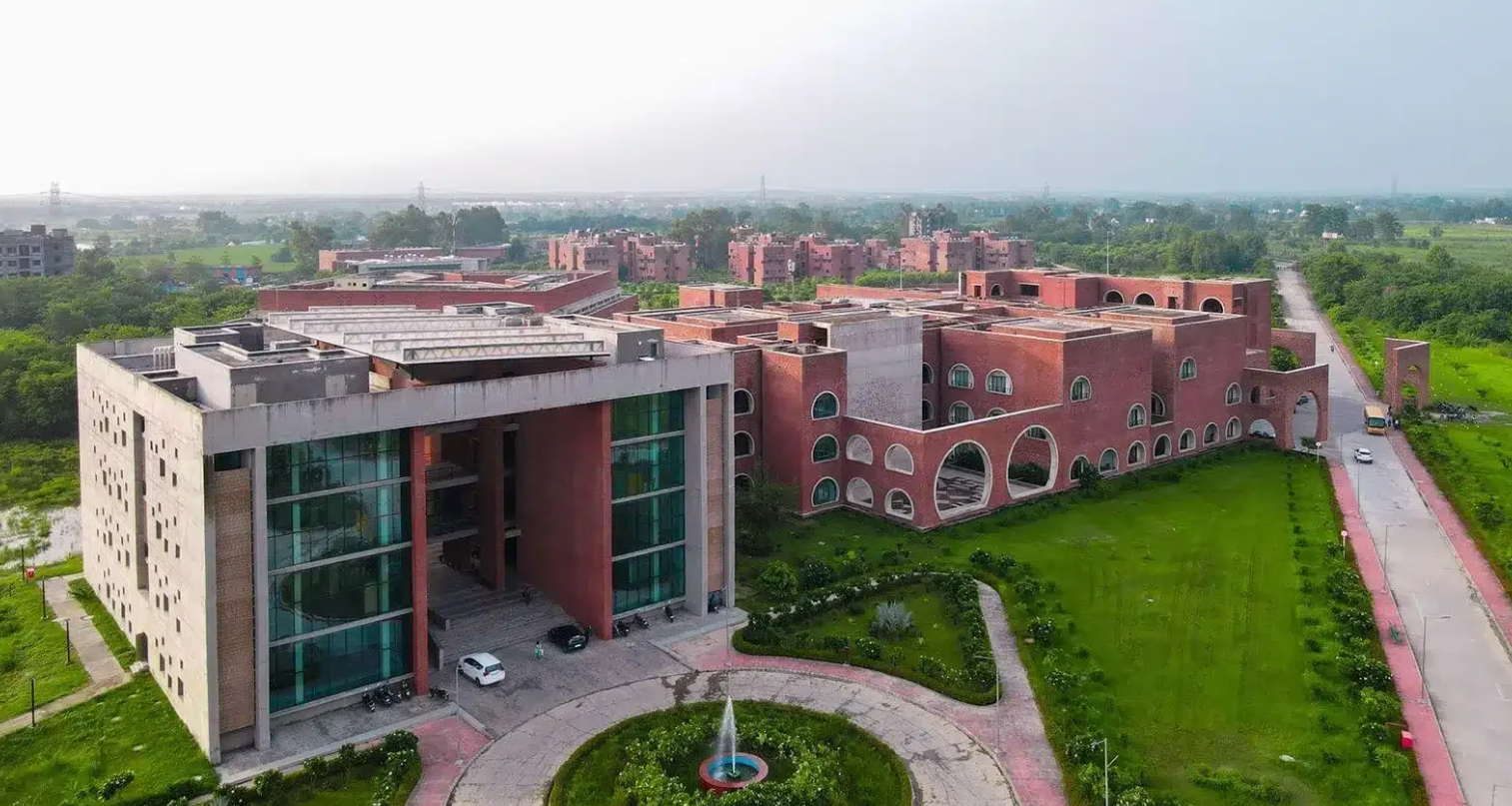
The India Semiconductor Mission (ISM) is a specialized, autonomous business division established within the Digital India Corporation under the Ministry of Electronics and Information Technology (MeitY). Launched with an initial financial allocation of ₹76,000 crore, the mission functions as the nodal administrative agency responsible for catalyzing a robust semiconductor and display manufacturing ecosystem. The institutional mandate of ISM is to transition India from a consumer of microelectronics into a leading, self-reliant global manufacturing node, thereby securing technological sovereignty and integrating the country into the high-technology global value chain.
Policy Structure and Sub-Schemes
The ISM implements a comprehensive structural policy engine through a series of modified incentive frameworks offering uniform fiscal support of 50% of the project cost on a pari-passu basis across all approved verticals.
Modified Scheme for Setting Up Semiconductor Fabs
Provides fiscal support to corporate entities for setting up silicon-based wafer fabrication plants. It applies uniformly to all technology nodes, including advanced nodes (≤ 7 nm) as well as trailing-edge and legacy nodes (≥ 28 nm), which are essential for automotive and power sectors.
Modified Scheme for Setting Up Display Fabs
Aims to attract large-scale capital investments to manufacture flat-panel displays, such as TFT-LCD, OLED, and MicroLED modules. Display components account for up to half the cost of electronic consumer units, making domestic fabrication key to reducing structural import bills.
Modified Scheme for Compound Semiconductors, Silicon Photonics, and Sensors
Focuses on next-generation materials and niche optoelectronic domains. It provides capital support for setting up Gallium Nitride (GaN) foundries, Silicon Carbide (SiC) fabs, Silicon Photonics units, and Micro-Electro-Mechanical Systems (MEMS) sensors.
Modified Scheme for Packaging (ATMP and OSAT)
Targets the backend segment of chip production. It subsidizes the capital expenditures required to set up Assembly, Testing, Marking, and Packaging (ATMP) units and third-party Outsourced Semiconductor Assembly and Test (OSAT) centers.
Design Linked Incentive (DLI) Scheme
Provides operational infrastructure, design access, and financial incentives to domestic fabless semiconductor startups.
- Product Design Linked Incentive: Reimburses up to 50% of eligible design expenditure.
- Deployment Linked Incentive: Provides 4% to 6% of net sales turnover over five years to companies commercializing indigenous microprocessors or system-on-chips (SoCs).
Paradigm Shift: Transition to ISM 2.0
As the country completes the setup of initial projects, the policy architecture has expanded into ISM 2.0. Supported by an enhanced single-year financial layout of ₹8,000 crore in the Union Budget, this phase focuses on upstream components and long-term self-sufficiency.
Equipment and Materials Manufacturing
Shifts focus toward building a domestic supply chain for critical raw inputs, specializing in electronic gases, chemical photoresists, specialized quartzware, high-purity silicon ingots, and precision components for lithography hardware.
Indigenous Intellectual Property (IP) and Full-Stack Design
Prioritizes the creation and ownership of foundational Indian core architectures, ensuring local entities own the patent rights for chip designs rather than relying entirely on licensed foreign IP blocks.
Academic Infrastructure and Applied R&D
Financially anchors industry-led research hubs and specialized training networks across 315 premier academic institutions to scale up Very Large Scale Integration (VLSI) engineering talent, aiming to secure a future-ready technical workforce.
Comprehensive Landscape of Approved Projects
The cumulative institutional approvals under the ISM network include 12 major semiconductor manufacturing units distributed across six states, with combined investment commitments exceeding ₹1.64 lakh crore.
| S.No | Project Unit Name | Corporate Promoters / Technology Partners | Project Typology & Core Node | Strategic Location | Key Target Applications |
| 1 | Tata Electronics Silicon Fab | Tata Electronics & PSMC (Taiwan) | Pure-Play Foundry; Mature 28nm Node | Dholera, Gujarat | Automotive MCUs, Power ICs, Consumer Tech |
| 2 | Tata Semiconductor Assembly (TSAT) | Tata Group | Mega OSAT Packaging Unit | Morigaon, Assam | Automotive, Smart Electric Vehicles |
| 3 | Micron ATMP Facility | Micron Technology (USA) | Captive Memory Packaging (DRAM/NAND) | Sanand, Gujarat | Data Centers, High-Volume Solid-State Memory |
| 4 | CG Power OSAT Unit | CG Power, Renesas (Japan) & Stars (Thailand) | Commercial OSAT Complex | Sanand, Gujarat | Industrial Power Electronics, Legacy Analog Chips |
| 5 | Kaynes Semicon OSAT | Kaynes Technology | Commercial OSAT Plant | Sanand, Gujarat | IoT Modules, Telecom Systems, Industrial Automation |
| 6 | SiCSem Fabs | SiCSem Pvt. Ltd & Clas-SiC (UK) | Compound Semiconductor Fab (Silicon Carbide) | Bhubaneswar, Odisha | High-Voltage EV Inverters, Green Energy Grids |
| 7 | Heterogenous Integration Packaging | 3D Glass Solutions Inc. (USA) | Advanced 3D Packaging (Glass Substrates) | Bhubaneswar, Odisha | AI Data Accelerators, 5G/6G RF Hardware |
| 8 | Crystal Matrix Facility | Crystal Matrix Limited | Compound Fab & ATMP (Gallium Nitride) | Dholera, Gujarat | Mini/Micro-LED Displays, Smart Wearables, XR Glasses |
| 9 | Suchi Semicon Unit | Suchi Semicon Private Limited | Commercial OSAT Complex | Surat, Gujarat | Power Management, Discretes, Consumer Appliances |
| 10 | India Chip Packaging | HCL–Foxconn Group Joint Venture | Multi-Chip Packaging Hub | Jewar, Uttar Pradesh | Telecom Infrastructure, Connected Vehicles |
| 11 | CDIL Brownfield Fab | Continental Device India Ltd | Power Discrete Component Foundry | Mohali, Punjab | Aerospace Systems, Smart Mobility |
| 12 | Rajasthan Semi-Complex | State-led Public-Private Initiative | Specialized Automotive Packaging | Neemrana, Rajasthan | Smart Meters, Industrial Sensing Arrays |
Strategic Geopolitical and Economic Impact
Mitigating Weaponized Supply Chains
The semiconductor value chain is prone to systemic disruptions. Domestic fabrication shields India from geopolitical chip blockades, ensuring an uninterrupted supply of electronic components for strategic defense platforms, missile tracking arrays, and internal communications networks.
Resolving the Electronics Import Imbalance
India’s electronic consumption is projected to drive a massive domestic semiconductor market worth $100–110 billion by 2030. Cultivating local foundries and packaging ecosystems reduces reliance on foreign electronic imports, improving the national current account deficit.
High-Tech Employment and Industrial Multiplier
Beyond creating direct employment for over 2,230 highly skilled professionals via current project pipelines, the semiconductor mission serves as an industrial multiplier. Every single operational cleanroom fab attracts surrounding clusters of chemical suppliers, logistics centers, gas plants, and packaging foundries.
Technical Trivia for UPSC Prelims
Pari-Passu Disbursement Mechanism
A financial management method implemented under ISM where central subsidy disbursements are made concurrently alongside the private investor’s capital deployment. This ensures real-time project auditing, prevents capital diversion, and accelerates fabrication plant construction timelines.
Silicon Carbide (SiC) vs. Gallium Nitride (GaN)
These wide-bandgap compound semiconductors are the focus of ISM’s niche manufacturing push. SiC withstands high voltages and thermal loads, making it ideal for electric vehicle power systems and trains. GaN operates at higher switching frequencies, making it the bedrock material for 5G telecommunications and advanced MicroLED displays.
Fabless Semiconductor Model
A business framework where an enterprise specializes exclusively in designing the architecture and functional layouts of integrated circuits while outsourcing the actual physical chemical fabrication to independent foundries (such as TSMC) or third-party OSAT facilities. The DLI scheme specifically aims to mature this segment within India.
Last Modified: June 17, 2026