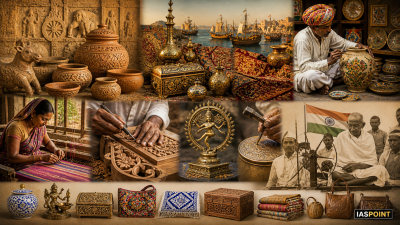
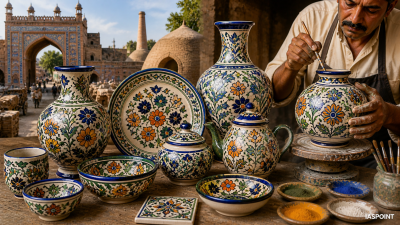
The evolution of Indian handicrafts is a testament to the country’s socio-economic and cultural transitions. From utilitarian items in ancient civilizations to luxury exports in the medieval era...
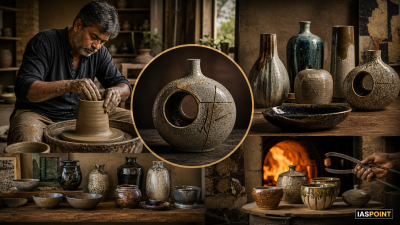
Studio pottery in India represents a departure from the traditional, hereditary-based "Kumbhar" system toward a personalized, artist-driven form of ceramic art. Unlike traditional pottery, which is often functional...
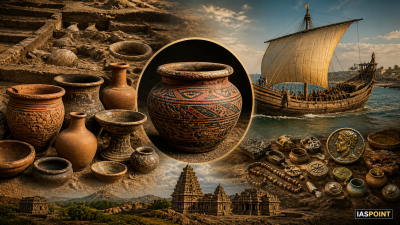
Ancient South Indian pottery is a cornerstone of Dravidian archaeology, providing a continuous timeline from the Neolithic period through the Iron Age to the early historical era. Unlike...
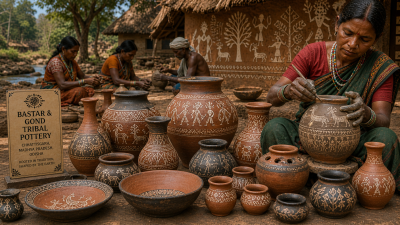
The tribal regions of Bastar (Chhattisgarh) and the Gond belts (Madhya Pradesh and Odisha) represent a primary locus of India's indigenous ceramic heritage. In these societies, pottery is...
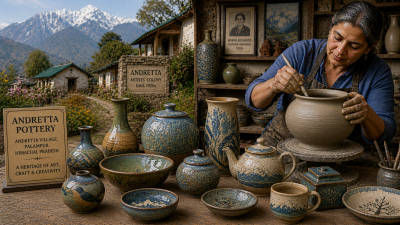
Andretta Pottery is a distinct school of ceramic art located in the small village of Andretta, near Palampur in the Kangra Valley of Himachal Pradesh. Unlike many indigenous...
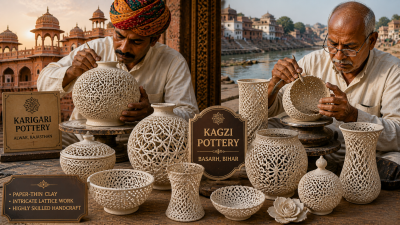
Karigari and Kagzi pottery represent two of the most delicate and technically sophisticated traditions within the Indian pottery landscape. Primarily centered in Alwar (Rajasthan) and Basarh (Bihar), these...
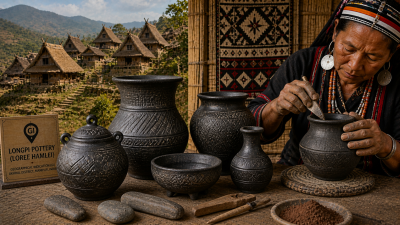
Longpi pottery, also known locally as Loree Hamlei, is an ancient craft originating from the villages of Longpi (Khullen andthel) in the Ukhrul district of Manipur. This craft...
Kutch pottery is a celebrated craft from the arid regions of Gujarat, specifically the Kutch district. This craft dates back nearly 4,500 years, tracing its lineage directly to...
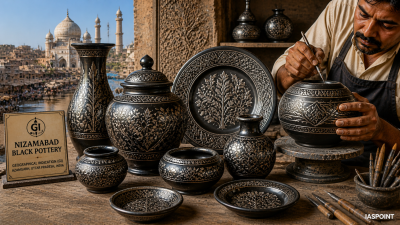
Nizamabad Black Pottery is a unique craft from the Azamgarh district of Uttar Pradesh, distinguished by its dark, lustrous body and intricate silver-colored engravings. This pottery tradition is...
Khurja Pottery, often referred to as the "Ceramic City of India," is a centuries-old glazed pottery tradition located in the Bulandshahr district of Uttar Pradesh. It is one...