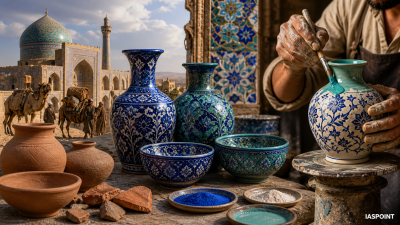
Blue Pottery is one of the most iconic craft traditions of Rajasthan, distinguished by its vibrant cobalt blue dye and its unique composition. Unlike traditional Indian pottery, which...
The arrival of Islamic influence in the 12th century CE introduced a revolutionary technique to the Indian ceramic tradition: Glazing. Unlike the indigenous tradition which primarily focused on...
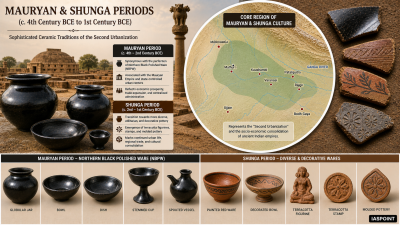
The Mauryan and Shunga periods (c. 4th century BCE to 1st century BCE) represent a sophisticated era in Indian ceramic history. While the Mauryan period is synonymous with...
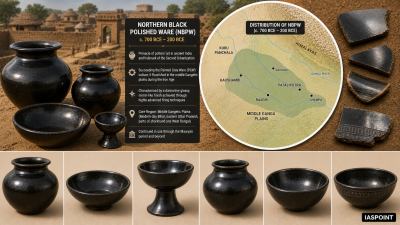
Northern Black Polished Ware (NBPW) represents the pinnacle of the potters' art in ancient India, marking the transition into the Second Urbanization of the Indian subcontinent. Succeeding the...
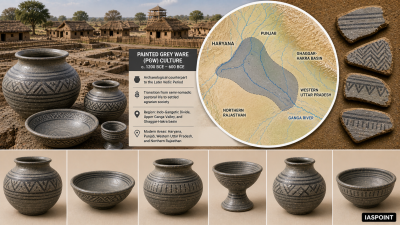
The Painted Grey Ware (PGW) culture marks a significant epoch in the proto-history of Northern India, flourishing approximately between 1200 BCE and 600 BCE. It is widely regarded...
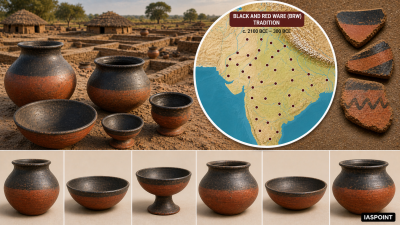
The Black and Red Ware (BRW) tradition is one of the most geographically widespread and chronologically persistent ceramic styles in Indian history. Spanning from the Neolithic-Chalcolithic era (c....
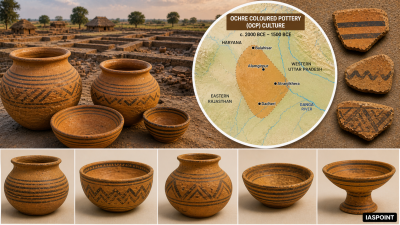
The Ochre Coloured Pottery (OCP) culture represents a significant transitional phase in the proto-history of the Indo-Gangetic divide and the Upper Ganga Valley. Flourishing roughly between 2000 BCE...
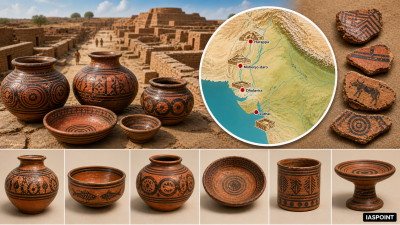
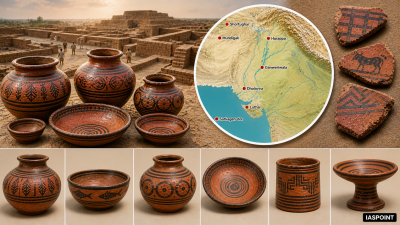
The pottery of the Indus Valley Civilization (IVC), spanning approximately 2600 BCE to 1900 BCE, represents the first instance of large-scale, standardized industrial production in the Indian subcontinent....
Harappan pottery represents the pinnacle of ancient ceramic technology in the Indus Valley Civilization (c. 2600 BCE – 1900 BCE). It is a primary source for reconstructing the...