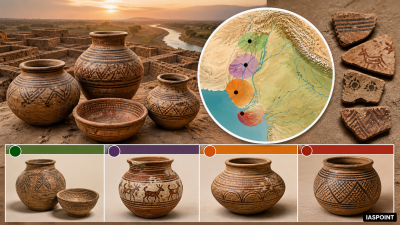
Pre-Harappan pottery refers to the ceramic traditions that flourished in the northwestern part of the Indian subcontinent (roughly 4000 BCE to 2600 BCE) before the emergence of the...
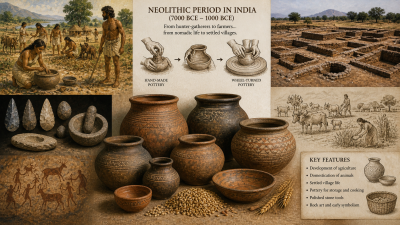
The Neolithic Period in India, spanning roughly from 7000 BCE to 1000 BCE, marked a revolutionary transition from a nomadic hunter-gatherer lifestyle to settled agriculture and animal husbandry....
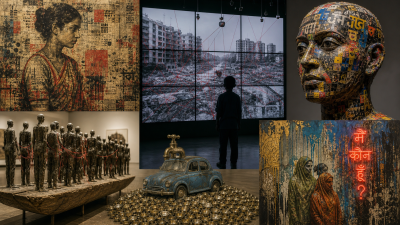
Contemporary Indian art (post-1970s to the present) marks a significant departure from the post-independence "Modernism" of the Progressive Artists' Group. While Modernism focused on establishing a national identity...
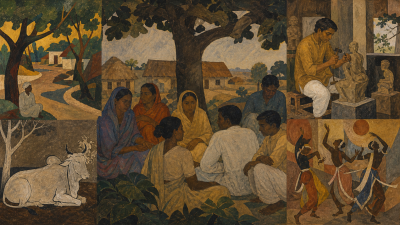
Contextual Modernism is a term coined by art historian R. Siva Kumar to describe the distinct brand of modern art that emerged from Santiniketan, West Bengal, particularly between...
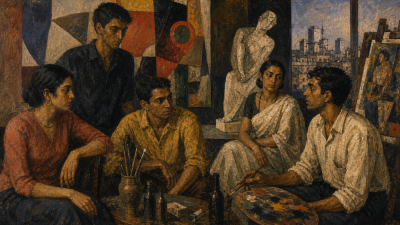
The Progressive Artists' Group (PAG) was established in 1947 in Bombay, coinciding with India's independence. It represented a radical departure from both the British academic realism and the...
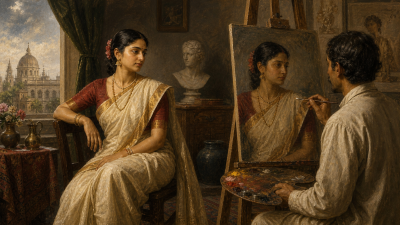
Modern Indian Academic Realism emerged during the mid-19th century as a direct result of British colonial influence and the establishment of formal art schools in major presidency towns....
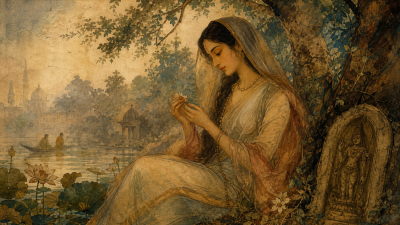
The Bengal School of Art emerged in the early 20th century as a nationalist response to the dominance of Western academic realism in Indian art education. It was...
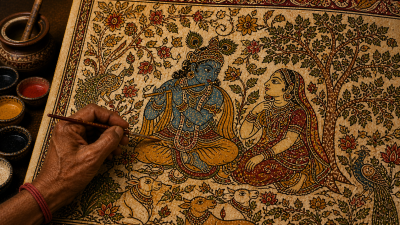
Kalamkari is a traditional Indian art form of hand-painting or block-printing on cotton textile, derived from the Persian words Kalam (pen) and Kari (craftsmanship). While its roots can...
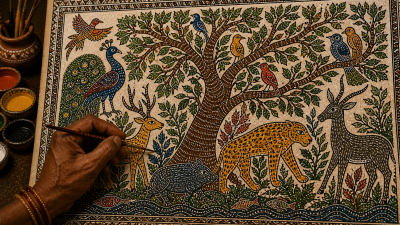
Gond art is a form of painting from the folk and tribal art that is practiced by one of the largest tribes in India—the Gond community, predominantly in...
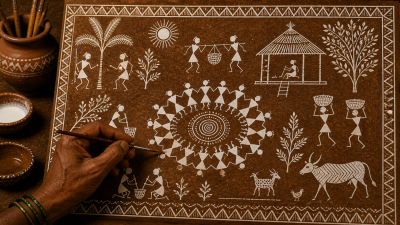
Warli painting is a vivid expression of tribal heritage, originating from the North Sahyadri Range in Maharashtra. Practiced primarily by the Warli tribe, one of India's largest scheduled...