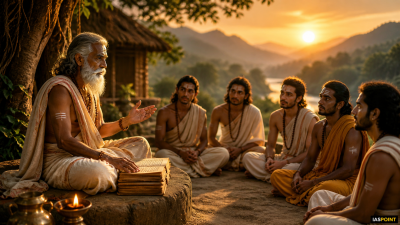
The Upanishads represent the final stage of the Vedic corpus and are collectively known as Vedanta (the end of the Vedas). The term is derived from the Sanskrit...
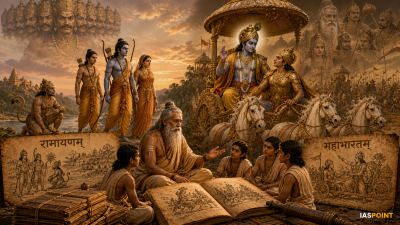
The Indian Epics, primarily the Ramayana and the Mahabharata, fall under the category of Itihasa (literally "it so happened"). Unlike the Shruti (Vedas), these are classified as Smriti...
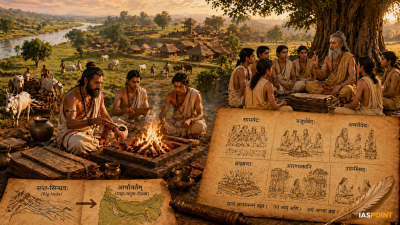
The Later Vedic Period (c. 1000 – 600 BCE) represents a significant shift in Indian civilization as the focus moved from the Sapta-Sindhu region to the Gangetic Doab...
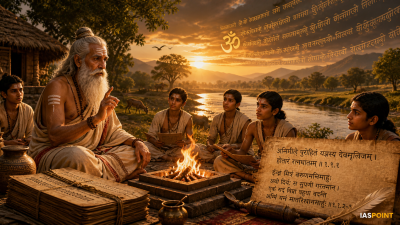
The Vedic period (c. 1500 – 600 BCE) marks the foundation of Indian civilization and its literary tradition. The word Veda is derived from the Sanskrit root Vid,...
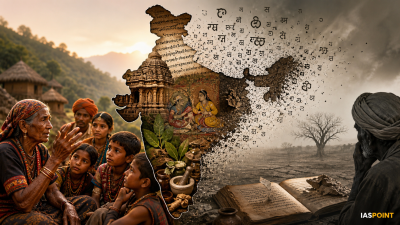
India is one of the most linguistically diverse nations globally, yet it also faces the highest risk of linguistic extinction. As of 2026, approximately 197 Indian languages are...
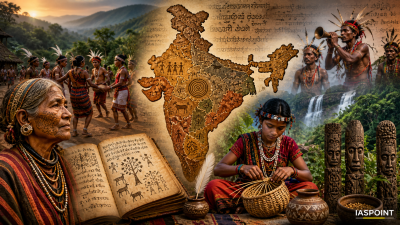
The tribal languages of India, predominantly spoken by the Scheduled Tribes (STs), represent the oldest linguistic layers of the Indian subcontinent. While the Eighth Schedule recognizes 22 official...
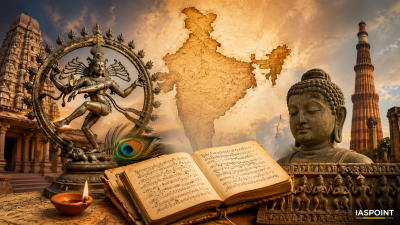
In the framework of Indian Art and Culture, "Classical Languages" refer to those which possess a high antiquity and a rich, original literary heritage. The Government of India...
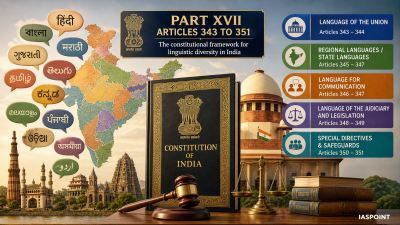
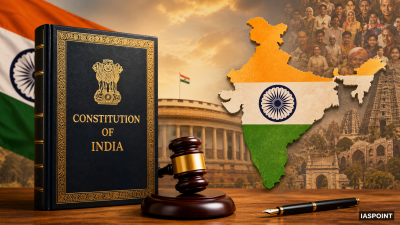
The linguistic diversity of India is governed by Part XVII of the Constitution, spanning Articles 343 to 351. The constitutional provisions distinguish between the language of the Union,...
Part XVII of the Indian Constitution (Articles 343 to 351) defines the legal and administrative status of languages in India. Contrary to popular belief, India does not have...
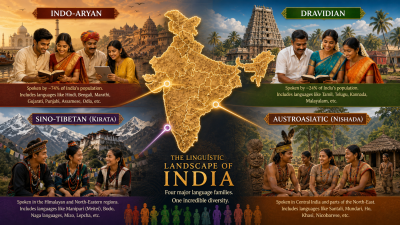
The linguistic landscape of India is categorized into four major families: Indo-Aryan, Dravidian, Sino-Tibetan (Kirata), and Austroasiatic (Nishada). While Indo-Aryan and Dravidian languages account for the majority of...