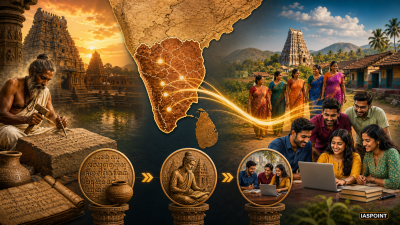
The Dravidian language family is one of the world's largest and most ancient linguistic groups, indigenous to the Indian subcontinent. It accounts for approximately 24% of India's population....
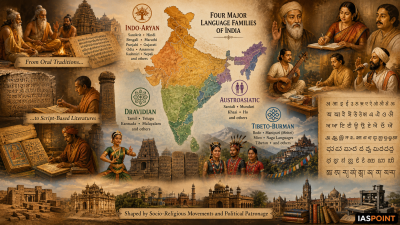
The Indo-Aryan group is a primary branch of the Indo-Iranian subfamily of the Indo-European language family. In the context of Indian heritage, it represents the largest linguistic group,...
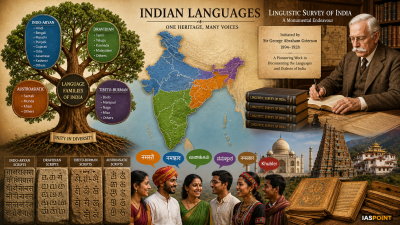
The classification of Indian languages is a cornerstone of the "Linguistic Culture" unit in Indian Art and Culture. India is home to several hundred languages and thousands of...
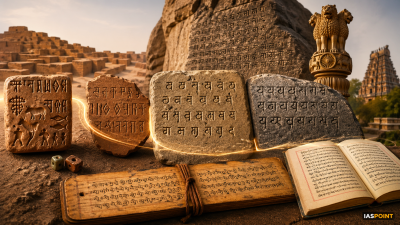
The evolution of scripts in India is a journey from pictographic representation to phonetically sophisticated writing systems. The transition from oral traditions to written records played a pivotal...
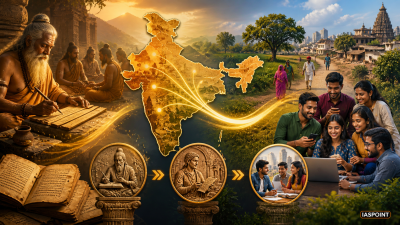
The linguistic landscape of India is a complex tapestry evolving over millennia, primarily categorized into four major language families: Indo-Aryan, Dravidian, Austroasiatic, and Tibeto-Burman. The evolution is characterized...
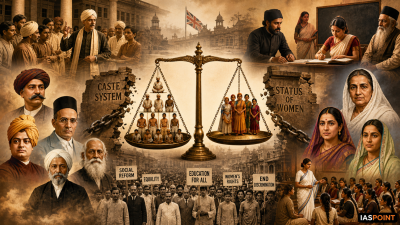
The 19th and early 20th centuries witnessed a series of social reform movements aimed at restructuring the Indian social fabric. These movements were a response to the challenges...
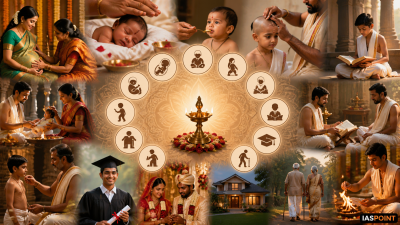
In Indian culture, Samskaras are the transformative rites of passage intended to purify the individual and mark significant transitions in the human life cycle. Derived from the Sanskrit...
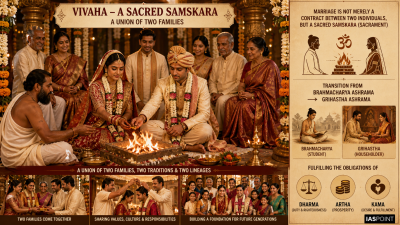
In the Indian social structure, marriage (Vivaha) is traditionally viewed not merely as a contract between two individuals, but as a sacred Samskara (sacrament) and a union between...
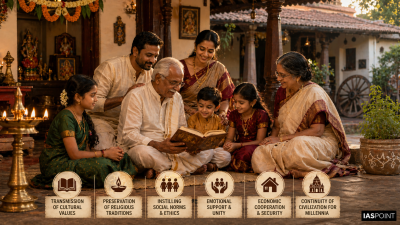
The family serves as the fundamental unit of the Indian social fabric, acting as the primary vehicle for the transmission of cultural values, religious traditions, and social norms....
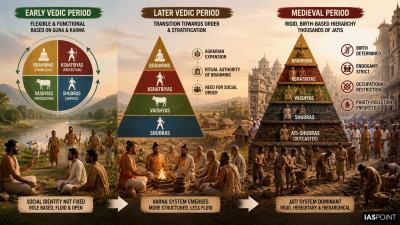
The Indian social hierarchy is a unique stratification system that transitioned from a flexible functional division in the early Vedic period to a rigid, birth-based structure in the...