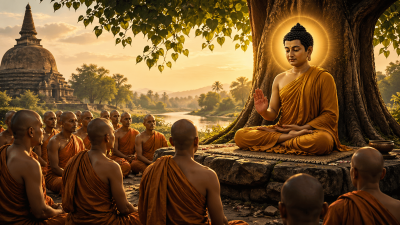
Buddhism emerged in the 6th century BCE as a "Sramana" tradition, a heterodox (Nastika) movement that challenged the ritualistic dominance and varna-based hierarchy of the later Vedic period....
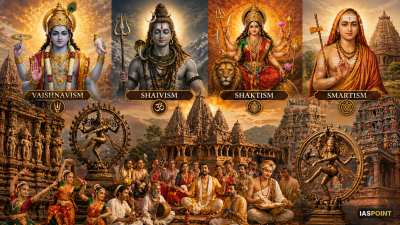
In the study of Indian Art, Culture, and Heritage, Hinduism is categorized as a mosaic of diverse traditions rather than a monolithic entity. The evolution of various sects—primarily...
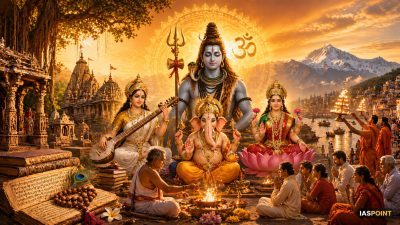
Hinduism, often referred to as Sanatana Dharma (the Eternal Way), is one of the world's oldest living religions. Unlike proselytizing faiths, it evolved through a synthesis of various...
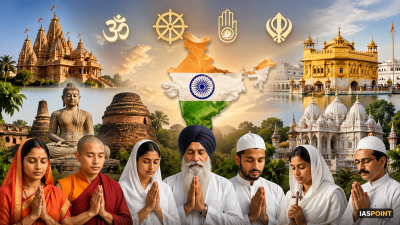
India is the birthplace of four major world religions: Hinduism, Buddhism, Jainism, and Sikhism. The religious diversity of the country is not merely a demographic statistic but is...
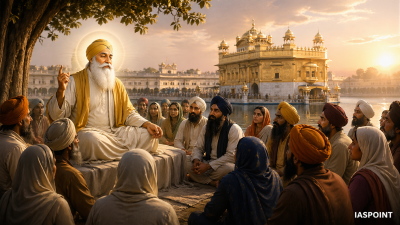
Sikh philosophy is a monotheistic, revolutionary school of Indian thought that emerged in the 15th century CE. Founded by Guru Nanak Dev, it represents a synthesis of spiritual...
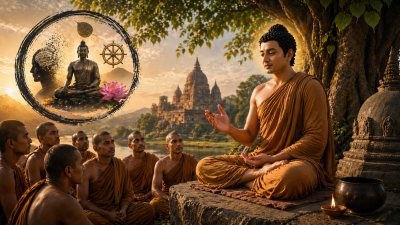
Buddhist philosophy, a heterodox (Nastika) school of Indian thought, emerged in the 6th century BCE as a challenge to the ritualistic Vedic orthodoxy. Founded by Siddhartha Gautama (The...
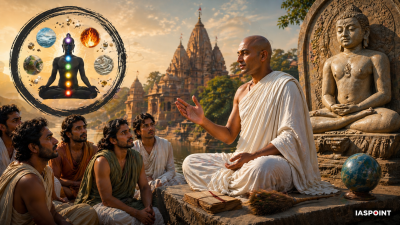
Jain philosophy is one of the oldest heterodox (Nastika) schools of Indian thought, rejecting the authority of the Vedas while emphasizing an independent, soul-centric universe. The core of...
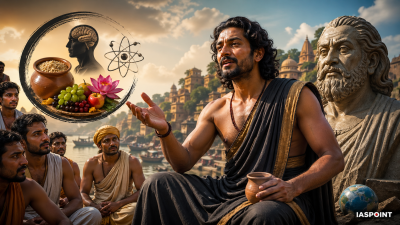
Charvaka is the most radical of the Nastika (Heterodox) schools of Indian philosophy. Unlike other schools that focus on the afterlife, soul, or liberation, Charvaka is characterized by...
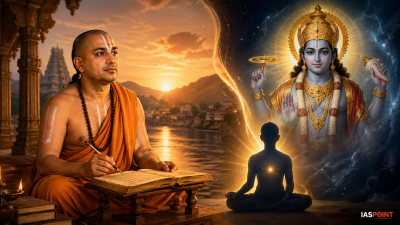
Dvaita Vedanta is one of the three major sub-schools of the Vedanta system of Indian philosophy. Founded by Sri Madhvacharya (1238–1317 CE) during the Bhakti movement, it represents...
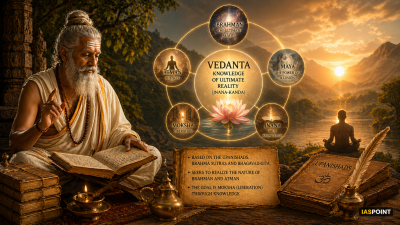
Vedanta, literally meaning "the end of the Vedas," refers to the philosophical teachings found in the Upanishads. It is the most influential of the six orthodox (Astika) schools...