
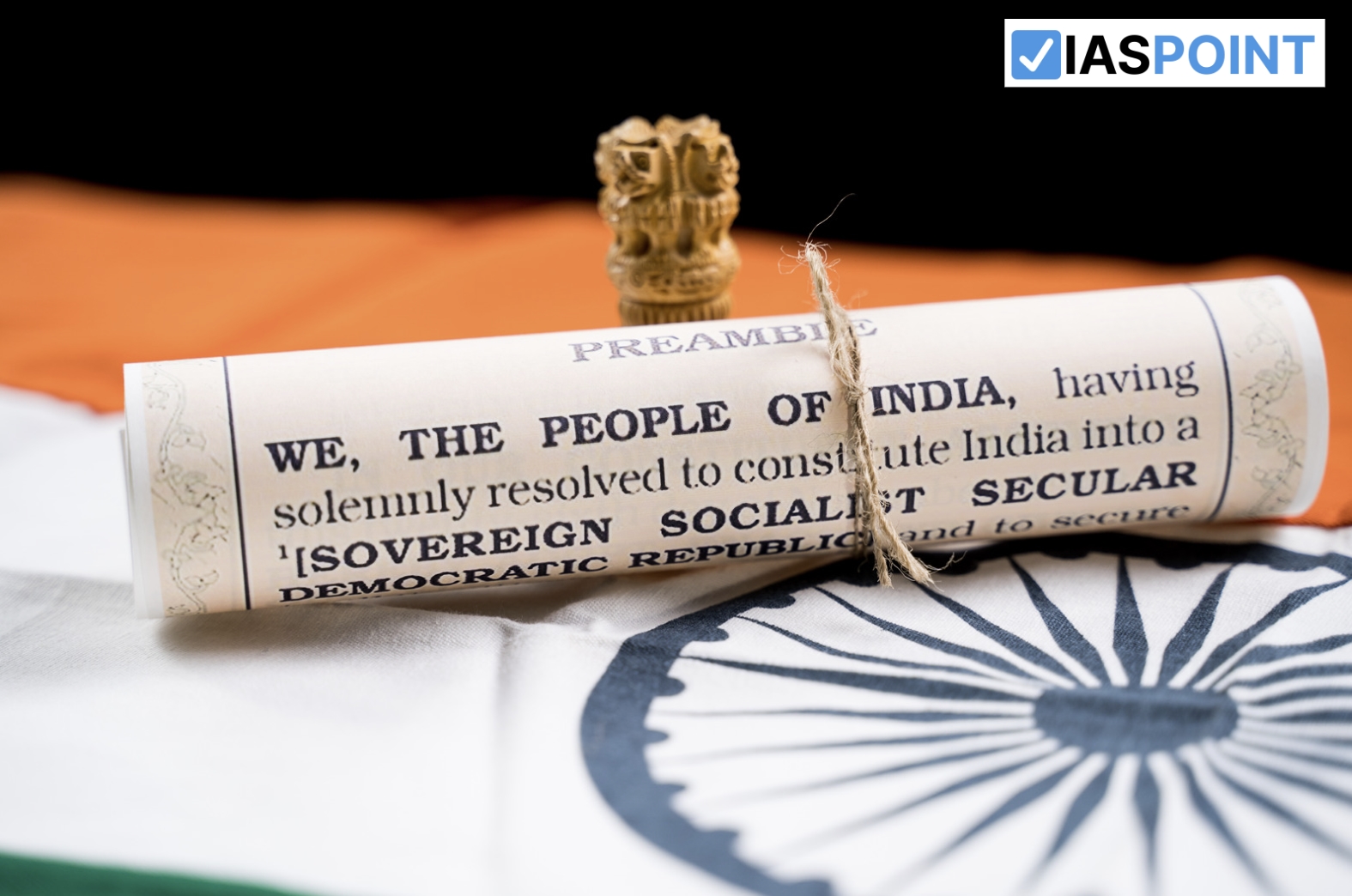

The President of India serves as the head of state and the first citizen of the nation. The role is largely ceremonial but holds constitutional powers. The President acts as a symbol of unity and integrity in India.
Constitutional Basis
The President’s powers and functions are detailed in the Constitution of India, primarily between Articles 52 and 78. The President’s oath mandates the preservation, protection, and defence of the Constitution (Article 60).
Executive Powers
- Head of the Union Executive: The President is the chief executive authority. All executive actions are taken in their name.
- Appointments: The President appoints Governors, Supreme Court and High Court judges, and other key officials such as the Auditor General and Election Commissioners.
- Prime Minister and Ministers: The President appoints the Prime Minister, who is usually the leader of the majority party in Lok Sabha. Other ministers are appointed on the Prime Minister’s advice.
- Majority Verification: The President can ask the Council of Ministers to prove their majority in Lok Sabha.
- Supreme Commander: As the head of state, the President is the supreme commander of the armed forces.
Legislative Powers
- Part of Parliament: The President is a component of the Parliament, which includes the two Houses and the President.
- Summoning and Proroguing: The President summons and prorogues Parliament sessions and can dissolve the Lok Sabha.
- Addressing Parliament: The President addresses both Houses at the commencement of the first session after general elections.
- Nominations: The President nominates 12 members to the Rajya Sabha to ensure diverse representation.
- Bill Assent: A bill passed by Parliament requires presidential assent to become law. The President can withhold assent or return a bill for reconsideration.
Ordinance Power
The President can promulgate ordinances when Parliament is not in session (Article 123). These ordinances have the same force as laws but must be approved by Parliament within a stipulated period.
Financial Powers
- Money Bills: No money bill can be introduced in Parliament without the President’s recommendation.
- Annual Financial Statement: The President presents the annual budget before Parliament.
- Expenditure Approval: All proposals for government expenditure require the President’s approval.
Emergency Powers
The Constitution empowers the President to proclaim three types of emergencies:
- National Emergency (Article 352): Declared during war or external aggression.
- State Emergency (Article 356): Imposed when there is a failure of constitutional machinery in a state.
- Financial Emergency (Article 360): Declared when the financial stability of India is threatened.
Judicial Powers
The President has the authority to grant pardons, reprieves, or remissions of punishment (Article 72). This power can be exercised in specific cases, including:
- Offences against Union law.
- Punishments by military courts.
- Death sentences.
Diplomatic Powers
The President represents India in international forums and affairs. All treaties and agreements are negotiated in the President’s name but are typically conducted by the Prime Minister and the Cabinet.
Military Powers
As the Supreme Commander of the Armed Forces, the President appoints the chiefs of the Army, Navy, and Air Force. The President can declare war or conclude peace, based on the advice of the Council of Ministers.
Election of the President
The President is elected by an electoral college. This includes elected members of both Houses of Parliament and the Legislative Assemblies of States and Union Territories. Nominated members do not participate in the election.
Qualifications for Presidency
To be eligible for the presidency, a candidate must:
- Be an Indian citizen.
- Be at least 35 years old.
- Meet the criteria to be elected as a member of Lok Sabha.
- Not hold any office of profit under the government.
Term and Impeachment
The President serves a term of five years but can be re-elected. The impeachment process can be initiated for violations of the Constitution. Both Houses of Parliament must participate in this process.


