Indian Polity & Constitution for UPSC Prelims

I. Foundational Concepts of Indian Polity

  1. Evolution of Constitutional Framework
  2. Making of the Constitution
  3. Philosophy of the Constitution
  4. Key Features of the Indian Constitution
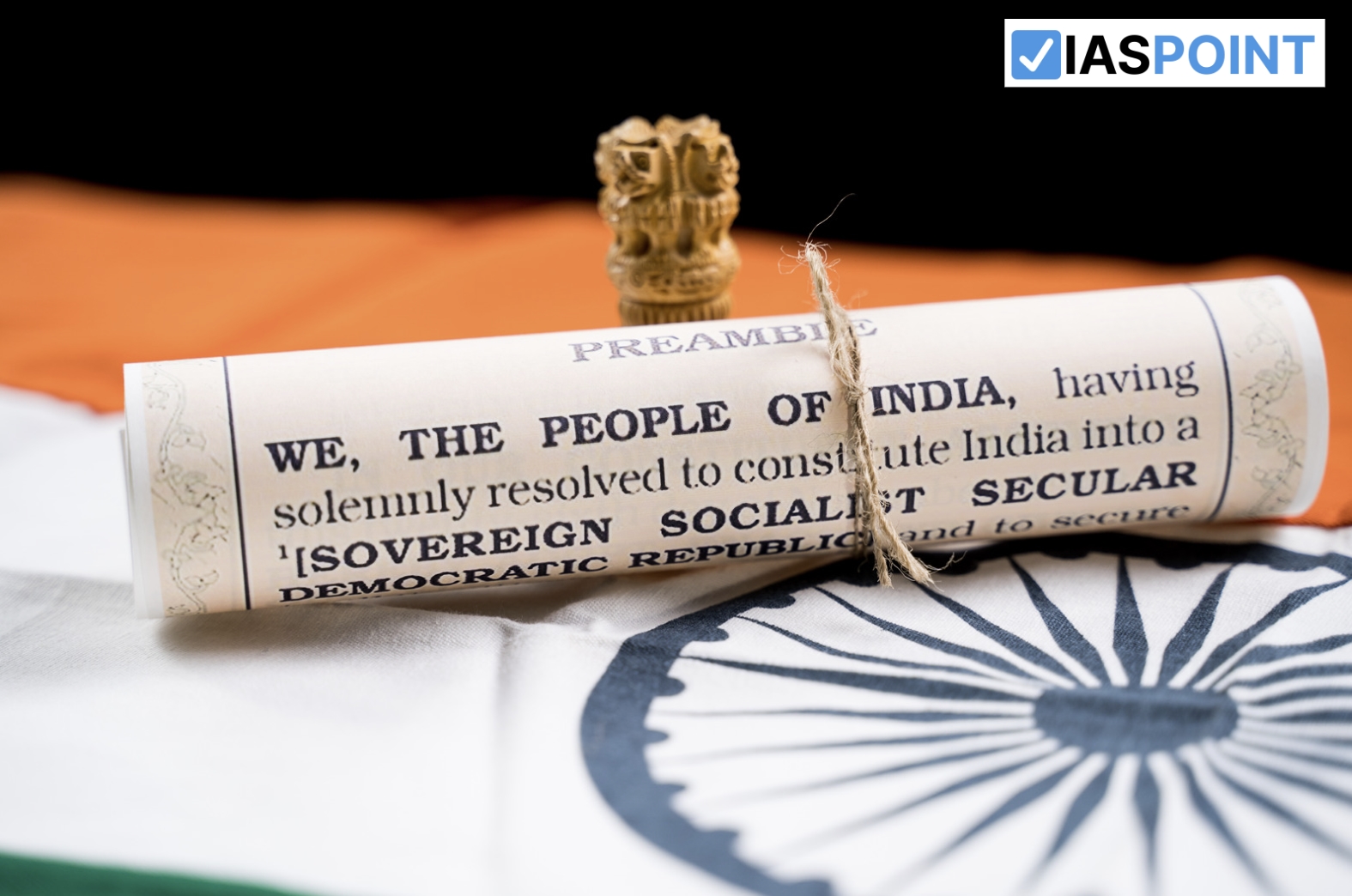
  5. Preamble: Vision and Ideals
  6. The Union and Its Territory
  7. Citizenship: Provisions and Policies

II. Fundamental Rights, Duties, and Principles

  1. Fundamental Rights: Scope and Limitations
  2. Directive Principles of State Policy
  3. Fundamental Duties of Citizens
  4. Doctrine of Basic Structure
  5. Constitutional Amendments

III. Central Government

  1. President: Powers and Functions
  2. Vice-President: Role and Responsibilities
  3. Prime Minister: Role and Powers
  4. Union Council of Ministers
  5. Cabinet Committees

IV. State Government

  1. Governor: Role and Powers
  2. Chief Minister: Executive Head of the State
  3. State Council of Ministers
  4. State Legislatures: Composition and Functions

V. Local Governance

  1. Panchayati Raj System
  2. Urban Local Bodies: Municipalities and Corporations

VI. Parliamentary System and Processes

  1. Indian Parliament: Structure and Powers
  2. Parliamentary Committees: Roles and Relevance
  3. Indian Parliamentary Group (IPG)

VII. Federalism and Inter-Governmental Relations

  1. India’s Quasi-Federal System
  2. Centre-State Relations
  3. Inter-State Relations
  4. Emergency Provisions

VIII. Judiciary

  1. Supreme Court: Powers and Jurisdiction
  2. High Courts: Role and Structure
  3. Subordinate Courts

IX. Judicial Mechanisms

  1. Judicial Review
  2. Judicial Activism
  3. Public Interest Litigation (PIL)

X. Alternative Dispute Resolution

  1. Tribunals: Scope and Authority
  2. Consumer Forums
  3. Lok Adalats and Alternative Mechanisms

XI. Union Territories and Special Provisions

  1. Administration of Union Territories
  2. Scheduled and Tribal Areas

XII. Constitutional Bodies

  1. Election Commission of India
  2. Union Public Service Commission (UPSC)
  3. State Public Service Commissions
  4. Finance Commission
  5. Goods and Services Tax (GST) Council
  6. Comptroller and Auditor General (CAG)
  7. Attorney General of India
  8. Advocate General of States

XIII. Special Commissions

  1. National Commission for Scheduled Castes
  2. National Commission for Scheduled Tribes
  3. National Commission for Backward Classes
  4. Special Officer for Linguistic Minorities

XIV. Non-Constitutional Bodies

  1. NITI Aayog: Policy Think Tank
  2. Central Vigilance Commission (CVC)
  3. Central Bureau of Investigation (CBI)
  4. Lokpal and Lokayuktas
  5. National Human Rights Commission (NHRC)
  6. State Human Rights Commissions
  7. National Commission for Women (NCW)
  8. National Commission for Protection of Child Rights
  9. National Commission on Minorities
  10. Central and State Information Commissions

XV. Political Dynamics and Elections

  1. Political Parties: National and Regional
  2. Coalition Governments: Evolution and Impact
  3. Electoral Process and Laws
  4. Electoral Reforms and Innovations
  5. Anti-Defection Law
  6. Voting Behavior and Trends
  7. EVMs and Election Technology

XVI. Societal Structures and Advocacy

  1. Pressure Groups and Their Influence
  2. Non-governmental Organizations (NGOs)

XVII. Cooperative Societies and Public Administration

  1. Cooperatives and Cooperative Movement

XVIII. Public Administration

  1. Public Services: Recruitment and Administration

XIX. Languages and Special Provisions

  1. Official Language and Regional Language Policies
  2. Special Provisions for Certain States and Classes

XX. Miscellaneous Topics

  1. National Integration and Unity
  2. Foreign Policy Principles and Challenges
  3. Landmark Judicial Verdicts
  4. Significant Doctrines in Indian Law
  5. Constitutions of Other Nations: A Comparative Study
  6. Rights and Liabilities of the Government

Equality of opportunity in matters of public employment

Equality of opportunity in matters of public employment

“There shall be equality of opportunity for all citizens in matters relating to employment or appointment to any office under the State (Article 16(1); No citizen shall, on grounds only of religion, race, caste, sex, descent, place of birth, residence or any of them, be ineligible for, or discriminated against in respect of, any employment or office under the State, (Article 16(2)); Nothing in this article shall prevent Parliament from making any law prescribing, in regard to a class or classes of employment or appointment to an office under the Government of, or any local or other authority within a State or Union territory, any requirement as to residence within that State or Union territory prior to such employment or appointment. (Article 16(3)); Nothing in this article shall prevent the State from making any provision for the reservation of appointments or posts in favour of any backward class of citizens which, in the opinion of the State, is not adequately represented in the services under the State. (Article 16(4)); Nothing in this article shall prevent the State from making any provision for reservation in matters of promotion to any class or classes of posts in the services under the State in favour of the Scheduled Castes and the Scheduled Tribes which, in the opinion of the State, are not adequately represented in the service under the State. (Article 16 (4A)) added by 77th amendment, 1995; Nothing in this article shall prevent the State from considering any unfilled vacancies of a year which are reserved for being filled up in that year in accordance with any provision for reservation made under clause (4) or clause (4A) as a separate class of vacancies to be filled up in any succeeding year or year and such class of vacancies shall not be considered together with the vacancies of the year in which they are being filled up for determining the ceiling of fifty percent reservation on total number of vacancies of that year. Added by 81st amendment, 2000; Nothing in this article shall affect the operation of any law which provides that the incumbent of an office in connection with the affairs of any religious or denominational institution or any member of the governing body thereof shall be person professing a particular religion or belonging to a particular denomination (Article 16(5)).

Article 16 ensures equality of opportunity for all the citizens and not the persons in matters of employment (clause 1) and says, in clause 2, that the citizens would not be discriminated on grounds such as stated in Article 15. Clause (3), (4) (4A) and (5) of Article 16 make provisions for exceptions (four in members) to the general rule of equality of opportunity, clause 4A was added by 77 amendment (1995) and clause 4B by 81st amendment (2000). “The historic case with regard to clause 4 of Article is well-known. It is the Indra Sahwney v. Union of India’1993, usually described as the Mandal case. “The Supreme Court, in its decision, summarised various aspects of reservations: (i) that the backward classes reservation world not exceed 50 percent; (ii) that such classes world be identified on the basis of caste and not only on economic basis; (iii) that the creamy layer would be excluded from backward classes; (iv) that the backward classes would not include those who are socially and educationally backward; (v) that reservation would not be permitted in promotion. In accordance with 77th amendment made in 1995, it was provided that reservation in promotion would continue if the government so wants. “The 77th amendment (1995) forbids and the 81st amendment (2000) and 85th amendment (2001) permit 50% filling up of the vacancies respectively. However, the Government would have, for purposes of reservation in promotion, to show, in each case, the existence of compelling reasons’backwardness, inadequacy and overall administrative efficiency before making provision for reservation.

Leave a Reply

Your email address will not be published. Required fields are marked *

Archives