
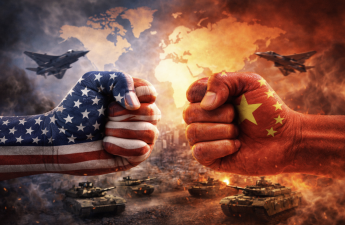
The ongoing Iran war and shifts in US-China relations are reshaping global geopolitics. While global focus remains on the Middle East conflict, the evolving US-China rivalry holds critical implications for India’s strategic landscape. The rivalry is no longer just about leadership but driven by deep structural shifts in power, economy, and technology.
Changing US-China Dynamics
Washington’s approach to China has shifted from ideological rivalry to economic competition. The US now prioritises the Western Hemisphere over Asia and seeks stability with China to focus on domestic priorities and alliances. China aims for technological self-reliance and economic stability amid global challenges. This results in less confrontational but more competitive relations, with China gaining relative advantage.
Energy and Technological Shifts
China’s preparedness for energy shocks is notable. It has diversified energy sources, built the largest strategic petroleum reserve, and leads in renewable energy technologies such as solar, wind, electric vehicles, and batteries. The Iran war accelerates the global move from fossil fuels to renewables, benefiting China’s green-tech dominance. The US’s continued reliance on fossil fuels weakens its energy leverage.
Strategic Implications for India
India faces shrinking strategic space as US-China ties become more transactional. The US is less inclined to fully back India against China. China sees limited incentive to improve ties due to India-US tensions. India must recalibrate its external balancing strategy by deepening selective US cooperation while engaging China cautiously. Strengthening border infrastructure, cyber resilience, and asymmetric deterrence is vital. Economic resilience requires reducing dependencies on both China and the US, especially in AI and critical technologies. India should avoid middle-power illusions and focus on building its own capabilities. Revitalising the Neighbourhood First and Act East policies is essential for regional stability.
India’s Strategic Priorities
India must prepare for long-term challenges by investing in indigenous military and technological strength. Anticipating crises and avoiding over-reliance on external powers will safeguard its interests. Balanced diplomacy with China and the US, combined with domestic capability building, will shape India’s future security and growth trajectory.
Topics for Prelims:
US-China Relations
- The US views China as an economic competitor with strategic rivalry.
- Western Hemisphere has become the US strategic focus.
- China pursues technological self-reliance and economic stability.
- The US-China relationship is competitive but less confrontational.
- China’s global influence is increasing relative to the US.
Energy Transition
- China has the world’s largest strategic petroleum reserve.
- China leads in renewable energy technologies and electrification.
- The Iran war accelerates global shift from fossil fuels to renewables.
- The US remains reliant on fossil fuels, weakening its energy leverage.
- China benefits from the rise of electrostates over petrostates.
India’s Strategic Challenges
- India’s strategic space is squeezed by US-China dynamics.
- India must recalibrate expectations from external balancing.
- Selective defence cooperation with the US is crucial.
- India should pursue cautious engagement with China.
- Building indigenous military, economic, and technological capabilities is essential.
Questions for Mains:
- Critically analyse the impact of the US-China rivalry on India’s foreign policy and strategic autonomy. [GS-II-International Relations]
- Point out the significance of energy transition in global geopolitics and estimate its implications for India’s energy security. [GS-III-Economic Development]
- With suitable examples, discuss the challenges and opportunities for India in balancing relations with the US and China in the current geopolitical scenario. [GS-II-Constitution of India & Polity]
- Underlie the need for India to develop indigenous technological capabilities in the context of global AI competition and strategic dependencies. [GS-III-Science & Technology]
Answer Hints:
1. Critically analyse the impact of the US-China rivalry on India’s foreign policy and strategic autonomy. [GS-II-International Relations]
- US-China rivalry shifting from ideological to economic competition; transactional nature limits US support for India.
- India’s strategic space shrinking as US prioritizes Western Hemisphere and reduces focus on Indo-Pacific.
- China’s long-term ambitions and capability growth constrain India’s regional influence.
- India’s external balancing options limited; US-China deals may exclude India’s interests.
- Need for calibrated engagement with China – firm on border peace, cautious economic ties.
- Emphasis on indigenous capability building to maintain strategic autonomy amid great power pressures.
2. Point out the significance of energy transition in global geopolitics and estimate its implications for India’s energy security. [GS-III-Economic Development]
- Iran war accelerates shift from fossil fuels (petrostates) to renewables (electrostates).
- China’s dominance in renewable tech, largest strategic petroleum reserve, and electrification programs.
- US reliance on fossil fuels weakens its global energy leverage.
- Energy transition reshapes global alliances and economic dependencies.
- India must diversify energy sources, invest in renewables, and reduce fossil fuel dependence.
- Building green-tech ecosystem critical for India’s long-term energy security and strategic autonomy.
3. With suitable examples, discuss the challenges and opportunities for India in balancing relations with the US and China in the current geopolitical scenario. [GS-II-Constitution of India & Polity]
- Challenges – US’s transactional approach limits strategic support; China’s assertiveness on LAC and limited incentives for concessions.
- US-Pakistan thaw complicates India’s security environment; China-Pakistan nexus remains strong.
- Opportunities – Selective defence cooperation with US (defence modernisation, maritime domain awareness).
- Engaging China with guarded realism—border issues firmly addressed, economic engagement cautiously pursued.
- Building indigenous technological and military capabilities reduces over-dependence on either power.
- Diplomatic balancing avoids binary alignment; focus on long-term resilience and strategic autonomy.
4. Underlie the need for India to develop indigenous technological capabilities in the context of global AI competition and strategic dependencies. [GS-III-Science & Technology]
- Global AI landscape moving toward bipolarity—US and China dominate foundational models.
- Exclusive reliance on US AI tech risks strategic vulnerabilities and loss of autonomy.
- China’s technological self-reliance drive as a model and competitor.
- India’s dual de-risking approach – reduce dependencies on both US and China in critical tech.
- Investing in sovereign AI stack and green energy tech essential for security and economic growth.
- Indigenous capability building strengthens cyber resilience, defence tech, and innovation ecosystem.