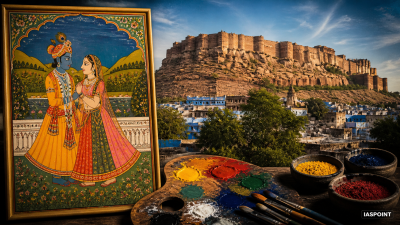
The Marwar School of Painting represents the artistic traditions of the erstwhile Jodhpur State and its surrounding principalities like Pali and Nagaur. It is characterized by its bold...
The Mewar School of Painting is the most significant and oldest sub-school of the Rajasthani School of Art. Emerging from the ancient principality of Medapata, it is considered...
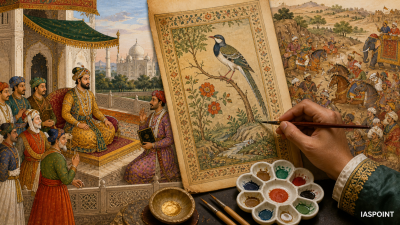
The Mughal School of Painting (16th–19th century) represents a sophisticated synthesis of indigenous Indian traditions, Safavid Persian techniques, and European naturalism. Unlike the earlier Pala or Western Indian...
The Deccan Schools of Painting flourished in the plateau region of Southern India between the 16th and 19th centuries. Developing independently from the Mughal School, these traditions were...
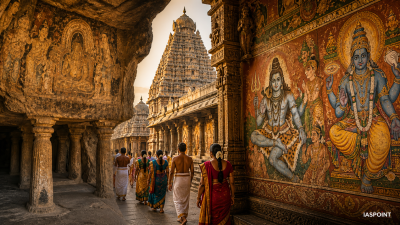
The transition of Indian mural painting from rock-cut caves to the walls of structural temples reached its aesthetic and technical zenith under the Chola and Vijayanagara Empires. While...
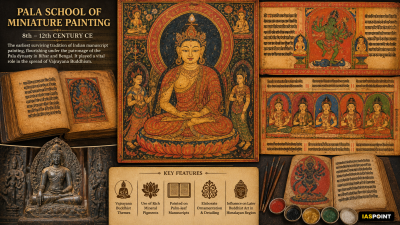
The Pala School of Miniature Painting marks the beginning of the "Early Medieval" phase of Indian art, flourishing between the 8th and 12th centuries CE. Centered in the...
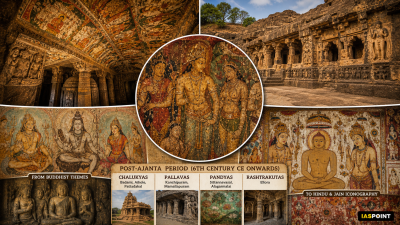
The period following the decline of the Vakataka dynasty and the completion of the Ajanta murals (6th century CE onwards) did not mark the end of Indian mural...
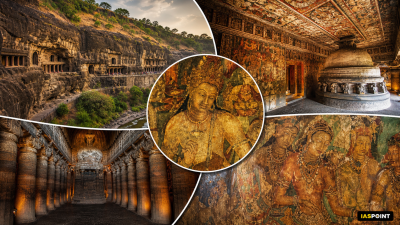
The Ajanta Caves, located in the Aurangabad (Sambhajinagar) district of Maharashtra, represent the pinnacle of ancient Indian mural painting. Carved into the basaltic cliffs of the Sahyadri ranges...
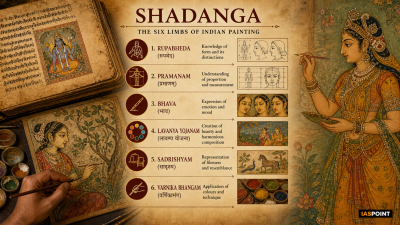
The Shadanga, or the "Six Limbs of Indian Painting," constitutes the classical canon of Indian art. These principles were first codified in the Vishnudharmottara Purana (specifically the Chitra...
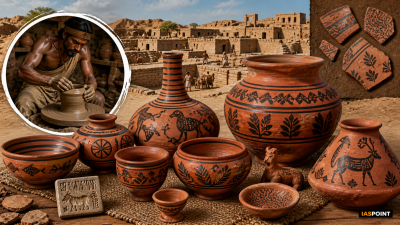
The pottery of the Indus Valley Civilization (IVC), dating primarily from the Mature Harappan phase (2600 BCE – 1900 BCE), represents the zenith of proto-historic ceramic technology and...