
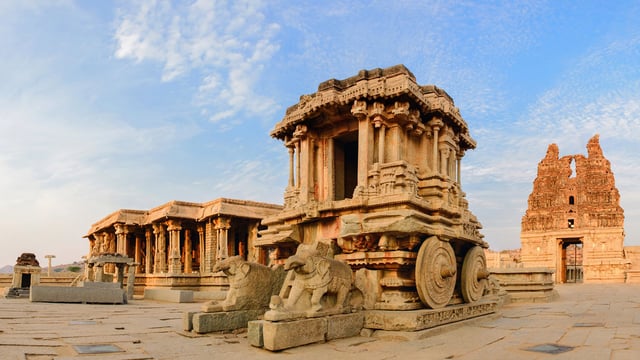
The Satavahana administrative system, which functioned from the 1st century BCE to the 3rd century CE, represented a structural blend of Mauryan centralization and decentralized feudal innovations. Operating as a political bridge between the Indo-Gangetic plains and the deep peninsula, the Satavahanas adapted the bureaucratic templates of the Arthashastra to the unique tribal and agrarian conditions of the Deccan. To legitimize their imperial sovereignty over a diverse population, the rulers claimed divine sanction by comparing themselves to cosmic deities like Rama, Kesava, Arjuna, and Bhima, and adopting exalted titles such as Raja, Maharaja, and Dakshinapathapati.
Convergence of Deities and Royal Ideology
Satavahana statecraft discarded the Mauryan practice of paternalistic kingship in favor of a ritualistic, divine model. The kings performed grand Vedic sacrifices like the Asvamedha (horse sacrifice) and Rajasuya (conquest sacrifice) to formalize their political authority. Royal proclamations written in Prakrit often linked the physical and moral prowess of the king directly to the maintenance of the cosmic and social order (Dharma).
Central Administration and Secretarial Machinery
The King and the Rajakula
The king sat at the apex of the administrative hierarchy, wielding supreme executive, judicial, and military authority. The succession was strictly patrilineal, though the frequent use of metronymics (such as Gautamiputra or Vasishthiputra) emphasized the high socio-political standing and administrative influence of the Queen Mother (Rajamata) within the inner palace council (Rajakula).
The Central Bureaucracy and Specialized Ministries
The king was assisted by a structured council of ministers (Mantra-Parishad) and an extensive network of specialized secretarial officers who managed revenue collection, intelligence operations, and state documentation.
- Amatyas: A specialized cadre of high-ranking civil servants who served as executive ministers, provincial governors, and judicial advisors.
- Raja-Amatyas: Elite ministers who lived at court and formed the immediate advisory council of the sovereign.
- Mahamatras: Executive officers tasked with implementing special royal decrees, directly adapted from the Mauryan administrative framework.
- Mahavenika: The chief state archivist responsible for logging royal titles, decrees, and land records.
- Heranika: The imperial treasurer who managed bullion deposits, verified the metal quality of state coinage, and oversaw the central treasury.
- Lekhaka: The state scribe who drafted royal edicts (Sasanas) in Brahmi script and Prakrit language.
- Nibandhakaras: Officers in charge of registering public documents and maintaining land surveys.
Provincial and Local Governance
Territorial Divisions into Aharas
For administrative convenience, the Satavahana Empire was divided into distinct geographic zones. The primary provincial unit was the Ahara, which corresponds to a modern district. Each Ahara was named after its headquarters or nuclear town (such as Govardhana-ahara, Mamala-ahara, and Sopara-ahara) and was placed under the direct administrative charge of an Amatya.
Rural Administration and the Grama
The lowest tier of the administrative structure was the village (Grama), which functioned as a self-contained fiscal and economic unit.
- Gramika: The village headman, appointed by the central crown or selected from the local landed elite, who was responsible for collecting agricultural revenues and maintaining law and order.
- Grama-Sabha: A traditional village assembly composed of local elders (Mahattaras) who assisted the Gramika in settling minor land disputes and managing village common lands.
Military Organization and the Feudalization of Border Zones
The Standing Army Infrastructure
The Satavahanas maintained a large central standing army organized according to the traditional four-fold division (Chaturanga), consisting of infantry, cavalry, chariots, and elephants. The empire’s naval arm was highly developed, protecting maritime trade lines along the Coromandel and Konkan coasts.
The Gaulmika and Rural Policing
In rural areas and volatile frontier zones, internal security was maintained by a specialized military officer known as the Gaulmika. The Gaulmika commanded a small, self-contained mobile military detachment called a Gulma, which consisted of nine chariots, nine elephants, twenty-five horses, and forty-five foot soldiers. These units operated as local police stations and tax-collection centers, helping suppress banditry along trade routes.
Feudal Hierarchy and Autonomous Chieftaincies
The outer provinces were governed by hereditary, autonomous vassals who held high military titles. These chieftains acted as a buffer against foreign invasions by the Sakas and Western Kshatrapas, enjoying internal autonomy while paying tribute and providing troops to the Satavahana king.
- Maharathis: High-ranking hereditary lords, concentrated primarily in the Western Deccan, who enjoyed matrimonial ties with the royal family and held the right to issue their own localized coins.
- Mahabhojas: Influential nobles located mainly in the Konkan region who managed coastal defense and maritime trade access.
- Mahasenapati: Originally a title for the supreme commander of the royal forces, it later evolved into a post for provincial governors in vulnerable border regions, combining civil administration with martial law.
Fiscal Policy, Revenue Systems, and Institutional Land Grants
Fiscal Extraction and Agricultural Taxation
The financial stability of the Satavahana state depended on a well-organized system of taxes levied on agriculture, trade, and crafts.
- Bhaga: The traditional king’s share of agricultural produce, typically fixed at one-sixth of the total harvest.
- Kara: A periodic tax levied on orchards and agricultural holdings.
- Deya: A generic term for mandatory cash assessments paid directly to the state treasury.
- Sulka: Customs duties and transit tolls collected at mountain passes (Nakas) and ports.
The Genesis of the Agrahara System
The Satavahanas introduced the practice of making tax-free land grants (Agraharas) to Brahmanas and Buddhist monastic orders (Sangha). The earliest epigraphic evidence of a land grant is found in the Naneghat inscription of Queen Nayanika, where land and cattle were given to priests during Vedic sacrifices.
Administrative and Fiscal Immunities of Land Grants
| Technical Epigraphic Term | Legal and Administrative Definition | Systemic Impact on State Power |
| A-pavesiya | Exempt from the entry of royal police, soldiers, and state officials. | Created autonomous administrative enclaves outside crown control. |
| An-amasya | Free from any direct interference or administrative meddling by royal bureaucrats. | Weakened the centralized authority of the central Amatyas. |
| A-karadayi | Stripped of all obligations to pay land revenue or agricultural taxes to the crown. | Transferred the fiscal surplus directly from the state to religious institutions. |
| A-lonagulacholana | Exempt from the state monopoly on salt extraction and digging for minerals. | Granted local resource exploitation rights to the donee. |
Judicial Administration and Guild Autonomy
The Royal Court and Provincial Tribunals
The king was the highest judicial authority (Dharmadhikari), hearing ultimate appeals at the imperial capital of Pratishthana. In the provinces, the Amatyas held judicial tribunals to enforce customary law (Achara) and royal decrees. Civil and criminal disputes were settled according to traditional Brahmanical law codes (Dharmasastras), local usages, and regional customs.
The Legal Autonomy of Shrenis
A unique feature of Satavahana judicial governance was the legal autonomy granted to Shrenis (merchant and artisan guilds). The state recognized Sreni-dharma (the internal bylaws and regulations of the guilds) as legally binding. The central government did not interfere in the internal disputes of weavers, potters, or oil-pressers; instead, guild courts headed by a chief called the Jyettha or Sresthi held exclusive jurisdiction over their members.
Summary Matrix of Satavahana Administrative Terms
| Administrative Official / Concept | Primary Functional Mandate | Core Operational Jurisdiction |
| Mantra-Parishad | Council of Ministers providing strategic and policy inputs to the King. | Imperial Center / Policy Formulation |
| Mahavenika | Imperial Chief Archivist and registrar of land titles. | Central Secretariat |
| Gaulmika | Military garrison commander tasked with rural policing and revenue defense. | Rural Districts and Frontier Zones |
| Mahasenapati | Supreme military commander turned provincial feudal governor. | Vulnerable Border Provinces |
| Heranika | Officer of the Mint and treasurer managing currency composition. | State Treasury and Mints |
| Akshayanivi | A perpetual financial endowment deposited with autonomous guilds. | Public/Private Banking System |
Administrative Features and Trivia for Prelims
The Naneghat Registration Protocol
Every land grant issued by the Satavahana kings had to go through a strict registration process before it became valid. The decree was first drafted by the Lekhaka (scribe), approved by the king, verified by the Mahabhujas or Maharathis of the region, and then engraved on stone or copper plates by metal artisans. A duplicate copy was kept in the central archive managed by the Mahavenika to prevent tax fraud.
Evolution of the Mahasenapati Title
The evolution of the title Mahasenapati under the later Satavahanas marks a clear shift toward medieval feudalism. Initially, the Mahasenapati was a single military commander who stayed at court with the king. However, as the empire faced constant threats from the Sakas, the later kings began appointing multiple Mahasenapatis as governors over whole provinces. These governors could command armies, collect taxes, and make land grants without waiting for royal permission, which eventually contributed to the fragmentation of the empire into smaller states like the Ikshvakus and Abhiras.
Last Modified: June 13, 2026