
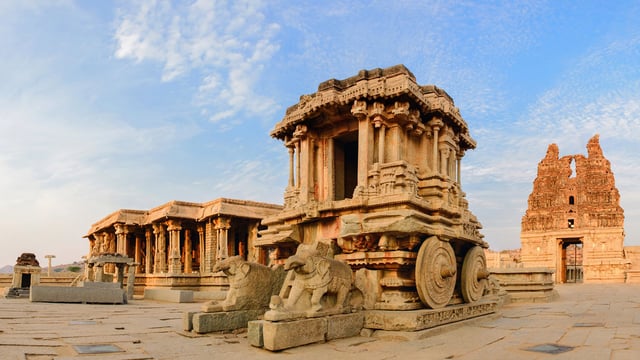
Karikala Chola, also known as Karikala Peruvalathan, was the most celebrated monarch of the Early Chola dynasty during the Sangam Age, ruling approximately in the late 1st century BCE to the 2nd century CE. He belonged to the Solar Lineage (Suryavamsha). The name ‘Karikala’ translates literally to “the man with the charred leg,” a reference to a palace fire orchestrated by his political rivals during his youth in which he sustained severe burn injuries while escaping captivity. Alternative literary interpretations of his name mean “the death to Kali” or “the destroyer of enemy elephants.” He was the son of the Chola king Ilamcetcenni, a ruler noted for his advanced cavalry and chariot warfare.
Primary Historical Sources
The reconstruction of Karikala’s reign relies on the classical Tamil anthologies of the Sangam literature. The Pattinappalai, composed by the poet Kadiyalur Uruttirangannanar, serves as the primary panegyric text detailing Karikala’s military triumphs, administrative acumen, and the commercial opulence of his port capital. The Porunarartruppadai by Mudattamakkanniyar further provides biographical details regarding his early struggles, his legitimate claim to the throne of Uraiyur, and his patronage of arts. Supplementary references to his pan-Indian expeditions and engineering works are found in the post-Sangam epics Silappadikaram and Manimekalai.
Military Expeditions and Geopolitical Hegemony
The Battle of Venni
The foundational event of Karikala’s military career was the Battle of Venni, fought near modern-day Thanjavur. A powerful coalition led by the Chera monarch Peruconceralathan, the Pandya ruler, and eleven independent Velir (velir chieftains) marched against the young Chola king to check his rising influence. Karikala achieved a decisive victory over the combined forces. The Chera king Peruconceralathan sustained a wound on his back during the battle, an injury considered deeply dishonorable in Sangam martial ethics, which led him to commit ritual suicide (Vadakiruttal) by starving himself to death facing North. This victory established undisputed Chola supremacy over the southern macro-region.
The Battle of Vagaipparandalai
Following the triumph at Venni, Karikala defeated a second confederacy of nine minor Velir chieftains at the Battle of Vagaipparandalai. This campaign successfully broken the internal resistance within the Tamilakam (the Tamil realm), securing the Chola kingdom’s northern frontiers and bringing the entire Kaveri basin under direct imperial administration.
Trans-Regional and Maritime Expeditions
Sangam traditions and later inscriptions credit Karikala with an expedition to Ceylon (modern-day Sri Lanka). He defeated the contemporary Sinhalese ruler, took thousands of war captives, and utilized them as manual labor for his domestic infrastructure projects. Later literary traditions like the Silappadikaram also attribute a northern expedition to Karikala, claiming he marched up to the Himalayas, carved the Chola tiger emblem on the mountain peaks, and received tributes from the kings of Vajra, Magadha, and Avanti.
Economic Transformations and Infrastructure
The Construction of Kallanai (Grand Anicut)
Karikala Chola recognized that the seasonal flooding of the Kaveri River caused large-scale destruction while leaving the delta dry during summers. Utilizing the labor of the war captives brought from the Ceylon expedition, he constructed the Kallanai, also known as the Grand Anicut. Built around the 1st or 2nd century CE, this structure is one of the oldest water-regulatory structures in the world still in active use.
Engineering Specifications of the Kallanai
The dam was constructed using unhewn stones embedded across the stream of the Kaveri. It measures approximately 329 meters in length, 20 meters in width, and 5.4 meters in height. The strategic objective was to divert the excess floodwaters of the Kaveri into the Kollidam (Coleroon) River via regulatory channels, thereby creating an intricate network of irrigation canals that transformed the arid tracts of the Thanjavur delta into a fertile agricultural zone.
Agrarian Expansion and Urbanization
To support the growing population and increase state revenue, Karikala undertook massive reclamation projects. He cleared vast forest tracts in the interior regions, leveled the land for reclamation, and settled agrarian communities by digging tanks and artificial reservoirs. This intensive push toward wet-paddy cultivation earned the Chola country the literary epithet of Chonadu Chotrudaiwathu (The Chola land is rich in rice).
| Strategic Dimension | Infrastructure/Action Taken | Socio-Economic Outcome |
| Water Management | Construction of the Kallanai (Grand Anicut) across the Kaveri River | Prevented delta flooding, stabilized agricultural water supply, and expanded double-cropping. |
| Land Reclamation | Clearing of interior forests and reclamation of waste lands | Settled new farming colonies, expanded state revenue, and neutralized forest-dwelling raiders. |
| Urban Planning | Expansion of the dual capitals of Uraiyur and Puhar (Kaveripattinam) | Bifurcated political administration (inland) from international maritime commerce (coastal). |
Port Administration and Global Maritime Trade
The Eminence of Puhar (Kaveripattinam)
Karikala fortified and expanded the coastal port-city of Puhar, also known as Kaveripattinam, located at the confluence of the Kaveri River and the Bay of Bengal. Puhar evolved into a cosmopolitan emporium during his reign. The Pattinappalai provides a detailed structural breakdown of the port, noting that it was divided into two distinct sectors: the Maruvurpakkam (the bustling coastal market district where foreign merchants lived) and the Pattinappakkam (the residential and royal quarter).
Custom House Administration and Revenue System
The Chola state under Karikala maintained a highly bureaucratic trade administration at Puhar. Large custom houses (Pandaravadam) were established near the docks to inspect imported and exported goods. State officials collected tolls and custom duties (Izhavu), and all cleared goods were stamped with the royal Chola insignia—the Puli (Tiger)—before they were allowed out of the docks. This custom duty formed a primary source of cash revenue for the royal treasury, supplementing the traditional land tax (Kadamai).
Trade Matrix of Karikala’s Realm
- Imports: High-bred horses arriving by sea from Arabia and Central Asia; black pepper from the Western Ghats transported via inland rivers; gold, silver, and lead coins from the Roman Empire; coral from the Mediterranean Sea; pottery and glassware from the Hellenistic world.
- Exports: Fine-translucent muslins and cotton textiles manufactured at the inland capital Uraiyur; high-grade pearls from the Pandyan Gulf of Mannar; tusks of war elephants; tortoise shells; blue sapphires; and aromatic woods like sandalwood and eaglewood.
Governance, Religion, and Cultural Patronage
Administrative Mechanism
Karikala functioned as a benevolent autocrat, balancing military power with structural governance. He was assisted by two administrative councils: the Aimberungulu (The Five Great Bodies, consisting of ministers, priests, army commanders, envoys, and spies) and the Enperayam (The Eight Great Committees, dealing with finance, city security, and public works). His royal court, the Naalilvai, operated as the highest court of justice. Trivia from the Palamoli Nanuru states that a young Karikala once disguised himself as an old man by wearing a grey wig to deliver an intricate legal judgment, proving his judicial maturity to skeptical elders.
Religious Affiliation and State Policy
Society during Karikala’s reign was pluralistic and integrated local traditions with Brahmanical elements. Karikala was a follower of the Vedic religion; the Sangam texts record that he performed elaborate Vedic sacrifices (Yagnas), patronized the priestly class, and encouraged the growth of scriptural learning. Concurrently, native cults centered around Murugan (Seyon) and the installation of Viragals (Hero Stones) for dead soldiers remained prevalent, while heterodox sects like Buddhism and Jainism coexisted peacefully within the urban centers of Puhar.
Historical Decline and Succession Interregnum
The death of Karikala Chola led to an immediate political decline of the Early Chola state. The absence of a strong centralized successor caused the dynasty to split into two rival cadet branches: one ruling from the traditional inland capital of Uraiyur and the other operating from the maritime capital of Puhar. This internal dissension weakened the geopolitical posture of the Cholas, allowing neighboring Velir chieftains, the Cheras, and the Pandyas to reclaim their lost territories. By the late 3rd century CE, the entire region was overrun by the Kalabhra invasion, forcing the Cholas into political obscurity as minor local chieftains until their imperial resurgence under Vijayalaya Chola in the 9th century CE.
Last Modified: June 15, 2026