
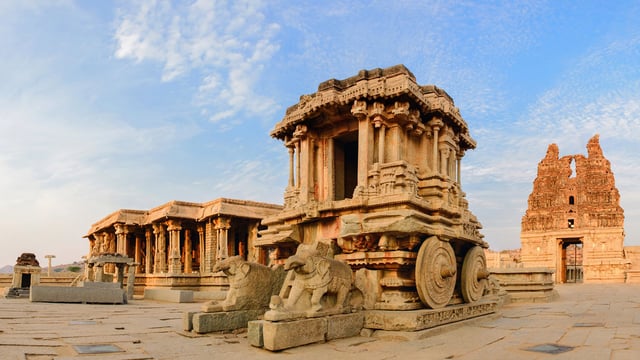
The Gupta period (c. 319–550 CE) marked the formal transition of Vaishnavism from a localized, syncretic cult into a highly organized, state-sponsored imperial religion. The Gupta monarchs utilized Vaishnavite theology as a primary political tool to legitimate their sovereign authority, establish a vast empire, and consolidate the Brahmanical socio-religious order across Classical India.
Royal Titles and Imperial Epigraphy
Gupta emperors systematically adopted sectarian titles that elevated their status from temporal rulers to divine agents of Vishnu on Earth.
- Paramabhagavata: Rulers like Samudragupta, Chandragupta II, Kumaragupta I, and Skandagupta explicitly assumed the title Paramabhagavata (devout worshipper of Vishnu) in their official land grants and copper plate inscriptions.
- Chakravartin Concept: The political ideal of a Chakravartin (universal ruler) was directly tied to the cosmic role of Vishnu as the sustainer and preserver of the universe. The king’s earthly duty of maintaining Dharma mirrored Vishnu’s celestial governance.
- The Allahabad Prashasti: Composed by Harishena, this inscription describes Samudragupta as a mortal dwelling on Earth only for the performance of right actions, equating his multi-directional military conquests with divine ordinances.
Structural Integration of Sects (Bhagavatism to Vaishnavism)
During the Gupta era, Bhagavatism merged with Vedic Brahmanism and various hero-cults to form classical Vaishnavism. This synthesis brought together three historically distinct theological streams:
- The Vedic Vishnu: The solar deity of the Rigveda, associated with cosmic steps and structural stability.
- Narayana: The non-Vedic, cosmic deity of the Pancharatra tradition who rests upon the primordial serpent Shesha.
- Vasudeva-Krishna: The pastoral and martial hero-deity of the Vrishni clan from Mathura, whose teachings were compiled in the Bhagavad Gita.
The Avataravada Doctrine and Socio-Political Integration
The codification of the Avataravada (doctrine of incarnations) during the Gupta era provided a flexible theological framework that allowed the state to assimilate diverse indigenous tribes, local cults, and foreign elements into the Brahmanical social hierarchy.
The Dashavatara Framework
While later texts fixed the number of incarnations at ten, Gupta-era Puranas, such as the early layers of the Vishnu Purana and the Matsya Purana, emphasized specific avatars that resonated with contemporary political challenges.
The Varaha Avatar as a Political Symbol
The third incarnation, Varaha (the cosmic boar), became the preeminent visual and political symbol of the Gupta state’s military resilience.
- The Udayagiri Cave Sculpture: Commissioned by Virasena, a minister of Chandragupta II, the monumental rock-cut relief at Udayagiri (Madhya Pradesh) depicts Varaha rescuing the Earth Goddess (Bhudevi) from the chaotic primordial waters.
- Political Metaphor: This narrative served as a direct metaphor for Chandragupta II’s military triumphs over the Western Kshatrapas (Shakas), symbolizing the liberation of northern and western India from foreign domination.
- Eran Boar Inscription: The colossal monolithic Varaha at Eran, dating to the late Gupta period, carries an inscription detailing the transition of regional geopolitical power and reinforces the role of the deity as the protector of territorial sovereignty.
Synthesis of Other Incarnations
- Krishna: Celebrated in Kalidasa’s Meghaduta and Raghuvamsa as the ultimate embodiment of statesmanship and divine strategy.
- Narasimha: The man-lion incarnation gained widespread popularity among regional feudatories as a symbol of royal power overcoming rebellious forces.
Iconographic Manifestations and Structural Architecture
The institutionalization of Vaishnavism under the Guptas drove the transition from perishable timber-and-clay shrines to permanent, structural stone architecture, establishing classical Indian temple design.
Iconographic Typologies of Vishnu
Gupta sculptors codified the canonical forms of Vishnu, which are documented in contemporary manuals like the Brihat Samhita of Varahamihira.
| Iconographic Form | Spatial and Visual Representation | Prominent Historical Site Example |
| Sheshashayi Vishnu | Vishnu reclining on the coils of the multi-headed serpent Ananta (Shesha) in the cosmic ocean, with Goddess Lakshmi massaging his feet and Brahma emerging from his lotus-navel. | Relief panel on the south wall of the Dashavatara Temple at Deogarh (Uttar Pradesh). |
| Gajendra Moksha | Vishnu flying on his mount, Garuda, to rescue the king of elephants (Gajendra) from the grip of a cosmic crocodile. | Side relief panel at the structural stone Deogarh Temple. |
| Nara-Narayana | The dual incarnation depicting Vishnu and the sage Nara performing ascetic penance in the Himalayas, symbolizing the union of human effort and divine grace. | Sculptural panel at Deogarh, highlighting classical Gupta naturalism and serene facial expressions. |
| Chaturbhuja Vishnu | Standing four-armed Vishnu holding classical attributes: the discus (Sudarshana Chakra), mace (Kaumodaki Gada), conch (Panchajanya Shankha), and lotus (Padma). | Mathura Museum collections and central sanctum fragments across Central India. |
Structural Temple Development
- Dashavatara Temple, Deogarh: Built in the early 6th century CE, this is one of the earliest surviving structural stone temples in Northern India. It introduced the Panchayatana layout (a central shrine surrounded by four smaller subsidiary shrines) and featured an early form of a curvilinear tower (Shikhara).
- Bhitargaon Brick Temple: Located in Kanpur, Uttar Pradesh, this structure demonstrates the use of baked bricks and terracotta panels to depict Vaishnavite lore, including Vishnu slaying the demons Madhu and Kaitabha.
- Tigawa Vishnu Temple: A flat-roofed, square stone cella (Garbhagriha) with an open pillared porch (Mandapa), representing the foundational stage of Gupta temple architecture.
Numismatic Evidence and Imperial Symbols
Gupta gold and silver coinage provides direct evidence of the deep integration of Vaishnavite symbols into the state’s fiscal and symbolic economies.
Garuda as the State Emblem
The Guptas replaced the seated goddess motif of the Kushana coinage with distinct Vaishnavite iconography.
- Garudadhvaja: The standard type coins of Samudragupta and Chandragupta II feature the Garudadhvaja (a staff surmounted by the mythical eagle Garuda, the vehicle of Vishnu) placed prominently to the left of the king. Garuda was adopted as the official seal of the empire, used on royal land charters and copper plates.
- Chakra Symbol: The Sudarshana Chakra (discus) is frequently depicted on the reverse of imperial issues, symbolizing the sovereign’s wheel of authority rolling over conquered territories.
Lakshmi on Gold Coinage
Goddess Lakshmi, the consort of Vishnu and the embodiment of wealth, prosperity, and royal fortune (Rajyalakshmi), is featured on the reverse of most Gupta gold coins (Dinaras).
- Visual Representation: She is depicted either seated on a high-backed throne or on a lotus flower, holding a cornucopia or a fillet, directly associating the fiscal wealth of the Gupta state with divine favor.
Epigraphic Records of Vaishnavite Foundations
Numerous inscriptions across Northern and Eastern India document the geographic spread and popularity of Vaishnavism among royal officers, merchants, and rural communities.
The Bhitari Pillar Inscription of Skandagupta
Located in Ghazipur, Uttar Pradesh, this inscription records Skandagupta’s victory over the invading Hunas and Pushyamitras. To commemorate the triumph, the emperor installed an image of Vishnu as Sharngin (the wielder of the bow) and granted the revenues of an entire village to maintain the temple, comparing his return to his mother after the war to Krishna returning to Devaki.
The Junagadh Rock Inscription
Engraved during Skandagupta’s reign by his provincial governor Parnadatta and city magistrate Chakrapalita, this inscription begins with an invocation to Vishnu’s Vamana (dwarf) avatar. It records the restoration of the Sudarshana Lake dam in Gujarat and the construction of a magnificent temple dedicated to Vishnu as Chakrabhruta (the wielder of the discus) by Chakrapalita in 457 CE.
The Mehrauli Iron Pillar Inscription
Located in Delhi, this inscription records the military achievements of a king named “Chandra” (identifiable with Chandragupta II). It states that the king erected the iron pillar as a Vishnudhvaja (standard of Vishnu) on a hill known as Vishnupadagiri, showcasing advanced Gupta metallurgical skill dedicated to a Vaishnavite context.
The Damodarpur Copper Plate Inscriptions
Dating to the reigns of Kumaragupta I and Budhagupta in Bengal, these administrative records document the purchase of land by local individuals to construct storage houses and temples for Vaishnavite deities like Shvetavarahasvamin (the white boar lord) and Kokamukhasvamin.
Key Facts and Trivia for UPSC Aspirants
- The Compilation of the Puranas: The Gupta Age was the golden period for the final redaction and structural compilation of the major Mahapuranas, particularly the Vishnu Purana, Bhagavata Purana, and Vayu Purana. These texts transformed abstract philosophical concepts into accessible mythological stories centered on Vishnu.
- The Harivamsa Appendix: The Harivamsa, an appendix to the Mahabharata detailing the genealogy and life of Krishna as a pastoral hero, was completed during this era, standardizing the narrative of the Krishna cult.
- Religious Tolerance and Syncretism: Despite their personal devotion to Vaishnavism, the Guptas maintained a policy of religious tolerance. Kumaragupta I patronized the Buddhist University of Nalanda, and Skandagupta’s officials funded Shaivite temples and Jain Tirthankara images.
- The Dhwaja-Stambha Custom: The practice of erecting free-standing stone pillars (Stambhas) topped with figures of Garuda or the Chakra in front of Vishnu temples became a standard architectural feature, as seen in the Budhagupta Eran Pillar (484 CE).