
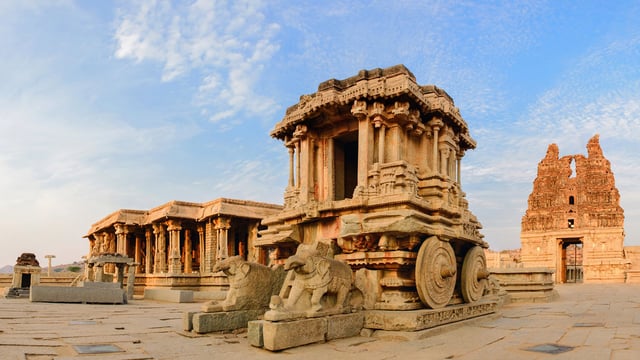
The development of Indian religious iconography up to 1000 AD reflects a transition from abstract, symbolic representations to complex anthropomorphic pantheons. This evolutionary trajectory was shared across Hinduism, Buddhism, and Jainism, shaped by shifting theological frameworks, imperial patronage, and regional artistic schools like Gandhara, Mathura, and Amaravati.
Mauryan and Post-Mauryan Foundations (3rd Century BCE – 1st Century BCE)
Early iconography was heavily rooted in nature worship and folk religions. The earliest independent stone sculptures represent semi-divine nature spirits like Yakshas and Yakshinis (fertility deities), exemplified by the Didarganj Yakshini and Parkham Yaksha. During this phase, Buddhism and Jainism relied strictly on aniconic symbols (symbols representing a deity without physical human form) to signify divine presence.
Kushana and Satavahana Paradigm Shift (1st Century CE – 3rd Century CE)
The turn of the common era marked the simultaneous emergence of anthropomorphic (human-form) images across all three major traditions. The Mathura school developed indigenous, robust representations of the Buddha, Jain Tirthankaras, and early Hindu divinities like Vasudeva-Krishna and Kartikeya. Concurrently, the Gandhara school integrated Greco-Roman Hellenistic styles, introducing realistic muscular anatomy and wavy hair to Buddhist imagery.
Gupta and Vakataka Classical Zenith (4th Century CE – 6th Century CE)
The Gupta period established the classical rules of Indian iconography, characterized by spiritual serenity, balanced proportions, and the formalization of mudras (hand gestures) and laksanas (divine marks). Sculptural guidelines were codified into canonical texts like the Pratimamana-lakshanam and early Shilpa Shastras.
Early Medieval Regionalization (7th Century CE – 1000 CE)
Post-Gupta iconography saw an expansion under dynasties like the Chalukyas, Rashtrakutas, Pallavas, Cholas, and Palas. Icons became more dynamic, multi-armed, and narrative-driven, reflecting the rise of Tantric philosophies and Puranic sectarian movements.
Hindu Iconography and Canonical Typologies
Hindu iconography solidified around the Puranic trinity (Trimurti) and the expansion of Vaishnava, Shaiva, and Shakta pantheons. Icons are structurally classified into three operational categories based on their physical attributes: Chara (movable metal icons used for processions), Achara (immobile stone sanctum icons), and Charachara (semi-movable representations).
Vaishnava Iconography and Dasavatara Typology
Vaishnava art centers around Vishnu in his cosmic form or through his ten primary incarnations (Dasavatara), designed to restore cosmic order (Rta). Standard depictions of Para-Vishnu present him with four arms (Chaturbhuja) holding specific cosmic attributes:
- Shankha (Conch named Panchajanya): Symbolizes the cosmic sound of creation.
- Chakra (Discus named Sudarshana): Represents the cosmic mind and the wheel of time.
- Gada (Mace named Kaumodaki): Represents physical strength and cosmic authority.
- Padma (Lotus): Symbolizes spiritual purity and the unfolding of the universe.
Evolution of Vishnu Forms
| Iconographic Form | Key Attributes and Narrative Meaning | Major Historical Examples |
| Sheshashayi / Anantasayana | Vishnu reclining on the coils of the multi-headed serpent Ananta-Shesha floating on the cosmic ocean, dreaming the universe into existence. | Deogarh Dashavatara Temple (Gupta period); Mahabalipuram (Pallava period). |
| Varaha (Boar Incarnation) | Zoomorphic or anthropomorphic boar rescuing the earth goddess (Bhudevi) from the cosmic ocean, symbolizing liberation from darkness. | Udayagiri Caves, MP (Colossal Gupta relief); Eran, MP (Free-standing zoomorphic boar). |
| Narasimha (Lion-Man) | Hybrid human-lion form tearing open the demon Hiranyakashipu, representing the divine omnipresence of cosmic justice. | Badami Cave 3 (Chalukyan relief); Ellora Cave 15 (Rashtrakuta phase). |
| Vaikuntha Chaturmurti | A multi-headed form of Vishnu featuring a central human face flanked by a lion (Narasimha) and a boar (Varaha) face, reflecting cosmic integration. | Lakshmana Temple, Khajuraho (Chandela period); Avantipur Temple, Kashmir. |
Shaiva Iconography: Aniconic and Anthropomorphic Variations
Shaiva iconography maintains a balance between the abstract cosmic essence and the personalized physical manifest.
- The Lingam: The primary aniconic object of worship in the inner sanctum (garbhagriha). It represents the formless, infinite pillar of cosmic light (Jyotirlinga). When faces are carved onto the cylinder, it is termed Mukhalinga (ranging from Ekamukha to Panchamukha, representing the five aspects of Shiva: Sadyojata, Vamadeva, Aghora, Tatpurusha, and Ishana).
- Nataraja (The Cosmic Dancer): Formalized into a perfect bronze aesthetic under the Cholas by the 10th century. Shiva dances inside a flaming halo (prabha-mandala), stepping on the dwarf demon Apasmara (representing spiritual ignorance). His upper right hand holds the damaru (drum of creation), the upper left holds agni (fire of destruction), the lower right shows abhaya mudra (reassurance), and the lower left points to his raised foot as the path of liberation (charana).
- Sadashiva / Mahesamurti: A colossal three-headed bust representing the three fundamental aspects of the divine: Aghora (the destructive left face), Vamadeva/Uma (the creative, feminine right face), and Tatpurusha (the serene, preserving central face), epitomized in the main cave at Elephanta.
- Ardhanarishvara: An iconic syncretic form splitting the vertical axis of the body into Shiva (right half) and Parvati (left half), symbolizing the indivisible unity of the masculine (Purusha) and feminine (Prakriti) cosmic principles.
Shakta Iconography: The Divine Feminine
The formalization of the Devi Mahatmya text during the Gupta era catalyzed independent imagery for the supreme mother goddess.
- Mahishasuramardini: The multi-armed goddess Durga slaying the buffalo demon Mahishasura. Iconographic manuals require her to be depicted with one foot pinned firmly onto the back of the decapitated buffalo, piercing its neck with a trident (trishula) while her vehicle, the lion, attacks the demon’s human manifestation emerging from the carcass. Prominent examples survive at the Mahabalipuram rock panels and Ellora Cave 16.
- Saptamatrikas: The group of seven divine mothers who represent the female energies (shaktis) of major male divinities, consistently sculpted in a linear sequence accompanied by Virabhadra and Ganesha. The standard group comprises Brahmani, Vaishnavi, Maheshvari, Indrani, Kaumari, Varahi, and Chamunda.
Buddhist Iconography: Symbols, Mudras, and Bodhisattvas
Buddhist iconographic practice evolved from Theravada aniconism to the complex deity configurations of Mahayana and Tantric Vajrayana systems.
Aniconic Symbolism of Early Buddhism
Prior to the 1st century CE, artists represented the historical Buddha Gautama strictly through symbolic signifiers linked to major life events:
- The Lotus and Elephant: Signifies his miraculous conception and physical birth.
- The Horse (Kanthaka) without a Rider: Represents the Great Renunciation (Mahabhinishkramana).
- The Bodhi Tree or Vacant Throne: Signifies the attainment of supreme enlightenment (Nirvana) at Bodh Gaya.
- The Wheel of Law (Dharmachakra): Symbolizes the delivery of his first sermon at Sarnath.
- The Stupa or Parasol: Represents his final physical death and liberation from rebirth (Mahaparinirvana).
Canonical Mudras of the Buddha
Standard Mudras in Buddhist Art
| Mudra Name | Visual Execution | Theological Significance |
| Bhumisparsha Mudra | Seated in lotus position; the right hand extends over the right knee, fingertips touching the earth. | “Earth-witness” gesture. The Buddha calls upon the earth goddess to witness his resistance to the temptations of the demon Mara just prior to enlightenment. |
| Dharmachakra Mudra | Both hands held close to the chest, tips of the thumbs and index fingers forming circles that touch. | “Turning the Wheel of Law.” Represents the preaching of the First Sermon to his five disciples at the Deer Park in Sarnath. |
| Abhaya Mudra | The right hand is elevated to shoulder height, arm bent, palm facing outward with fingers extended upward. | “Gesture of Fearlessness.” Bestows divine protection, peace, and reassurance to devotees. |
| Dhyana / Samadhi Mudra | Both hands placed flat in the lap, palms turned upward, the right hand resting on top of the left with thumbs touching. | “Gesture of Deep Meditation.” Symbolizes complete inner tranquility and concentric mental focus. |
| Varada Mudra | The right arm is lowered downward, palm facing outward with extended fingers pointing toward the ground. | “Gesture of Charity/Boons.” Symbolizes the granting of wishes, compassion, and boundless generosity. |
The Mahayana Bodhisattva Pantheon
Mahayana theology introduced celestial beings who delayed their own salvation to rescue suffering humanity. Their iconography mimics the luxurious attire of royal princes, distinguishing them from the simple, unadorned monastic robes of the Buddha.
- Avalokiteshvara (Padmapani): The embodiment of infinite compassion. He holds a long-stemmed blue lotus (padma) in his left hand and carries a miniature image of Amitabha Buddha within his crown.
- Vajrapani: The personification of divine spiritual power and protective energy, consistently depicted grasping a thunderbolt (vajra) in his right hand.
- Manjushri: The Bodhisattva of transcendent wisdom, holding aloft a flaming sword in his right hand to sever the bonds of ignorance, and a palm-leaf manuscript of the Prajnaparamita text close to his heart.
- Maitreya: The designated future Buddha of the next cosmic age, frequently represented holding a water flask (kamandalu) or a stupa emblem inside his hair locks.
Jain Iconography: Tirthankaras and Yaksha-Yakshini Pairs
Jain iconographic programs are governed by principles of extreme asceticism, monastic isolation, and the mathematical symmetry of the cosmos.
General Iconographic Postures
Images of the 24 Tirthankaras (Jinas) are sculpted exclusively in two highly regulated physical attitudes:
- Kayotsarga Posture: A rigid, symmetrical standing posture where the body is held straight, arms hanging straight down without touching the torso, and feet balanced equally, symbolizing complete detachment from the physical body.
- Padmasana Posture: A seated cross-legged lotus position where the Jina sits in absolute meditative immobility, eyes locked on the tip of the nose.
Sectoral Distinctions: Digambara vs. Shvetambara
The iconographic split between the two major Jain sects formalized by the Gupta-Kushana transition:
- Digambara Icons: The Tirthankara is depicted entirely nude (digambara – sky-clad), with downcast unadorned eyes, free of any jewel decorations or textile markings.
- Shvetambara Icons: The Jina is represented wearing a stylized loincloth, with prominent, inset glass or marble eyes looking straight forward, often accompanied by jeweled crowns and marks on the limbs.
Key Tirthankaras and Cognizance Laksanas
Because all Tirthankaras share identical facial features and body proportions to signify their uniform spiritual perfection, they are identified by a specific symbol (laksana or chinha) carved onto their stone pedestal or directly on the center of their chest (Srivatsa mark).
Identifying Emblems of Major Tirthankaras
| Tirthankara | Chronological Position | Unique Laksana / Cognizance Symbol | Distinctive Sculptural Variant |
| Adinatha / Rishabhanatha | 1st Tirthankara | Bull (Vrishabha) | Sculpted with long locks of hair falling down over his shoulders, breaking the otherwise standard short curly hair protocol. |
| Neminatha | 22nd Tirthankara | Conch Shell (Shankha) | Frequently associated with Krishna narratives in regional relief panels. |
| Parshvanatha | 23rd Tirthankara | Serpent (Sarpa) | Crowned by a protective multi-headed serpent canopy (dharanendra) spreading over his head like a hood. |
| Mahavira | 24th Tirthankara | Lion (Simha) | The base pedestal always displays a central lion emblem flanked by standard chowrie-bearers. |
Sasanadevatas: The Yaksha-Yakshini Guardians
To accommodate popular folk beliefs and provide a channel for worldly boons (since Tirthankaras are completely liberated and cannot intervene in human affairs), Jainism integrated a secondary layer of semi-divine guardian deities (Sasanadevatas). Each Tirthankara is allocated a specific male Yaksha and female Yakshini pair.
- Ambika Devi: The highly popular Yakshini of Neminatha. She is depicted sitting beneath a mango tree laden with golden fruit, holding a child on her lap, symbolizing fertility, material abundance, and family preservation.
- Kubera / Sarvanubhuti Yaksha: Represented with a prominent pot-belly, holding a money bag or a wine cup, channeling old earth-spirit wealth into Jain cosmic structures.
Epigraphic and Archaeological Trivia for Prelims
- The Heliodorus Pillar Inscription (c. 113 BCE): Located at Vidisha, Madhya Pradesh. A stone column erected by a Greek ambassador named Heliodorus, who calls himself a Bhagavata (devotee of Vishnu). It is the earliest epigraphic record of Bhagavata iconography, dedicated to Garuda atop the column in honor of Vasudeva.
- The Chhaonri Yakshini Mystery: The Didarganj Yakshini, discovered in Bihar and dating to the Mauryan/Post-Mauryan phase, features a highly polished Chunar sandstone finish, characteristic of Mauryan court art. It provides an early example of the feminine aesthetic that later defined Hindu, Buddhist, and Jain goddess architecture.
- The Ayagapatas of Mathura: Distinctive square stone tablets carved by early Jain communities during the Kushana era. They feature a central miniature Tirthankara surrounded by auspicious symbols like the swastika, dhvaja (banner), and mina-yugala (twin fish), serving as a bridge to standard icon worship.
- The Sarnath Seated Buddha: Crafted during the 5th century CE out of buff-colored Chunar sandstone. This sculpture is considered the pinnacle of Gupta art. The plain, transparent drapery emphasizes the smooth contours of the body, and the background features an elaborately carved circular halo with two celestial Gandharvas.
- Srivatsa Mark evolution: The Srivatsa is a sacred mark resembling a stylized knot or flower carved on the chest of divine figures. In early Kushana art, it appears prominently on both Hindu deities and Jain Tirthankaras, but over time, it became a primary iconographic requirement for identifying a Jain Jina.