
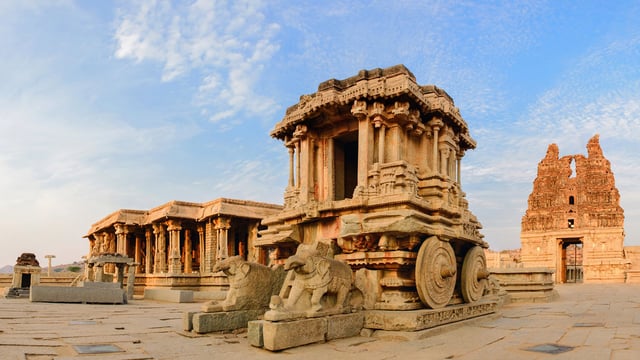
The Mantriparishad (Council of Ministers) was the institutional core of the Mauryan executive machinery (c. 322–185 BCE). In Kautilya’s Arthashastra, the bureaucracy (Amatya) constitutes the second essential limb of the Saptanga Theory of State. The Arthashastra declares that sovereignty is possible only with assistance, comparing governance to a carriage that cannot move on a single wheel (Saha-sahayam Rajyam). The King remained the supreme authority, but the Mantriparishad was a constitutional necessity to formulate policy, debate legislative decrees, and oversee administrative execution.
Recruitment and Upadha-Puradha Qualifications
Appointment to the Mantriparishad was strictly meritocratic and not hereditary. Candidates chosen from the larger pool of civil servants (Amatyas) had to undergo a series of stringent psychological and moral tests known as Upadha. These tests evaluated a candidate’s vulnerability to four specific temptations:
- Dharmopadha: Religious temptation to check if the candidate could be swayed by orthodox dogmas or heretical ideas against state interests.
- Arthopadha: Financial temptation to test honesty and resistance to bribery or embezzling state treasury funds.
- Kamopadha: Sexual temptation to ensure moral integrity and resistance to honey-traps.
- Bhayopadha: Fear temptation to verify courage, resilience, and loyalty under threat of physical violence or execution.
Internal Bifurcation: The Cabinet vs. General Assembly
The Mauryan central executive operated on a two-tier ministerial structure to balance high-security decision-making with broader administrative representation:
- The Mantrinah (The Inner Cabinet): A compact, high-powered advisory body consisting of three to four extraordinary officials. It usually comprised the Mantri (Prime Minister), Purohita (Chief Priest), Senapati (Commander-in-Chief), and occasionally the Yuvaraja (Crown Prince). They received an elite annual salary of 48,000 panas (silver coins) and were consulted daily on top-secret state matters, foreign declarations, and immediate military deployments.
- The Mantriparishad (The General Council): A larger plenary body composed of variable numbers of ministers depending on administrative exigencies (the Arthashastra advocates for flexibility, stating numbers should match state needs). Members of this outer tier received a salary of 12,000 panas per annum. They deliberated on routine regional administration, public works, and long-term socio-economic legislation.
Operational Mechanics and Administrative Functions
Deliberation and Voting Protocols
The Mantriparishad convened in a dedicated, high-security assembly hall called the Mantrasala. Kautilya prescribed absolute secrecy for these meetings, stating that any leak of council deliberations warranted capital punishment. Minutes of the meeting and policy decisions were recorded by a specialized secretariat head called the Mahamantra-in-charge. Decisions were typically reached through individual deliberation followed by collective consensus. If opinions differed, the matter was settled by a majority vote, although the King retained absolute veto power over any council decision.
Emergency Powers and Joint Consultations
During acute national emergencies (Atyayike Karya), such as foreign invasions, widespread famines, or internal rebellions, the operational dynamic shifted. The King was textually mandated to summon both the Mantrinah and the Mantriparishad for a joint emergency session. In these critical situations, the King was advised to follow the consensus or majority opinion of the combined assembly to ensure unified, decisive state action.
Executive Liaison with the Adhyakshas
The Mantriparishad acted as the direct supervisory body over the vast network of functional departments. The 18 elite executive heads (Tirthas) and the 27 specialized department heads (Adhyakshas) were directly accountable to the Council of Ministers. The Council evaluated departmental performances, approved budgets submitted by the Samaharta (Chief Revenue Collector), and recommended the dismissal or promotion of regional bureaucrats.
Comparative Breakdown of Executive Tiers
| Administrative Organ | Size / Strength | Annual Salary | Core Functional Portfolio | Key Historic Figures |
| The King (Swami) | Absolute Head | Supreme | Fountainhead of military, executive, judicial, and legislative commands. | Chandragupta, Bindusara, Ashoka |
| The Mantrinah (Inner Cabinet) | 3 to 4 Members | 48,000 Panas | National security, diplomatic treaties, high espionage, and declaration of wars. | Chanakya (Kautilya), Radhagupta |
| The Mantriparishad (Outer Council) | Large Assembly | 12,000 Panas | Enforcement of civic laws, public welfare projects, and tax evaluation. | Variable regional ministers |
| The Amatyas (Civil Service Pool) | Extensive | Variable | General administrative pool serving as magistrates, judges, and collectors. | Pan-empire bureaucrats |
Historical Evolution: Pre-Mauryan to Ashokan Era
The Kautilyan Prime Ministership
During the foundation and consolidation era under Chandragupta Maurya, the office of the Prime Minister (Mantri or Agratyatya) held unprecedented authority. Chanakya utilized the Mantriparishad as an aggressive tool of state centralisation, implementing structural surveillance over regional oligarchies. The council during this phase was heavily focused on imperial expansion, fiscal extraction, and the systematic suppression of political subversives through the Kantakasodhana (Criminal Courts).
The Ashokan Structural Reorientation
Under Emperor Ashoka, the ideological mandate of the Mantriparishad underwent a major transformation. While the administrative framework remained centralized, the policy execution shifted from militarism to paternalism. Ashoka modified the functional duties of the ministers to prioritize the dissemination of Dhamma (righteousness). The council was directed to assist and coordinate with a newly created cadre of ministers known as the Dhamma Mahamatras, who checked religious friction, managed prison reforms, and distributed welfare funds to the destitute.
Epigraphic Disagreements and Council Friction
Ashoka’s Major Rock Edicts reveal that the relationship between the King and the Mantriparishad was occasionally marked by institutional friction. In Major Rock Edict VI, Ashoka explicitly commands that if any verbal order he gives regarding donations or public proclamations causes a debate or disagreement within the Mantriparishad, the matter must be reported to him immediately at any time and any place by the Pativedakas (reporters). This proves that the Council possessed the structural independence to debate, stall, or critique royal proclamations that they deemed economically unviable or administratively disruptive.
Prelims-Centric Key Facts and Trivia
The Financial Audit Mechanism
The annual budgets, tax assessments, and state expenditures debated by the Mantriparishad were maintained by a highly specialized accounting office called the Akshapatala. At the close of the financial year in the Hindu month of Ashadha (July), ministers and department heads were obliged to present their accounts to this office for strict verification against corruption.
Foreign Policy Directives: The Mandala Theory
All foreign policy recommendations formulated within the Mantrinah cabinet were governed by the Mandala Theory outlined in the Arthashastra. This diplomatic framework categorized geopolitical relations into a circle of 12 neighboring states, operating on the foundational axiom that a state’s immediate geographical neighbor is a natural enemy (Ari), while the neighbor’s neighbor is a natural ally (Mitra).
Historical Continuity: The Case of Radhagupta
The operational power of the Mauryan council is illustrated by the historical career of Radhagupta, a prominent minister who served in the Mantriparishad during the late reign of Bindusara. Radhagupta played a decisive, king-making role by backing Ashoka in the fratricidal war of succession against his brother Susima. He subsequently ascended to the position of Agratyatya (Prime Minister) within the inner cabinet, demonstrating how influential council ministers were in determining dynastic successions.
Last Modified: June 13, 2026