
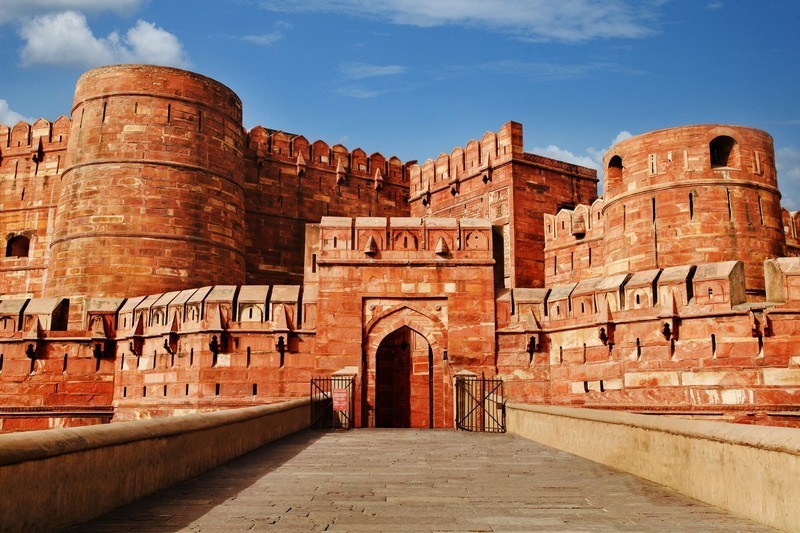
The rise of the Gurjara-Pratihara dynasty in the 8th century coincided with the expansionist phase of the Umayyad Caliphate in Sindh. Following the conquest of Sindh by Muhammad bin Qasim in 712 CE, Arab forces attempted to push eastward into Rajasthan and Gujarat. The Pratiharas emerged as the primary military obstacle to this westward Islamic expansion, earning them a reputation among contemporary chroniclers as the most effective defenders of the Indian subcontinent.
Military Confrontations and Defense Strategy
The Pratihara military structure was uniquely adapted to neutralize the mobile warfare tactics favored by the Arab forces. By maintaining a superior cavalry force and a network of fortified outposts, they prevented the consolidation of Arab power beyond the Indus River.
Nagabhata I and the Resistance
Nagabhata I (c. 730–756 CE) is historically recognized for decisively repelling Arab incursions. The Gwalior inscription of Mihira Bhoja credits him with the defeat of a powerful Mlechchha king, identifying him as the vanguard of resistance during the formative years of his dynasty. His success at Avanti (Ujjain) created a secure territorial base that prevented the Arab forces from penetrating deeper into the Gangetic heartland.
The Arab Perspective: Testimony of Sulaiman
The 9th-century Arab merchant Sulaiman, in his travelogue, provided a neutral and detailed assessment of the Pratihara state, which he referred to as the Kingdom of Jurz (a corruption of Gurjara). His account remains a primary source for understanding the international perception of the Pratihara military.
- Sulaiman praised the Pratihara king for maintaining internal security and order throughout his domains.
- He specifically highlighted that the Pratihara cavalry was the best among all Indian kings, noting their discipline and equipment.
- The accounts suggest that despite the ongoing military enmity on the borders, trade between the Pratihara kingdom and the Arab-controlled ports of Sindh continued, facilitating a complex relationship of conflict and commerce.
Geopolitical Impact of the Pratihara-Arab Rivalry
The persistent threat posed by the Arab forces influenced the internal politics of the Gurjara-Pratihara dynasty and their participation in the broader Tripartite Struggle.
- Strategic Allocation: The need to maintain a standing army on the western frontier required the Pratiharas to develop a robust feudal levy system, which allowed them to keep forces in the field for extended periods.
- Legitimacy: Successfully containing foreign invasions bolstered the moral and political authority of the Pratihara monarchs, providing them with the necessary prestige to assert dominance over North India during the Tripartite Struggle.
- Economic Resilience: The Pratiharas benefited from trade routes that linked Western India to the Persian Gulf. By controlling the ports of Gujarat, they effectively leveraged the wealth generated by maritime trade to finance their prolonged military campaigns against the Palas and Rashtrakutas.
Comparative Dynamics: Pratiharas vs. Arab Forces
| Feature | Gurjara-Pratiharas | Arab Forces (Sindh-based) |
| Military Focus | Heavy, disciplined cavalry | Light, mobile cavalry and archers |
| Primary Strategy | Defensive fortification and containment | Raiding and localized expansion |
| Diplomatic Stance | Hostile on frontiers, commercial in ports | Expansionist and tributary-seeking |
| Cultural Impact | Patronage of Sanskrit and Hindu temples | Spread of Islamic administration in Sindh |
UPSC Prelims Facts and Trivia
- The term Mlechchha was historically used in inscriptions during this period to describe foreign invaders, with the Arab armies of the Caliphate being the primary targets of this description.
- The Gwalior Prasasti serves as the most significant epigraphic evidence regarding the dynasty’s achievements against the Arab forces.
- Arab accounts refer to the Pratihara king as the king of the “Jurz,” confirming that the dynasty was known as the Gurjara-Pratiharas to international traders of the medieval era.
- The containment of the Arabs by the Pratiharas is often compared to the role played by the Chalukyas of Badami under Pulakeshin II, who also halted early Arab attempts to invade the Deccan.
- The resilience of the Pratihara frontiers prevented the consolidation of a Caliphate-aligned state in North India, ensuring that the political evolution of the region remained dominated by indigenous dynasties until the arrival of the Ghaznavids in the 11th century.