
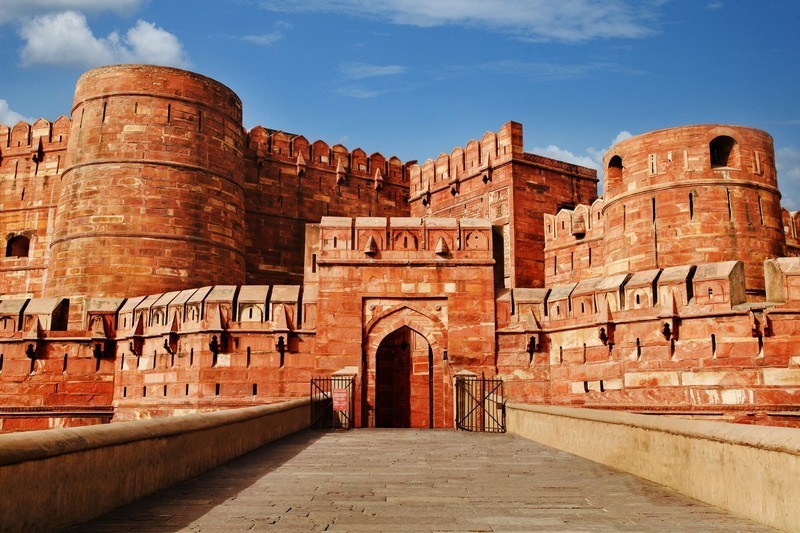
The Badami Cave Temples, located in the Bagalkot district of Karnataka, represent the foundational stage of structural and rock-cut temple architecture in the Deccan. These four cave temples were excavated during the 6th and 7th centuries CE under the patronage of the Early Western Chalukyas, particularly during the reigns of Kirtivarman I and Mangalesha. The site serves as a significant intersection of religious iconography and architectural evolution in early medieval India.
Architectural Characteristics and Style
The architecture at Badami marks a transition from the rudimentary rock-cut styles of the period to more sophisticated spatial planning. The temples are carved into the red sandstone cliffs on the southern side of the Agastya Tirtha reservoir.
- The interiors feature a pillared veranda (mukha-mandapa), a columned hall (maha-mandapa), and a small square sanctum (garbhagriha) deep within the rock.
- The pillars exhibit distinct Chalukyan features, such as brackets adorned with miniature figures and pot-and-foliage capitals (ghata-pallava).
- The ceilings are often decorated with carvings of various deities, including Naga figures and celestial beings.
- The exterior facades are relatively plain, emphasizing the internal sculptural richness characteristic of the Chalukyan style.
Analysis of the Four Major Caves
Each of the four caves is dedicated to specific deities, reflecting the religious diversity and state-sponsored syncretism of the Chalukyan court.
| Cave Number | Religious Affiliation | Key Sculptural Features |
| Cave 1 | Shaiva | Dedicated to Shiva; features the famous Nataraja sculpture with 18 arms. |
| Cave 2 | Vaishnava | Dedicated to Vishnu; depicts Varaha and Vamana avatars prominently. |
| Cave 3 | Vaishnava | The most elaborate; contains large reliefs of Narasimha, Harihara, and Trivikrama. |
| Cave 4 | Jaina | Dedicated to Tirthankaras; contains carvings of Mahavira and Parshvanatha. |
Major Iconographic Significance
The sculptures at Badami illustrate the evolution of Puranic iconography, integrating both Vedic and local traditions.
- Harihara: The composite form of Shiva and Vishnu (Hari and Hara) represents the religious harmony fostered by the Chalukyan monarchs to bridge sectarian divides.
- Nataraja: The 18-armed depiction of Shiva in Cave 1 demonstrates early experimentation with the depiction of dance and rhythm in stone, pre-dating many later Chola bronzes.
- Varaha Avatar: The depiction of the boar avatar of Vishnu reflects the royal association with the boar as the dynastic emblem (launches) of the Chalukyas.
- Jaina Tirthankaras: The presence of the Jaina cave (Cave 4) highlights the patronage extended to heterodox sects, reflecting a pluralistic religious policy.
Historical Context and Patronage
The construction of these temples aligns with the period when the Badami Chalukyas were establishing their imperial authority in the Deccan.
- Patronage: The primary patron of the most significant cave (Cave 3) was Mangalesha, as confirmed by an inscription dated 578 CE.
- Administrative Legacy: The caves served as centers for state rituals and were used to legitimize royal power through the visual representation of divine authority.
- Transition Point: While these are rock-cut, they provided the architectural blueprint for the subsequent structural temple experiments at Aihole and Pattadakal.
Key Facts for Prelims
- Location: Badami (ancient Vatapi), Bagalkot district, Karnataka.
- Material: Red sandstone cliffs.
- Dynasty: Early Western Chalukyas (6th–7th Century CE).
- Inscriptions: The site contains important Kannada and Sanskrit inscriptions that provide chronological data for the Chalukyan dynasty.
- Religious Scope: Three caves are devoted to Hindu deities (Shaivite and Vaishnavite), while one is dedicated to Jainism.
- Significance: They are among the earliest dated examples of monumental temple architecture in the Deccan, bridging the gap between earlier rock-cut traditions and later structural temples.