
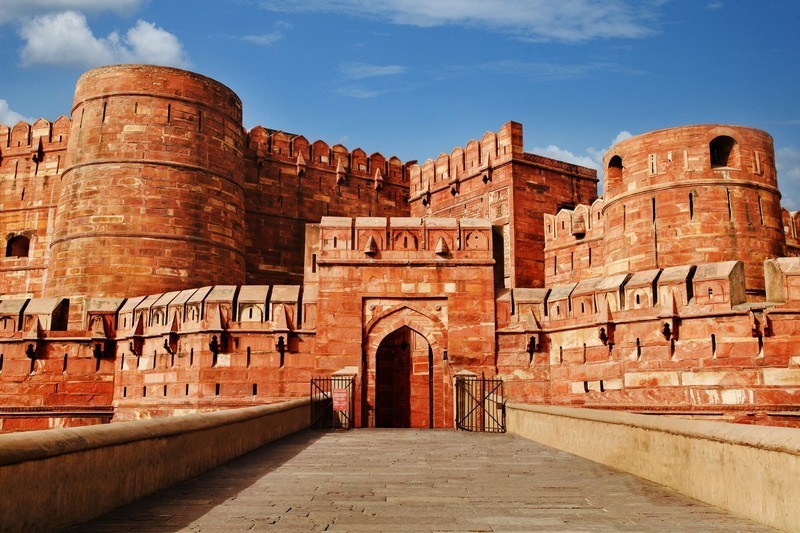
Gulbarga, historically known as Kalambaragi, emerged as the primary political center of the Deccan in 1347 CE. Following his successful rebellion against Sultan Muhammad bin Tughlaq of the Delhi Sultanate, Alauddin Hasan Bahman Shah established the independent Bahmani Kingdom and chose Gulbarga as his imperial capital. He renamed the city Ahsanabad, transforming it from a provincial outpost into a heavily fortified administrative core designed to resist military incursions from both northern dynasties and southern kingdoms.
Geopolitical Vulnerability and Relocation
Gulbarga served as the permanent Bahmani capital for nearly eight decades (1347–1425 CE). Geographically situated in the northern part of the Karnataka plateau, its proximity to the contested Raichur Doab—the fertile tract between the Krishna and Tungabhadra rivers—made it highly vulnerable to constant military campaigns by the rival Vijayanagara Empire. In 1425 CE, Sultan Ahmad Shah Wali relocated the permanent capital further northeast to Muhammadabad (Bidar), which offered better natural defense, an elevated climate, and a more central location to govern the expanding eastern territories.
Architecture and Urban Landscape of Ahsanabad
The Gulbarga Fort
Originally built by Raja Gulchand of the Kakatiya dynasty, the Gulbarga Fort was extensively expanded and reinforced with West Asian military engineering under the early Bahmani Sultans. The fortification features a double-wall system, a wide moat filled with water, and 26 formidable bastions equipped with heavy artillery. Inside the fort complex, the Great Mosque or Jami Masjid stands as a landmark of Indo-Persian architecture.
Structural Anatomy of the Jami Masjid (1367 CE)
Commissioned by Muhammad Shah I and designed by the Persian architect Rafi bin Shams bin Mansur, the Jami Masjid of Gulbarga is unique among Indian mosques due to its distinct layout:
- Fully Covered Floor Plan: Unlike traditional Indian mosques that feature a large open-air central courtyard, the entire area of 38,000 square feet is completely covered by a roof.
- Dome Configuration: The structure features a grand central dome mounted on a high square clerestory, flanked by four medium-sized corner domes and 63 smaller cupolas that cover the longitudinal bays.
- West Asian Architecture: The design incorporates wide Spanish-style arches and a vaulted ceiling texture that closely resembles the Great Mosque of Córdoba, illustrating the direct migration of Mediterranean and Persian architectural styles to the medieval Deccan.
The Haft Gumbaz Complex
Situated to the east of the fort, the Haft Gumbaz (Seven Domes) serves as the royal necropolis of the early Bahmani rulers. The tombs illustrate the stylistic transition from the heavy, sloping walls typical of the Tughlaq style of Delhi to a refined, distinct Deccani architectural style.
| Monument | Associated Ruler / Figure | Architectural Highlight |
| Tomb of Alauddin Hasan Bahman Shah | Alauddin Hasan Bahman Shah (r. 1347–1358 CE) | Thick, sloping walls, battlements, and a low-slung dome reflecting strong Tughlaq architectural influence. |
| Tomb of Muhammad Shah I | Muhammad Shah I (r. 1358–1375 CE) | Adorned with fine stuccowork, stylized geometric bands, and early variants of Deccani trefoil arches. |
| Double Tomb of Tajuddin Firoz Shah | Tajuddin Firoz Shah (r. 1397–1422 CE) | A unique two-chambered structure featuring two contiguous domes, highly ornate plaster carvings, and prominent Persian-style arched recesses. |
| Dargah of Hazrat Khwaja Bande Nawaz | Sufi Saint Gesudaraz (d. 1422 CE) | A grand pilgrimage complex featuring a massive dome, arched arcades, and walls painted in bright eco-friendly frescoes reflecting a fusion of Indo-Islamic styles. |
Religious Transformation and the Sufi Nexus
Indigenization of Muslim Rule
Gulbarga was a primary center for the institutionalization of Sufism in South India, which played a major role in stabilizing the minority ruling class amidst a large non-Muslim populace. The early Bahmani sultans relied heavily on the spiritual authority of Sufi saints belonging to the Chishti order to legitimize their political sovereignty, independent of the Delhi Sultanate.
Impact of Hazrat Khwaja Bande Nawaz
The arrival of the Chishti Sufi saint Muhammad al-Hussaini, popularly known as Hazrat Khwaja Bande Nawaz or Gesudaraz (He of the Long Locks), in 1400 CE profoundly altered the socio-religious fabric of Gulbarga:
- Royal Patronage: Sultan Tajuddin Firoz Shah and his successor Ahmad Shah Wali granted vast revenue-free land estates (Inams) to the saint’s family, establishing the Gulbarga Dargah as a major economic and religious institution.
- Linguistic Development: Bande Nawaz was among the earliest scholars to write prose and poetry in Dakhni (an early form of Deccani Urdu blending Arabic, Persian, Old Hindi, Punjabi, and local Marathi/Telugu dialects), making complex Sufi concepts accessible to the local population.
- Political Influence: The saint supported Ahmad Shah Wali during a succession dispute with Firoz Shah, reinforcing the influence of spiritual leaders over state politics.
Socio-Economic Fabric and Provincial Administration
The Taraf of Gulbarga
Following the division of the Bahmani Kingdom into four original provinces (Tarafs) by its founder, Gulbarga was designated as the premier administrative zone. Due to its status as the imperial center, the governor of the Gulbarga Taraf, titled Malik Naib, held a higher rank in the court hierarchy than the governors of Daulatabad, Berar, and Bidar. When the Prime Minister Mahmud Gawan reformed the administration in the late 15th century, he split the massive Gulbarga Taraf into two smaller units—Gulbarga and Bijapur—to prevent provincial governors from amassing excessive military and financial power.
Trade Routes and Monetary Economy
- The Coastal Connection: Gulbarga was linked via overland trade highways to thriving Arabian Sea ports like Chaul, Dabhol, and Goa. This network facilitated the steady import of Persian textiles, glassware, weapons, and West Asian warhorses, which were regularly traded for local Deccani cotton cloth, salt, and grain.
- The Diamond Trade: The city served as a major regional collection center for precious stones mined in the nearby Krishna River valley, attracting wealthy merchants from Persia, Arabia, and Central Asia.
- Currency and Minting: The Bahmani rulers established an imperial mint at Gulbarga that produced gold dinars, silver tankas, and copper fals. These coins maintained strict standards of weight and purity, featuring titles that proclaimed the sultans as the “Defenders of the Faith.”
Post-Bahmani Era: Gulbarga under the Adil Shahis of Bijapur
Secession and Incorporation
Following the collapse of central Bahmani authority and the execution of Mahmud Gawan in 1481 CE, the empire fractured into five independent Deccan Sultanates. By 1527 CE, the city and fort of Gulbarga were officially annexed by the Adil Shahi dynasty of Bijapur. Under Bijapur’s rule, Gulbarga lost its status as an imperial capital but remained a highly valued strategic frontier fortress and religious center.
Later Developments and Mughal Annexation
The Adil Shahi sultans consistently maintained and repaired the fortifications of Gulbarga to protect their eastern flank from the Qutb Shahis of Golconda. They also expanded the shrine complex of Bande Nawaz, adding ornate pavilions and gateways. In 1687 CE, the Mughal Emperor Aurangzeb marched south, annexed the region, and brought Gulbarga under the direct control of the Mughal Empire. This ended its period as a major strategic stronghold for the independent Deccan Sultanates.
Essential Prelims Facts and Historical Trivia
- The Myth of Gangu Bahmani: The medieval historian Ferishta recorded a popular legend claiming that the founder of the Bahmani Sultanate, Zafar Khan, was originally a servant to a Hindu Brahmin astrologer named Gangu in Delhi, which supposedly inspired his title “Bahman Shah.” However, epigraphical evidence and coins found at Gulbarga confirm that he actually claimed descent from the ancient Persian monarch Bahman, son of Isfandiyar.
- Induction of local elites: To balance the political influence of his Turkish and Afghan military commanders, Alauddin Hasan Bahman Shah systematically inducted local Hindu chieftains (Deshmukhs and Mannas) into the mid-level agrarian revenue system of Gulbarga.
- A unique artillery piece: The Gulbarga Fort houses the famous Bara Gazi Tope (Twelve-Yard Cannon), a massive medieval weapon cast from bronze and iron alloy. Measuring over 29 feet in length, it remains one of the largest operational cannons from the medieval world.