
Chaitanya Mahaprabhu (1486–1534 CE), born Vishvambhara Mishra and also known as Gauranga due to his golden complexion, was a prominent socio-religious reformer and saint who spearheaded the medieval Bhakti movement in Eastern India. Operating primarily across Bengal and Odisha during the reigns of the Hussain Shahi dynasty of Bengal and the Gajapati kingdom of Odisha, he founded Gaudiya Vaishnavism. His spiritual doctrine shifted the epicenter of eastern devotion toward emotional mysticism centered on Radha and Krishna.
Achintya Bheda Abheda (Inconceivable Oneness and Difference)
Chaitanya Mahaprabhu formulated the distinct philosophical system of Achintya Bheda Abheda. This school of Vedanta posits that the individual soul (Jiva) is simultaneously identical with and different from the Supreme Godhead (Krishna or Bhagavan).
- The Analogy of Fire: The relationship is explained using the analogy of fire and sparks. A spark is qualitatively identical to the fire (it possesses the capacity to burn), yet it is quantitatively different (a single spark cannot warm a room like a bonfire).
- The Inconceivable (Achintya) Nature: This simultaneous oneness and difference is logically paradox-ridden and cannot be comprehended by the human intellect alone; it can only be realized through pure, unalloyed devotional experience (Bhakti).
Madhurya Rasa and Radical Inclusivity
- Madhurya Rasa (Conjugal Love): The core theological paradigm centers on Madhurya Rasa or Bridal Mysticism, where the devotee models their spiritual longing after Radha’s intense, ecstatic love for Krishna, viewing the soul as the eternal beloved and God as the supreme lover.
- Social Egalitarianism: Chaitanya openly challenged the orthodox Brahminical monopoly over spiritual salvation and ritual purity. He declared that anyone, irrespective of caste, gender, or creed, could achieve the highest state of love for God (Prema). He initiated lower-caste individuals and Muslims into his close circle of disciples.
Structural Discipleship: The Six Goswamis of Vrindavan
Chaitanya Mahaprabhu focused almost entirely on congregational chanting and ecstasy, leaving the formal systematic documentation of Gaudiya Vaishnava theology to six selected disciples known as the Shad-Goswamis. He instructed them to travel to Vrindavan to excavate lost holy sites associated with Krishna and draft canonical texts.
The Six Goswamis and Their Literary-Theological Contributions
| Goswami Name | Prior Social/Political Status | Primary Canonical Work | Key Theological Contribution |
| Rupa Goswami | High-ranking minister under Alauddin Husain Shah | Bhakti-rasamrta-sindhu, Ujjvala-nilamani | Systematized the science of Rasa (aesthetic-devotional emotions); mapped the hierarchy of divine love. |
| Sanatana Goswami | Prime Minister/Chief Secretary under Husain Shah | Hari-bhakti-vilasa, Brihad-bhagavatamrta | Formulated Gaudiya Vaishnava code of conduct (Sadachara), temple rituals, and comprehensive Vaishnava theology. |
| Raghunatha Das Goswami | Son of a wealthy landlord (Zamindar) in Bengal | Vilapa-kusumanjali, Stavavali | Exemplified the highest stage of asceticism (Vairagya); wrote deeply emotional poetry dedicated to Radha. |
| Gopala Bhatta Goswami | Brahmin from South India (Srirangam) | Co-authored Hari-bhakti-vilasa, Sat-kriya-sara-dipika | Established the formal scriptural methods for Vaishnava initiation, deity worship, and domestic rituals. |
| Raghunatha Bhatta Goswami | Son of a devotee in Varanasi | None (Oral exponent of the Bhagavata) | Renowned for his exceptional recitation of the Bhagavata Purana in classical musical meters; managed temple cooking technologies. |
| Jiva Goswami | Nephew of Rupa and Sanatana Goswami; scholar | Sat-sandarbhas (Bhagavata, Krsna, Bhakti Sandarbhas) | Provided the ultimate philosophical, epistemological, and metaphysical foundations of Achintya Bheda Abheda. |
Literary Proliferation and Biographical Texts
While Chaitanya Mahaprabhu himself left behind only an eight-verse poetic legacy known as the Sikshashtakam detailing the cleaning of the mirror of the mind, his life inspired a vast genre of biographical and theological literature written in both Sanskrit and medieval Bengali.
Major Biographical Canons of Gaudiya Vaishnavism
- Chaitanya Charitamrita: Composed by Krishnadasa Kaviraja Goswami in mature Bengali with extensive Sanskrit verses. It is universally regarded as the definitive theological biography, detailing Chaitanya’s later life, deep philosophical discourses, and the high points of Achintya Bheda Abheda.
- Chaitanya Bhagavata: Written by Vrindavana Dasa Thakura, this text chronicles the early life (Adi-lila) of Chaitanya in Nabadwip. It provides invaluable details about the socio-political fabric of 15th-century Bengal and the early resistance faced during the launch of the Bhakti movement.
- Chaitanya Mangala: Composed by Lochana Dasa Thakura, this work introduced the folk ballad style to the biographical tradition and popularized the Dhama (holy spots) of Nabadwip among the rural population.
Interactions with Sufism and Syncretic Traditions
The socio-religious activities of Chaitanya Mahaprabhu occurred within the geographical domains of the Bengal Sultanate, creating a vibrant space for dialogue, friction, and syncretism with localized Sufi traditions.
The Kazi Confrontation and Civil Disobedience Trivia
- The Nabadwip Kazi Episode: When the local Islamic magistrate, Chand Kazi, banned the public singing of Krishna’s name (Sankirtan) in Nabadwip, Chaitanya organized a massive, peaceful protest march. Thousands of citizens carrying torches marched to the Kazi’s residence. This event is recorded as one of the earliest documented instances of organized non-violent civil disobedience in Indian history, culminating in the Kazi revoking the ban and granting official state protection to the Sankirtan parties.
- Haridasa Thakura (The Muslim-Born Vaishnava): One of Chaitanya’s most prominent close disciples was Haridasa Thakura, a convert from Islam. Despite fierce orthodox opposition from both Brahmin pandits and Islamic clergy, Chaitanya elevated Haridasa to the position of Namacharya (the supreme teacher of the Holy Name).
- Convergences with Sufi Sama: Chaitanya’s practice of reaching spiritual trance through continuous musical chanting, weeping, and ecstatic dancing closely mirrored the Sama and Zikr rituals of contemporary Chishti and Madariya Sufi orders in Bengal. Local traditions notes that several Sufi dervishes became followers of Chaitanya’s ecstatic kirtan style, viewing him as a divine mystic.
Influence on Art, Architecture, and Performing Arts
Chaitanya Mahaprabhu fundamentally altered the performing arts landscape of Eastern India by pulling devotional music out of closed elite temples and placing it directly into public spaces.
Genesis of Sankirtan and Nagara Kirtan
- Sankirtan: The collective, congregational singing of the Hare Krishna Maha-Mantra accompanied by the Khol (terracotta drum) and Kartal (cymbals).
- Nagara Kirtan: Processions where devotees marched through public streets, bazaars, and villages singing and dancing. This performance artistic tool disrupted the traditional spatial taboos of medieval society, as lower-caste individuals occupied the center of public roads alongside upper-caste singers.
- Manoharshahi and Garanhati Kirtan Styles: Following Chaitanya’s demise, his followers systematized kirtan into distinct classical sub-genres, incorporating complex rhythm cycles (Talas) and structural raga frameworks.
Structural Architecture and Temple Restoration
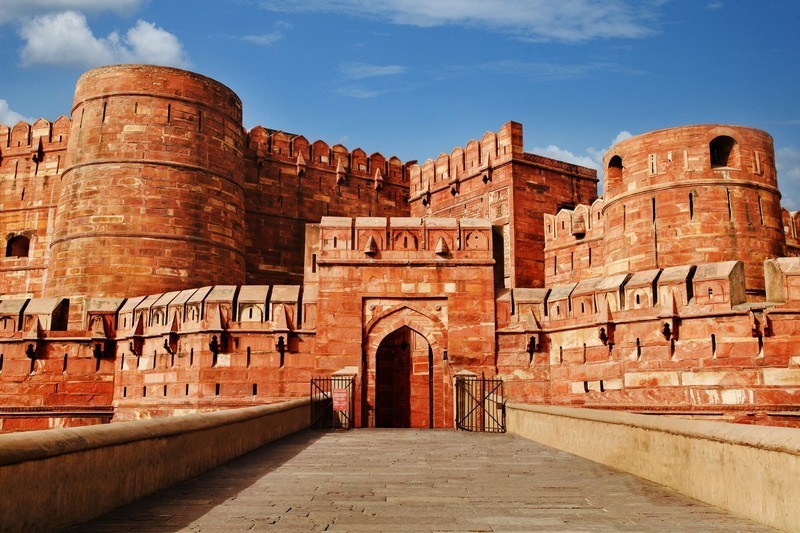
- The Reclamation of Vrindavan: Acting under Chaitanya’s direct guidance, Rupa and Sanatana Goswamis transformed Vrindavan from an uncultivated forest into a grand temple town. They secured imperial patronage from Mughal Emperor Akbar, enabling the construction of red sandstone structural marvels like the Govindajee Temple (1590 CE), which blended traditional Hindu temple architecture with Islamic structural elements like intersecting arches and vaults.
- Radha-Kund and Shyam-Kund Construction: The Goswamis engineered the systematic restoration and preservation of these sacred step-pools in Mathura, standardizing the pilgrimage network known as the Vraja Parikrama.
Technical, Technological, and Economic Intersections
The institutional expansion of Gaudiya Vaishnavism under Chaitanya Mahaprabhu and the Six Goswamis drove advancements in localized material industries, agrarian colonization, and information storage methods.
Terracotta Engineering and Ceramic Drum Production
- The Khol (Mridanga) Technology: The immense popularity of Sankirtan created a massive demand for the Khol, a distinct asymmetrical barrel drum. Artisans in Bengal advanced terracotta clay baking technologies to manufacture highly durable, resonant clay shells capable of withstand long, energetic public processions without cracking.
- Leather Curing for Percussion Membranes: The assembly of the Khol required specialized processing of animal hides for the drumheads. Craftsmen developed multi-layered leather rings bound with rice-paste and iron-filings filings glue to achieve a high-pitched metallic snap, altering the acoustics of medieval folk instrumentation.
Manuscript Proliferation, Ink Chemistry, and Preservation
- Scribing in the Grantha and Bengali Scripts: The compilation of the Sat-sandarbhas and commentaries by Jiva Goswami required a dedicated scriptorium network across Vrindavan and Nabadwip. Scribes refined the art of copying text onto Tulapat (indigenous cotton-layered paper) and processed palm leaves.
- Arsenic Sulfide Ink Chemistry: To protect thousands of newly authored Vaishnava texts from the highly humid climates of Bengal and Vrindavan, scholars standardized an ink formula incorporating Harital (yellow arsenic sulfide). This chemical acted as a permanent insecticide and anti-fungal shield, ensuring that manuscript storehouses (Grantha-Bhandaras) could preserve medieval literature for centuries without degradation.