
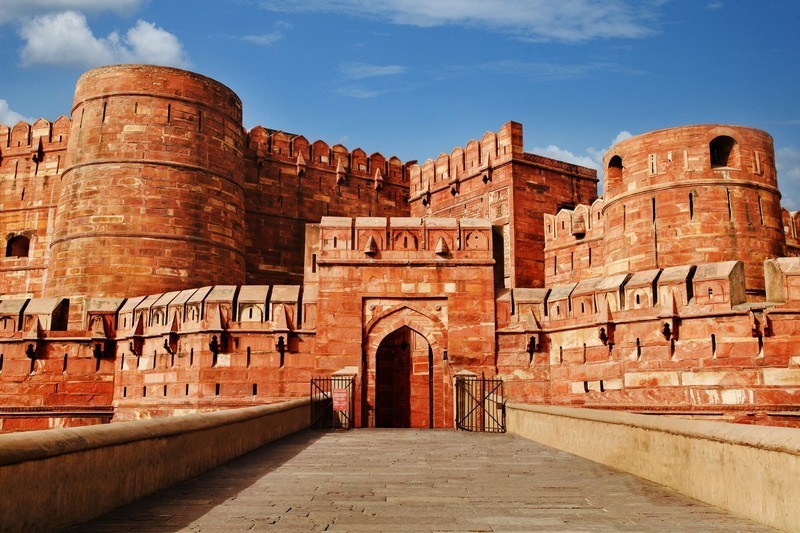
- The Eastern Ganga Dynasty was a prominent medieval Indian ruling house that established a sprawling empire spanning the eastern, western, and frontier regions of the Indian subcontinent.
- The dynasty governed the historical region of Kalinga from approximately 498 CE, eventually consolidating control over the larger region of Trikalinga from 1038 CE to 1434 CE.
- At its geographical zenith, the empire spanned from the Bhagirathi River in the north to the Gautami Godavari River in the south, encompassing present-day Odisha, Andhra Pradesh, West Bengal, and Chhattisgarh.
- The rulers initially established their administrative capital at Kalinganagara, which is modern Mukhalingam, and later shifted it to Kataka, which is modern-day Cuttack.
Prominent Rulers and Their Military Conquests
Indravarman I and Vajrahasta III
- Indravarman I is considered the first historical ruler and founder of the early Eastern Ganga Dynasty, initiating the Ganga era in 498 CE after successfully defeating the Vishnukundin king Indrabhattaraka.
- Vajrahasta III assumed the prestigious title of “Trikalingadhipati” or Lord of the Three Kalingas in 1028 CE, marking the formal transition of the dynasty into a sovereign imperial power.
Anantavarman Chodaganga Deva (1078–1147 CE)
- Anantavarman Chodaganga Deva was the most significant emperor of the dynasty who politically unified Kalinga, Utkala, and Odra into a heavily centralized eastern empire.
- He was the son of Rajaraja Devendravarman and Chola princess Rajasundari, which allowed him to leverage Chola administrative models while maintaining a massive standing army.
- He laid the foundation for the world-renowned Jagannath Temple at Puri in the late eleventh century, forever altering the religious and cultural landscape of Odisha.
Narasimhadeva I (1238–1264 CE)
- Narasimhadeva I, famously known in historical texts as “Langula” Narasimhadeva, was a formidable warrior and the first Kalinga king to launch offensive military campaigns against the Islamic expansion in eastern India.
- He successfully defeated Tughral Tughan Khan, the Muslim ruler of Bengal, and captured the strategic capital city of Gauda to secure his northern frontiers.
- He is universally celebrated for commissioning the magnificent Konark Sun Temple around 1250 CE to commemorate his major military victories.
Bhanudeva IV (1414–1434 CE)
- Bhanudeva IV was the last known ruler of the imperial Eastern Ganga lineage.
- His reign witnessed severe internal administrative weakness and external invasions, leading to a bloodless coup by his minister Kapilendra Deva, who overthrew him to establish the Suryavamsi Gajapati Dynasty.
Administrative Framework
- The empire functioned as a highly centralized monarchy where the reigning king held supreme administrative, judicial, and military authority.
- The royal administration was continuously assisted by a council of key officials, including the Sarvadhikari serving as Prime Minister, the Sandhivigrahi serving as Minister of Peace and War, and the Shri Bhandari serving as Treasurer.
- The vast territory was systematically decentralized into distinct hierarchical units to ensure efficient revenue collection, law enforcement, and local governance.
| Administrative Unit | Governance Head | Functional Description | | | | | | Maha Mandala | Mahamandalika | The largest provincial division functioning under the direct oversight of a royally appointed governor. | | Mandala | Mandalika | A mid-level territorial division analogous to a modern commissionership managing regional clusters. | | Visaya or Nadu | Visayapati | A district-level administrative unit strictly responsible for regional law, order, and agrarian tax collection. | | Grama | Gramika | The fundamental village unit functioning as a highly independent and self-governing entity. |
Economy, Trade, and Coinage
- The agrarian economy was heavily supported by state-sponsored irrigation networks, expansive canal systems, and tax-free land grants given to Vedic scholars.
- Imperial revenue was primarily generated through taxes such as Kara which was an internal land tax, Sulika which consisted of customs and tolls on imported goods, and Hiranya which mandated cash payments.
- The dynasty maintained a flourishing maritime trade network with Southeast Asian regions like Bali, Java, and Sumatra through ancient coastal ports including Tamralipti and Kalingapatnam.
- The Eastern Gangas issued highly specialized regional currency known as “Ganga Fanams,” which were meticulously minted in gold, silver, and copper denominations.
- These coins frequently depicted a couchant bull on the obverse side and represented one of the earliest adoptions of the decimal system in Indian coinage by utilizing single-digit symbols with specific positional values.
Art, Architecture, and Culture
- The Eastern Ganga period is celebrated as the golden age of Kalinga architecture, representing the absolute pinnacle of the Nagara sub-style of temple building in India.
- Architectural innovations included distinct temple forms such as the Rekha Deula featuring a curvilinear spire, the Pidha Deula featuring a pyramidal porch, and the Khakhara Deula featuring a barrel-vaulted roof.
- The Jagannath Temple at Puri, which was historically documented by European sailors as the White Pagoda, became a major sub-continent center of Vaishnavism and Odia cultural identity.
- The Konark Sun Temple, historically known as the Black Pagoda, was built in the shape of a colossal twenty-four-wheeled chariot and remains a masterpiece of medieval Indian architecture.
- The royal court patronized both classical Sanskrit and early Odia literature, successfully facilitating a massive cultural synthesis that blended Shaivism, Vaishnavism, and indigenous tribal traditions into the overarching Jagannath cult.