
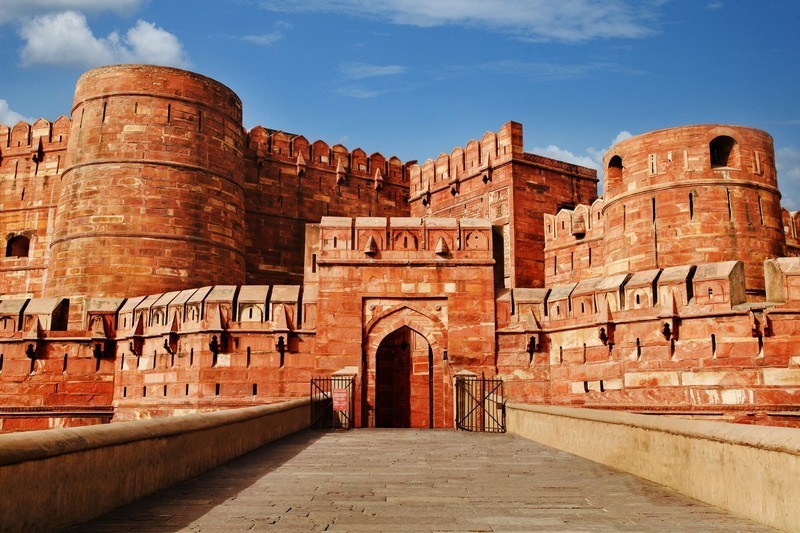
The Paramara dynasty was a prominent Rajput power that ruled the Malwa region (modern-day Madhya Pradesh) from the 9th to the 14th century CE. Initially, the Paramaras served as feudatories to the Rashtrakutas of the Deccan before asserting their independence following the decline of the Rashtrakuta authority in the late 10th century. The dynasty is traditionally associated with the Agnikula (Fire-born) myth, which attributes their origin to a sacrificial fire at Mount Abu.
Strategic Geographical Significance
The Malwa plateau served as the heartland of the Paramara Empire. Its central location in India provided several strategic advantages:
- Malwa acted as a bridge between the northern Gangetic plains and the southern Deccan plateau, making it a critical hub for trade routes.
- The fertile soil of the Narmada and Chambal river valleys supported a strong agrarian economy, enabling the Paramaras to sustain a powerful military.
- Proximity to the Gujarat coast allowed the Paramaras to engage in lucrative trade and maintain political contact with the maritime powers of the western seaboard.
Prominent Paramara Rulers
The dynasty produced several notable monarchs who expanded the empire and patronized art, literature, and science.
- Upendra (Krishnaraja): Regarded as the founder of the Paramara dynasty.
- Vakpati Munja: A powerful warrior and a renowned patron of poets. He is known for his military campaigns against the Western Chalukyas and his support for the Sanskrit poet Padmagupta.
- Bhoja: The most famous Paramara ruler. His reign is often considered the golden age of Malwa. He was a polymath who authored works on astronomy, architecture, poetry, and philosophy.
- Naravarman and Jayavarman: Rulers who presided over the later phase of the dynasty as they faced mounting pressure from the Chahamanas and the rising power of the Delhi Sultanate.
Raja Bhoja: The Philosopher-King
Raja Bhoja (reigned c. 1010–1055 CE) stands out as one of the most intellectually gifted rulers in medieval Indian history. His contributions to diverse fields remain significant to this day:
- Literary Contributions: He authored the Sarasvatikanthabharana (a treatise on grammar) and the Samaranganasutradhara (a monumental work on architecture and engineering).
- Architectural Patronage: He founded the city of Bhojpur and commissioned the construction of the massive Bhojeshwar Temple, known for its colossal Shiva linga. He also built the Bhoj Tal in Bhopal, an expansive artificial lake.
- Intellectual Hub: His capital at Dhara (modern-day Dhar) became a premier center for Sanskrit learning and attracted scholars from across the subcontinent.
Administrative and Military Structure
The Paramara state was characterized by a classic medieval Rajput administrative model:
- Feudal Hierarchy: The king governed with the assistance of high-ranking feudatories (Mahasamantas) who held land grants in exchange for military service and administrative support.
- Military Focus: The army relied heavily on a strong cavalry force, supported by infantry and elephant corps. The ability to mobilize these forces quickly was essential for defending the Malwa plateau from invasions by the Solankis of Gujarat and the Chahamanas of Rajasthan.
- Governance: The state was organized into Mandalas (districts) and Bhuktis (provinces), overseen by officers appointed by the central authority.
Cultural and Architectural Legacy
The Paramaras were prolific builders and patrons of the Maru-Gurjara style of temple architecture:
- Temple Architecture: Beyond the temples in Bhojpur and Dhara, the Paramaras patronized the construction of several ornate shrines throughout Malwa, characterized by intricate stone carvings and pyramidal shikharas (spires).
- Religious Pluralism: While the Paramaras were primarily Shaivite, they extended patronage to Jainism and Vaishnavism. The Dilwara Temples at Mount Abu (though built with the cooperation of Solanki ministers) reflect the influence of Paramara-era architectural aesthetics and Jain patronage.
- Scientific Advancement: The Paramara court promoted advancements in astronomy and mathematics, with Raja Bhoja himself demonstrating deep interest in planetary calculations and construction engineering.
Decline and Collapse
The decline of the Paramara dynasty was a protracted process driven by external military pressure and internal political instability:
- Constant Warfare: Prolonged conflicts with the Solankis of Gujarat, the Kalachuris of Tripuri, and the Chahamanas of Ajmer exhausted the state’s economic and military resources.
- Rise of the Delhi Sultanate: In the early 14th century, the expansionist policies of the Khalji and Tughlaq Sultans of Delhi led to the final conquest of Malwa. In 1305 CE, Alauddin Khalji’s forces defeated the Paramara king Mahlak Deo, ending the dynasty’s sovereignty.
- Fragmentation: By the 13th century, the central authority at Dhara had significantly weakened, allowing feudatories to declare independence and further fracturing the region.
Key Facts and UPSC Prelims Trivia
- Historical Sources: The Padmagupta’s Navasahasankacharita provides valuable insights into the early history and genealogy of the Paramara dynasty.
- Titles: Paramara rulers adopted imperial titles such as Maharajadhiraja and Parameshwara to solidify their legitimacy.
- Engineering Feat: The Bhojeshwar Temple in Bhojpur remains unfinished, but its architecture demonstrates an advanced understanding of masonry, featuring massive, precisely carved sandstone blocks.
- Scholarly Hub: The city of Dhara is often referred to in historical literature as the ‘Nagari of Vidya’ (City of Knowledge) due to the presence of the Saraswati Mandir, a royal college and temple complex dedicated to the goddess of learning.
- Geographical Buffer: The rugged terrain of the Vindhya range provided the Paramaras with a natural defensive perimeter that they effectively utilized to protect their heartland from southern invasions.