
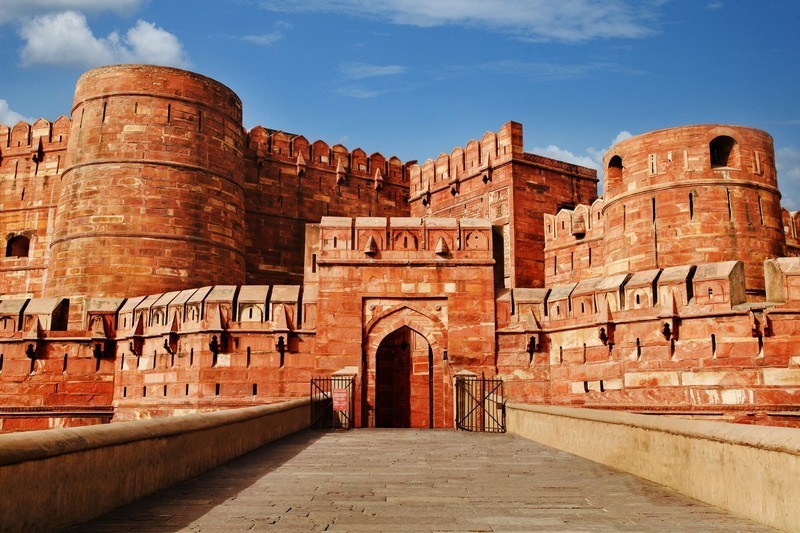
Muhammad bin Tughlaq (reigned 1325–1351), born Fakhr-ud-din Muhammad Jauna Khan, was the second and most controversial Sultan of the Tughlaq dynasty. He succeeded his father, Ghiyas-ud-din Tughlaq, in 1325. He is widely considered the most learned and intellectual of all the Delhi Sultans, possessing profound knowledge of logic, philosophy, astronomy, mathematics, and medicine. Despite his scholarship, his reign was marked by widespread rebellions and administrative experiments that frequently failed, leading contemporary historians like Ziauddin Barani and Ibn Battuta to describe him as a “mixture of opposites.”
Core Administrative Experiments
The Sultan is best known for five major, ambitious administrative projects. While conceptually innovative, their execution often failed, causing significant economic and social unrest.
The Transfer of Capital (1327)
The Sultan ordered the shifting of the capital from Delhi to Deogir (renamed Daulatabad) in the Deccan.
- The primary rationale was to control the southern territories more effectively and to provide a secure base against Mongol invasions.
- The attempt to force the entire population of Delhi to relocate to Daulatabad resulted in immense suffering and death.
- Within a few years, the project was abandoned, and the capital was moved back to Delhi, leaving both cities depleted.
Introduction of Token Currency (1329–1330)
Due to a global silver shortage and the cost of his expansionist policies, the Sultan introduced bronze and copper coins to replace silver and gold.
- These coins were assigned the same face value as the previously minted Tanka (silver) and Jital (gold).
- The state failed to establish a monopoly on the minting process, leading to widespread circulation of counterfeit, privately minted copper coins.
- The economy collapsed, forcing the Sultan to withdraw the tokens and exchange them for gold and silver from the royal treasury, further emptying state coffers.
Taxation in the Doab (1326)
The Sultan increased agricultural taxes in the fertile Doab region (between the Ganges and Yamuna rivers) to fund his military ambitions.
- The timing was catastrophic, coinciding with a severe famine in the region.
- Peasants abandoned their lands to escape oppressive taxation, leading to rural uprisings.
- When the Sultan eventually attempted to provide relief through loans (Sondhar) and agricultural improvements, the measures came too late to prevent mass agrarian distress.
Khurasan and Qarachil Expeditions
The Sultan planned two massive military campaigns that drained the treasury without yielding territorial gains.
- Khurasan Expedition: He organized a massive army to conquer Khurasan (Persia), paying soldiers a year in advance; the plan was eventually abandoned.
- Qarachil Expedition: Aimed at the Himalayan region (modern-day Kumaon-Garhwal) to secure the northern frontiers, the campaign resulted in the loss of almost his entire army due to harsh mountain terrain and weather.
Internal Governance and Reforms
Despite the failure of his major experiments, Muhammad bin Tughlaq introduced significant institutional changes in revenue and social policy.
The Diwan-i-Kohi
The Sultan established a separate department for agriculture known as Diwan-i-Kohi. Its objective was to bring uncultivated land under the plow through direct state supervision. The state provided financial support (Sondhar) to farmers to procure better seeds and shift to higher-value crops like wheat and grapes.
Relationship with Religious Authorities
Unlike his predecessors, Muhammad bin Tughlaq was secular in his approach to governance. He was the first Sultan to engage with the Hindu yogis and Jain saints, inviting them to his court. He curtailed the political influence of the Ulema (religious scholars), asserting the Sultan’s authority in matters of law and justice.
The State of the Empire
By the later years of his reign, the empire began to disintegrate due to constant rebellions and economic instability.
| Region | Outcome during Tughlaq Rule |
| Bengal | Declared independence and successfully broke away from Delhi. |
| Madurai | Jalal-ud-din Ahsan Shah founded the Madurai Sultanate in 1334. |
| Vijayanagara | Harihara and Bukka established the Vijayanagara Empire in 1336. |
| Bahmani Kingdom | Ala-ud-din Bahman Shah founded the Bahmani Sultanate in 1347. |
Death and Legacy
Muhammad bin Tughlaq died in 1351 at Thatta, Sindh, while campaigning against a rebellion led by Taghi. He was succeeded by his cousin, Firoz Shah Tughlaq.
- Historical Assessment: Modern historians often view him as a visionary who was far ahead of his time but lacked the pragmatic temperament required to implement his reforms.
- Foreign Accounts: Ibn Battuta, the famous Moroccan traveler, arrived in India during his reign and served as the Qazi of Delhi for several years. His travelogue, the Rihla, remains the most authoritative primary source for the social and political life of this period.
- Trivia: The Sultan was the first to implement a famine code, attempting to organize relief measures during natural disasters, a practice that was unique for the 14th century.