
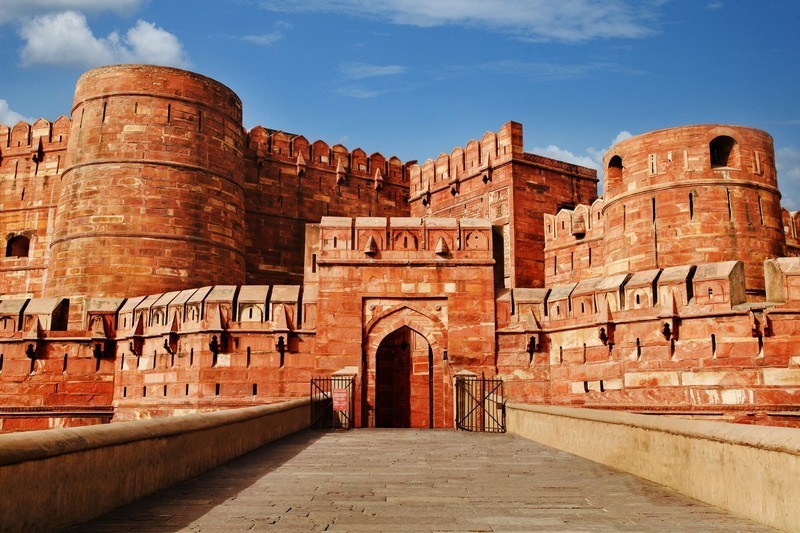
The Ghurids were a Tajik dynasty of Persian origin from the mountainous Ghor region of present-day Afghanistan. Initially vassals of the Ghaznavids, they rose to prominence after the decline of Ghaznavid power, eventually eclipsing them to become the primary architects of Islamic political authority in North India. Unlike the Ghaznavids, whose primary interest was wealth extraction, the Ghurids focused on systematic territorial conquest and the establishment of a centralized state.
Muhammad Ghori: The Architect of Expansion
Muhammad Ghori (r. 1173–1206 CE) shifted the focus of the Ghurid Empire from Central Asian skirmishes to the Indian subcontinent. His military strategy was defined by a transition from sporadic raids to permanent territorial occupation.
- Initial Invasions: Ghori captured Multan in 1175 CE and Uchch in 1176 CE. By 1186 CE, he had conquered Lahore, effectively liquidating the remnants of the Ghaznavid Empire in the Punjab.
- Strategic Objectives: His primary goal was to secure the Gangetic plains and establish a stable administrative base in India, rather than merely raiding for plunder.
- Military Edge: The Ghurid army excelled in horse-archer tactics, mobility, and the use of iron-stirrups, which allowed their cavalry to perform complex maneuvers impossible for the heavy, elephant-reliant Indian armies of the time.
Decisive Military Campaigns
The Ghurid expansion was solidified through a series of key battles that altered the power dynamics of medieval North India.
- Battle of Tarain (1191 CE): In the first engagement against the Rajput confederacy led by Prithviraj Chauhan III, Ghori suffered a significant defeat and was forced to retreat.
- Second Battle of Tarain (1192 CE): Ghori returned with a reorganized and superior force. By employing feigned retreat tactics and surprise dawn attacks, he defeated the Rajput forces. This victory is regarded as the watershed moment that ended the dominance of the Chauhan dynasty and effectively broke the back of Rajput resistance in the Doab.
- Battle of Chandawar (1194 CE): Ghori defeated Jayachandra of the Gahadavala dynasty of Kannauj, ensuring Ghurid control over the fertile Gangetic heartland.
Administrative Infrastructure and the Iqta System
The Ghurids inherited and refined the administrative machinery developed by the Ghaznavids, institutionalizing it to support their expanding empire.
- Iqta System: This was the bedrock of Ghurid administration. Military commanders (Muqtis or Iqtadars) were assigned specific territories from which they collected revenue to maintain troops and provide administrative support. This system effectively decentralized military maintenance while centralizing political loyalty to the Sultan.
- Military Governance: Upon conquest, regions were placed under trusted military generals (such as Qutb-ud-din Aibak, Bakhtiyar Khalji, and Taj-ud-din Yildiz), who functioned as de facto governors.
- Economic Continuity: The Ghurids largely retained the existing agrarian tax structures, ensuring that the transition of power did not disrupt agricultural production, which remained the primary source of state revenue.
Regional Expansion: Bakhtiyar Khalji
The expansion of the Ghurid Empire was not limited to North India. Muhammad Bakhtiyar Khalji, a general under Ghori, extended the empire’s influence into the eastern regions.
- Conquest of Bihar: Khalji led a swift campaign into Bihar (c. 1197–1200 CE), capturing the significant intellectual and administrative centers of Odantapuri and Vikramshila.
- Incursion into Bengal: By 1204–1205 CE, Khalji pushed into Bengal, defeating the elderly Lakshmana Sena of the Sena dynasty. This brought the lower Gangetic basin under the Ghurid fold and facilitated the spread of Islamic influence into eastern India.
Comparative Analysis: Ghaznavid vs. Ghurid Strategy
| Feature | Ghaznavid Strategy | Ghurid Strategy |
| Primary Objective | Resource extraction (plunder) | Territorial conquest and state formation |
| Nature of Incursion | Raids (temporary presence) | Permanent occupation (settlement) |
| Military Focus | Frontier defense/Security | Systemic expansion into the heartland |
| Administrative Model | Primitive Iqta system | Institutionalized Iqta system |
Reasons for Ghurid Success
The collapse of North Indian resistance to the Ghurids was driven by a combination of internal and external factors:
- Political Fragmentation: India lacked a unified national consciousness or central command. Regional kingdoms (Chauhans, Gahadavalas, Paramaras) were often locked in internecine conflicts, preventing a coordinated response.
- Tactical Superiority: The Ghurid cavalry was faster and more flexible than the Indian military, which relied on defensive, static formations and heavy, vulnerable elephant corps.
- Social Stratification: In some regions, the rigid caste-based military structure restricted military training to a specific class, leaving a large portion of the population disengaged from defense efforts.
- Logistical Coordination: The Ghurids utilized a well-established supply network from their Afghan bases, whereas Indian kingdoms struggled with maintaining long-term defensive alliances.
The Legacy of 1206 CE
The death of Muhammad Ghori in 1206 CE necessitated a political transition. Following his assassination, his lead general, Qutb-ud-din Aibak, consolidated control over the Ghurid territories in India. This transition marked the formal birth of the Delhi Sultanate, with Aibak establishing the Mamluk (Slave) dynasty. The Ghurid expansion provided the foundational military, fiscal, and bureaucratic structures that defined the governance of Northern India for the subsequent three centuries.
Last Modified: June 19, 2026