
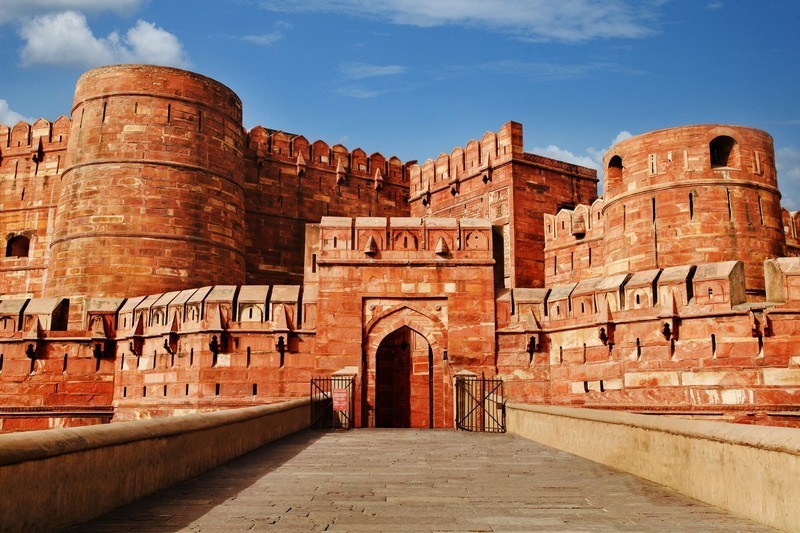
The Saluva Dynasty (1485–1505 AD) was the second of the four ruling dynasties of the Vijayanagara Empire. It was established following a period of severe political decline and instability under the later rulers of the founding Sangama Dynasty, specifically Mallikarjuna Raya and Virupaksha Raya II. Internal corruption, weak central authority, and continuous external aggression from the Bahmani Sultanate and the Gajapati Dynasty of Odisha threatened to collapse the empire. The Saluva Dynasty emerged as a stabilizing militaristic force, temporarily arresting this decline through the implementation of India’s first historical “Saluva Usurpation.”
The Founders and Ideological Basis
The dynasty was founded by Saluva Narasimha Deva Raya, who served as the powerful military commander and governor of Chandragiri (modern-day Andhra Pradesh) under the Sangama rulers.
The First Saluva Usurpation (1485 AD)
Recognizing that the weak Sangama monarch Virupaksha Raya II could not defend the state against external invasions, Saluva Narasimha dispatched his loyal general, Narasa Nayaka, to seize the capital city of Vijayanagara. Virupaksha Raya II fled, and Saluva Narasimha was formally crowned king, an event recorded in medieval historiography as the “First Usurpation.” This transition of power shifted the basis of political legitimacy from hereditary lineage to sheer military capability.
Chronological Succession and Key Monarchs
Saluva Narasimha Deva Raya (1485–1491 AD)
As the founding sovereign, Saluva Narasimha spent his entire reign executing military campaigns to reclaim territories lost to external enemies and subduing rebellious internal chieftains, such as the Sambeias of Peranipadu and the chiefs of Ummattur.
Thimma Bhupala (1491 AD)
The elder son of Saluva Narasimha, Thimma Bhupala, ascended the throne under the regency of the general Narasa Nayaka. His brief reign ended within months when he was assassinated by a political rival, leading to immediate internal instability.
Immadi Narasimha Raya (1491–1505 AD)
The younger son of Saluva Narasimha succeeded his brother as a minor. Absolute political and military power during his reign was held by the regent Narasa Nayaka, and later by Narasa’s son, Vira Narasimha Tuluva. Immadi Narasimha remained a titular sovereign, confined largely to the fort of Penukonda. In 1505 AD, Vira Narasimha Tuluva assassinated Immadi Narasimha, executing the “Second Usurpation” and establishing the Tuluva Dynasty.
Geopolitical Conflicts and Military Reorganization
The Gajapati Conundrum and Captivity
Saluva Narasimha faced continuous conflict with the Gajapati ruler Purushottama Deva of Odisha. During a military campaign to defend the strategic fort of Udayagiri, Saluva Narasimha was defeated and taken prisoner by the Gajapati forces. He surrendered the fort of Udayagiri and the surrounding coastal districts to secure his release.
Revival of the Horse Trade Monopolies
To counter the superior cavalry of the Deccan Sultanates, Saluva Narasimha recognized the critical need to revitalize the imperial military structure. He re-established state monopolies over the maritime import of Arabian horses. He offered high cash incentives to Arab and Portuguese merchants operating at the western ports of Bhatkal and Honavar, laying the groundwork for the military dominance later achieved by the Tuluva Dynasty.
Administrative Mechanisms and Governance
Intensification of the Nayankara System
The Saluva period formalized the centralization of the Nayankara system. Given the continuous state of warfare, the crown assigned large territorial tracts (Amaram) to dependable military commanders (Nayakas). These Nayakas were granted absolute revenue collection rights in exchange for maintaining structured divisions of infantry, cavalry, and war elephants available for immediate imperial mobilization.
Administrative Divisions
The dynasty preserved the primary administrative hierarchy inherited from the Sangamas, utilizing Rajyas (provinces) governed by military loyalists, which were further divided into Nadus (districts) and Gramas (villages).
Cultural Renaissance, Epigraphy, and Literary Patronage
Despite its brief and unstable tenure, the Saluva Dynasty was a significant period for the patronage of Sanskrit literature and the development of the Vaishnavite Madhva tradition.
Patronage of Sri Vyasatirtha
Saluva Narasimha was a patron of Vyasatirtha, the eminent Madhva saint, philosopher, and scholar. Vyasatirtha served as the spiritual advisor to the Saluva court and later became the patron saint of the Tuluva rulers, including Krishnadevaraya.
The Saluvabhyudayam
The court poet Rajanatha Dindima II composed the historical Sanskrit epic Saluvabhyudayam. This text serves as a key literary source, chronicling the ancestry, military achievements, and life of the founding monarch Saluva Narasimha.
Direct Royal Compositions
Saluva Narasimha was an accomplished Sanskrit scholar who authored the Ramabhyudayam, a dramatic work based on the epic Ramayana.
Key Aspects of the Saluva Dynasty
| Core Dimension | Foundational Element and UPSC Specific Fact |
| Reign Period | 1485 – 1505 AD (The shortest-ruling dynasty of the empire). |
| Dynastic Emblem | The Varaha (Boar) combined with the Gandaberunda (a double-headed mythical bird), representing strength. |
| Official Royal Signature | Retained the tradition of signing all official edicts and land grants in the Kannada script as “Sri Virupaksha”. |
| Foreign Relations | Initiated early diplomatic and commercial dialogues with Portuguese traders who were seeking to establish factories along the Malabar and Kanara coasts. |
| Primary Inscriptions | The Devulapalli Copper Plates (1505 AD) provide a detailed genealogy of the Saluva rulers and record extensive land grants to temples. |
| Numismatic Legacy | Issued gold Varahas and Pratapas featuring images of the Venkateswara deity of Tirupati, signaling a strong alignment with Vaishnavism. |
Architectural Footprint and Hydraulic Foundations
Epigraphic Records at Tirumala
The Saluva dynasty maintained a close relationship with the Venkateswara Temple at Tirupati. Saluva Narasimha and his family made extensive donations of gold, jewels, and tax-free villages (Agraharas) to the temple. They constructed the Sampangi Pradakshinam path and several pillared pavilions (Mandapas) within the temple complex.
Hydraulic Interventions
To support agrarian expansion and ensure steady land revenue (Sist), the Saluva governors patronized the excavation of irrigation canals and the construction of water tanks in the arid tracts of Rayalaseema. The renovation of irrigation systems around the Chandragiri fort area was directly funded by the Saluva treasury to protect agricultural yields against seasonal droughts.
Last Modified: June 22, 2026