
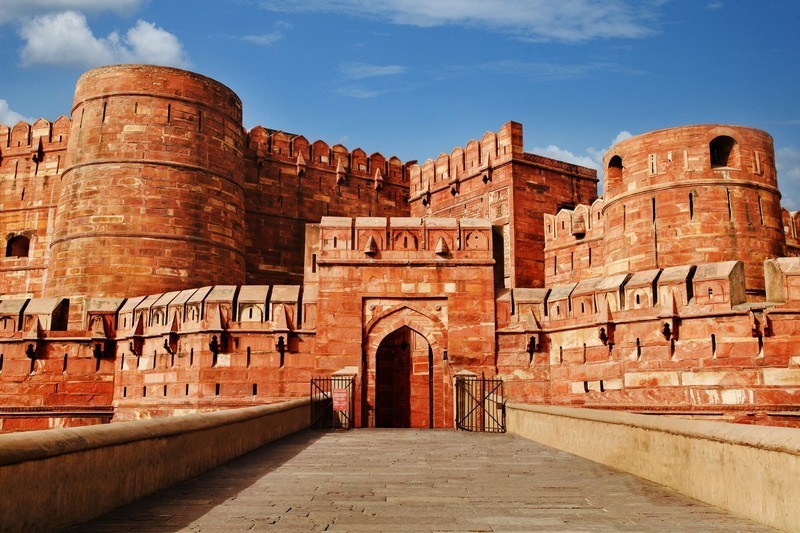
Bidar, situated on a central plateau in the northeastern Deccan, transformed from a secondary fortress into an imperial capital in 1425 CE. Sultan Ahmad Shah Wali of the Bahmani Dynasty relocated the capital from Gulbarga (Ahsanabad) to Bidar, renaming the city Muhammadabad. The shift was driven by strategic and geographical factors, as Bidar offered a healthier climate, an abundant water supply from natural springs, and a more secure, elevated defensive position against military incursions from the Vijayanagara Empire and the Kakatiya successors.
Geopolitical Core of the Late Bahmani Era
As the political nerve center, Bidar oversaw the peak of Bahmani territorial expansion toward both the Konkan coast in the west and the Andhra delta in the east. Positioned at the tri-junction of modern-day Karnataka, Maharashtra, and Telangana, the city acted as a multicultural crucible. It served as the central stage for the political power struggle between the Deccanis (local Deccani Muslims) and the Afaqis (foreign immigrants from Persia, Turkey, and Central Asia), which ultimately caused the fragmentation of the state.
The Architectural Marvel of Bidar Fort and Urban Planning
Military Engineering and Fortification
The Bidar Fort stands as a prime example of Indo-Islamic military engineering heavily influenced by medieval Persian designs. Constructed using local laterite stone, the fort features a triple-moat system carved out of solid rock. It contains 37 massive bastions, including the prominent Munda Burj, which housed heavy artillery. The fort is entered through distinct monumental gateways, such as the Sharaza Darwaza (Lion Gate) and the Gumbad Darwaza.
Monolithic Palaces and Administrative Structures
- Rangin Mahal: Built by Sultan Mahmud Shah and later modified by the Barid Shahi rulers, this palace is famous for its intricate mother-of-pearl inlay work on black basalt stone, reflecting a blend of Persian and Deccani woodcraft.
- Gagan Mahal and Tarkash Mahal: These residential complexes served as the royal quarters, featuring advanced multi-story engineering, hanging gardens, and stuccowork ceilings.
- Solah Khamba Masjid: Constructed by Qubil Sultani in 1423–24 CE, this mosque is named for the 16 massive circular pillars supporting its central prayer hall, making it one of the oldest surviving Bahmani structures within the citadel.
- Takht Mahal: The throne room complex where the Bahmani coronations took place, designed with long-span arches and secret underground escape tunnels.
The Madrasa of Mahmud Gawan and Academic Infrastructure
Educational Architecture and Global Scholars
In 1472 CE, the Persian-born Prime Minister Mahmud Gawan commissioned the construction of a grand Madrasa (Islamic residential university) in the heart of Bidar. Built in the classic Timurid style of Central Asia, the three-story building featured a large central courtyard, four grand arched porticos (iwans), and twin minarets decorated with green, turquoise, and white glazed tiles containing Quranic calligraphy.
Library and Administrative Influence
The Madrasa operated as a world-class academic center, housing a library of over 3,000 rare manuscripts from Persia, Arabia, and Central Asia. Mahmud Gawan used his personal wealth to invite leading global scholars, scientists, and theologians to teach at Bidar, establishing the city as a major center of Islamic learning in South India.
The Karez System: Medieval Hydrological Innovation
Engineering and Topography
To solve the water scarcity issues of the dry Deccan plateau, the Bahmani rulers introduced the Karez (Qanat) system to Bidar. This subterranean water-supply network relies entirely on gravity, without using external power sources.
Subterranean Aquifers and Shafts
The system features a series of vertical shafts connected by a gently sloping underground tunnel. This channel taps into groundwater from the laterite hilltops and transports it directly to royal palaces, public squares, and domestic settlements. The Bidar Karez network includes over 30 vertical inspection shafts, highlighting the transmission of advanced Persian hydrological engineering to medieval India.
The Barid Shahi Dynasty and the Fragmentation of Bidar
Emergence of the Barid Shahis
Following the execution of Mahmud Gawan in 1481 CE, central Bahmani authority collapsed. Qasim Barid, a Turkish slave who rose to become the Amir-ul-Barid (prime minister) of the puppet Bahmani sultans, seized actual administrative power. In 1528 CE, his son Amir Ali Barid established the independent Barid Shahi Dynasty, making Bidar the capital of the smallest of the five Deccan Sultanates.
Dynastic Rulers and Political Contributions
| Ruler | Reign (CE) | Key Historical Contributions |
| Qasim Barid I | 1489–1504 | De facto ruler of the late Bahmani state; founded the Barid Shahi political house. |
| Amir Ali Barid | 1504–1542 | Formally established the independent Barid Shahi Sultanate; fortified Bidar against Bijapur. |
| Ali Barid Shah I | 1542–1580 | First to adopt the title of “Shah”; joined the Deccan coalition in the Battle of Talikota. |
| Ibrahim Barid Shah | 1580–1587 | Expanded artistic patronage; consolidated territories around Udgir. |
| Amir Barid Shah III | 1609–1619 | Last independent ruler; faced final annexation by neighboring powers. |
The Ashtur Tombs and Royal Necropolis
Located outside the city walls at Ashtur, the royal tombs showcase the architectural transition across dynasties. The Bahmani tombs, like that of Ahmad Shah Wali, feature large hemispherical domes with interior walls decorated with gold leaf and bright colors. In contrast, the Barid Shahi tombs, such as the tomb of Ali Barid Shah, feature open four-sided arched pavilions surrounded by formal Persian-style gardens (Charbagh).
The Decline, Annexation, and Cultural Legacy of Bidar
The Battle of Talikota (1565 CE)
Under Ali Barid Shah I, Bidar joined the alliance of the Deccan Sultanates (with Bijapur, Ahmadnagar, and Golconda) to defeat the Vijayanagara Empire at the Battle of Talikota. Despite this victory, Bidar remained vulnerable to its larger neighbors due to its small size and lack of natural borders. In 1619 CE, Ibrahim Adil Shah II annexed the Barid Shahi Kingdom, incorporating Bidar into the Sultanate of Bijapur.
Mughal Conquest and Aurangzeb’s Siege
In 1656 CE, Prince Aurangzeb led a 27-day siege that captured the Bidar Fort for the Mughal Empire, officially annexing the region during the reign of Shah Jahan. Under Mughal rule, Bidar lost its status as a royal capital but remained a key administrative outpost, later transferring to the Nizam of Hyderabad in the early 18th century.
The Bidriware Craft Industry
The permanent cultural legacy of medieval Bidar is Bidriware, a unique metal handicraft developed under Bahmani patronage. The craft involves casting an alloy of zinc and copper, which is blackened using soil containing ammonium chloride sourced from the Bidar Fort. Artisans then inlay intricate geometric and floral designs using pure silver or gold wire, creating a sharp visual contrast. This craft received a Geographical Indication (GI) tag, preserving the artistic tradition of the medieval Deccani courts.
Last Modified: June 22, 2026