
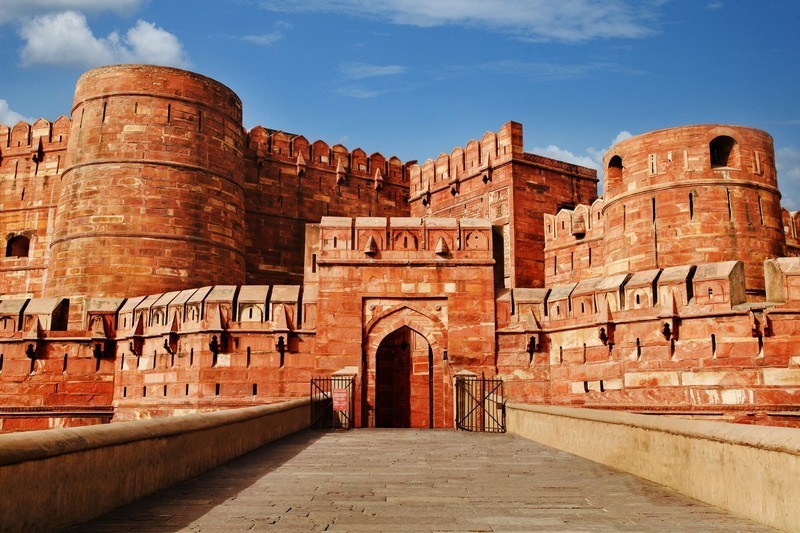
The Bahmani Kingdom stands as the first independent Islamic kingdom in South India, serving as a critical geopolitical and cultural counterweight to the Vijayanagara Empire during the medieval period.
Foundation and Political Evolution
Rise of Alauddin Hasan Bahman Shah
- Establishment Fact: The Bahmani Sultanate was founded in 1347 CE by Alauddin Hasan Bahman Shah, whose original name was Zafar Khan.
- Geopolitical Context: He was a Turkish officer (Amir-i-Sadah) who revolted against the centralizing, oppressive policies of Sultan Muhammad bin Tughlaq of the Delhi Sultanate.
- Capital Shifts: The initial capital was established at Ahsanabad (Gulbarga), which remained the political hub until 1425 CE when Sultan Ahmad Shah Wali shifted the capital to Muhammadabad (Bidar) due to its strategic and climatic advantages.
Administrative and Military Structure
- Tarafs (Provinces): To manage the expanding territory, the kingdom was divided into four distinct administrative provinces called Tarafs: Gulbarga, Daulatabad, Berar, and Bidar.
- Tarafdars: Each Taraf was placed under a governor known as a Tarafdar, who held extensive military, financial, and judicial powers within their jurisdiction.
- The Nobility Conflict: The polity was deeply fractured by an internal socio-political conflict between two factions: the Deccanis (local Deccani Muslims) and the Afaqis / Gharibs (foreign immigrants from Persia, Turkey, and Central Asia).
Key Monarchs and Contributions
| Ruler | Reign (CE) | Key Historical Contributions | Trivia / Prelims Facts |
| Alauddin Hasan Bahman Shah | 1347–1358 | Founded the dynasty; established the capital at Gulbarga. | Claimed descent from the mythical Persian hero Bahman. |
| Tajuddin Firoz Shah | 1397–1422 | Noted linguist, astronomer, and patron of sciences; built the city of Firozabad on the Bhima River. | Inducted Hindus into the administration on a large scale; fought the Battle of absolute supremacy over Krishna-Godavari Basin against Vijayanagara. |
| Ahmad Shah Wali | 1422–1436 | Shifted the permanent capital from Gulbarga to Bidar. | Strongly influenced by Sufi saint Hazrat Khwaja Bande Nawaz. |
| Muhammad Shah III | 1463–1482 | Witnessed the peak of territorial expansion. | Conducted administration under the famous Prime Minister Mahmud Gawan. |
The Era of Mahmud Gawan
Administrative and Military Reforms
- Redistribution of Tarafs: Mahmud Gawan divided the existing four provinces into eight new Tarafs to curb the over-centralized power of the provincial governors.
- Khasa-i-Sultani: Gawan placed key strategic lands under the direct administrative control of the Sultan as royal lands, reducing the revenue independence of local lords.
- Monetary Salaries: He institutionalized systemic military discipline by paying soldiers in cash instead of assigning traditional land grants (Jagirs).
Cultural and Academic Infrastructure
- Bidar Madrasa: In 1472 CE, Mahmud Gawan built a massive three-story residential university (Madrasa) at Bidar using distinct Persian architectural designs.
- Library Collection: The Madrasa housed a library filled with over 3,000 rare manuscripts sourced directly from Islamic academic centers in the Middle East.
Breakup of the Kingdom and the Deccan Sultanates
Internal court intrigues led to the execution of Mahmud Gawan in 1481 CE, accelerating the disintegration of the state. By 1527 CE, the Bahmani Kingdom fractured into five independent principalities known collectively as the Deccan Sultanates.
| Sultanate | Founder | Ruling Dynasty | Annexed By |
| Ahmadnagar | Malik Ahmad | Nizam Shahi | Shah Jahan (Mughal Empire) in 1633 CE |
| Bijapur | Yusuf Adil Shah | Adil Shahi | Aurangzeb (Mughal Empire) in 1686 CE |
| Golconda | Quli Qutb Shah | Qutb Shahi | Aurangzeb (Mughal Empire) in 1687 CE |
| Berar | Fathullah Imad-ul-Mulk | Imad Shahi | Ahmadnagar Sultanate in 1574 CE |
| Bidar | Amir Ali Barid | Barid Shahi | Bijapur Sultanate in 1619 CE |
Battle of Talikota (1565 CE)
- The Alliance: Ahmadnagar, Bijapur, Golconda, and Bidar formed a united front, leaving out Berar due to regional animosities.
- The Outcome: This grand alliance decisively defeated the Vijayanagara Empire led by Rama Raya at the Battle of Talikota, also known as the Battle of Rakshasi-Tangadi.