
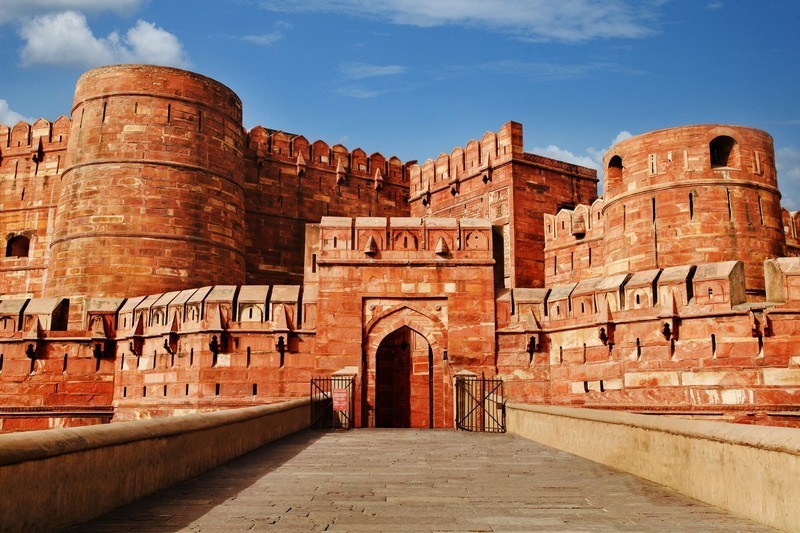
The Khajuraho group of monuments, located in the Bundelkhand region of Madhya Pradesh, represents the pinnacle of the Nagara style of temple architecture. Built primarily between 950 and 1050 CE by the Chandella dynasty, these temples serve as a testament to the artistic, religious, and political prosperity of early medieval North India.
Historical and Political Context
The construction of these temples was directly supported by the Chandella rulers, who transitioned from feudatories of the Gurjara-Pratiharas to sovereign monarchs. The site was selected as a religious and cultural hub, reflecting the dynasty’s legitimacy and devotion.
- Patronage: Rulers like Yashovarman, Dhanga, and Vidyadhara were the primary architects of the site’s development.
- Religious Syncretism: The complex includes temples dedicated to both the Hindu pantheon (Shiva, Vishnu, and Shakti) and the Jain Tirthankaras, illustrating a state policy of religious harmony.
- Political Significance: The temples functioned not only as sites of worship but as symbols of Chandella imperial might, asserting their status amidst the regional competition of the Tripartite Struggle.
Architectural Characteristics: Nagara Style
Khajuraho temples represent the evolution of the Nagara style, moving away from simple structures to complex, multi-layered edifices.
- Structure: Most temples follow the panchayatana layout, consisting of a main shrine surrounded by four subsidiary shrines at the corners.
- Shikhara: The temples are known for their curvilinear shikhara (spire) design, which rises in a series of mountain-like peaks (mount meru).
- Mandapa: The structure is typically divided into an entrance (ardha-mandapa), a hall (mandapa), a vestibule (antarala), and a sanctum (garbhagriha).
- Adhisthana: The temples are built on a high stone platform (jagati), which elevates the structure and provides a base for circumambulation (pradakshina).
Symbolic and Sculptural Program
The sculptures at Khajuraho are renowned for their intricate craftsmanship and the diversity of themes depicted.
- Daily Life: Panels depict musicians, dancers, hunters, soldiers, and artisans, providing a snapshot of the social and economic life in the Chandella kingdom.
- Mythology: Elaborate carvings of gods and goddesses, celestial nymphs (apsaras), and mythical beings reflect the theological focus of the era.
- Erotic Art: A small percentage of the sculptures depict erotic scenes. Scholars interpret these as representations of the four goals of life (purusharthas) in Hindu philosophy: dharma, artha, kama, and moksha.
- Sardula: The recurring motif of the sardula—a mythical creature blending parts of lions, humans, and other animals—symbolizes strength and transcendence.
Notable Temples in the Complex
The Khajuraho site is traditionally divided into three groups: Western, Eastern, and Southern.
| Temple Name | Dedication | Notable Feature |
| Kandariya Mahadeva | Shiva | The largest and most elaborate temple; built by Vidyadhara. |
| Lakshmana Temple | Vishnu | Features detailed friezes depicting court processions and battle scenes. |
| Vishvanatha Temple | Shiva | Known for its classic panchayatana layout and refined sculptures. |
| Parshvanatha Temple | Jain | Part of the eastern group; famous for the absence of erotic carvings. |
| Matangeshvara Temple | Shiva | The only temple in the complex that is still in active use for worship. |
Administrative and Economic Significance
The temples served as centers of socio-economic activity, managed by the temple administration and supported by royal land grants.
- Endowments: The Chandella kings frequently issued copper plate inscriptions documenting the grant of villages to support temple upkeep, priests, and ritual services.
- Urban Hubs: The presence of such massive architectural complexes stimulated the growth of urban settlements, markets, and trade routes around the religious center.
- UNESCO Status: The Khajuraho group of monuments was designated as a UNESCO World Heritage Site in 1986, recognizing its universal cultural value.
UPSC Prelims Trivia
- The Khajuraho temples are primarily constructed from sandstone, brought from the nearby Panna quarries.
- The temples are built in a unique orientation, generally facing the sunrise, with the exception of some Jain temples.
- The Matangeshvara temple is the most ancient temple at the site and differs slightly in its structural layout compared to the later Chandella masterpieces.
- The name ‘Khajuraho’ is derived from the Sanskrit word ‘khajuravahaka’, referring to the city of date palms.
- Unlike many other medieval temple sites, Khajuraho was never destroyed by major invasions during the Sultanate period, though many temples were abandoned until they were “rediscovered” by colonial surveyors in the 19th century.