
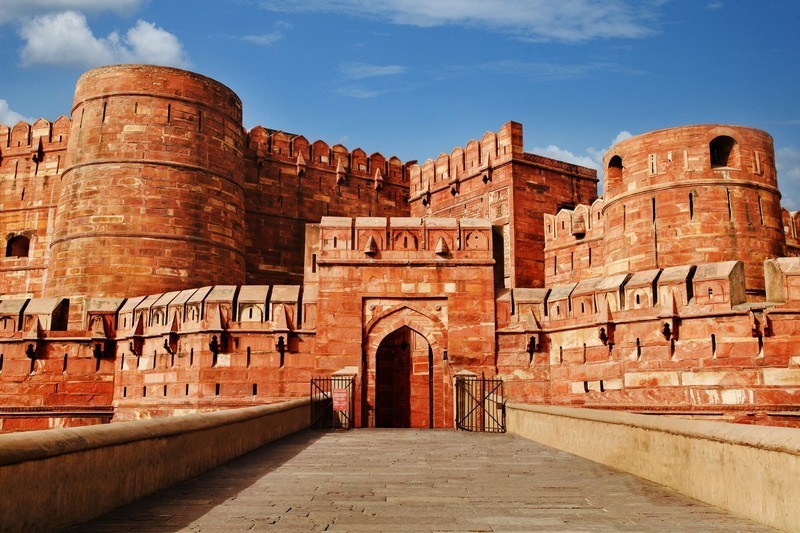
- Consolidation of Fractured Regions: Prior to the establishment of the Ilyas Shahi dynasty, Bengal was administratively splintered by the Tughlaq dynasty into three distinct entities: Lakhnauti (North Bengal), Satgaon (South-West Bengal), and Sonargaon (East Bengal). Shamsuddin Ilyas Shah, originally a noble in the service of Delhi, systematically conquered these regions between 1342 and 1352 CE.
- Proclamation of Imperial Titles: Upon unifying the deltaic territories, Ilyas Shah proclaimed himself Sultan-i-Bangala and Shah-i-Bangalah. These titles marked the birth of a distinct, unified politico-cultural identity for Bengal, independent of the Delhi Sultanate. He also adopted the title Sultan-us-Salatin (Sultan of Sultans).
- Military Expeditions beyond Bengal: Ilyas Shah extended his geopolitical influence through aggressive external campaigns. He invaded Nepal in 1349 CE, penetrating as far as Kathmandu and destroying the Swayambhunath stupa. He also launched successful military incursions into Gorakhpur, Varanasi, Orissa (Jajnagar), and Kamarupa (Assam), establishing Bengal as a dominant regional power.
- The Siege of Ekdala: In 1353 CE, Sultan Firuz Shah Tughlaq of Delhi led an imperial army to reassert central authority over Bengal. Ilyas Shah retreated to the impregnable mud-fortress of Ekdala (located in present-day Dinajpur district). The imperial forces failed to breach the fortifications, forcing Firuz Shah Tughlaq to negotiate a retreat and tacitly acknowledge the independence of the Bengal Sultanate with the River Kosi fixed as the mutual boundary.
Reign of Sikandar Shah (1358–1390 CE)
- The Second Tughlaq Invasion: Firuz Shah Tughlaq launched a second massive military campaign against Bengal in 1359 CE, targeting Ilyas Shah’s successor, Sikandar Shah.
- Securing Sovereignty at Ekdala: Replicating his father’s defensive strategy, Sikandar Shah shut himself inside the fortress of Ekdala. Following a protracted and inconclusive siege, a formal peace treaty was struck. The Delhi Sultanate explicitly recognized Bengal’s sovereign independence and exchanged valuable gifts, ensuring nearly two centuries of geopolitical autonomy for the region.
Zenith of Diplomacy and Culture under Ghiyasuddin Azam Shah (1390–1411 CE)
- Judicial Integrity and Rule of Law: Ghiyasuddin Azam Shah’s reign is celebrated in medieval chronicles for the absolute supremacy of the judiciary. The Persian historian Firishta records an event where the Sultan submitted himself unconditionally to the court of the Chief Qazi to face trial for an accidental injury caused to a widow’s son, establishing a significant legal precedent.
- Trans-Oceanic Diplomatic Networks: Azam Shah initiated robust diplomatic relations with the Ming Dynasty of China. He exchanged high-level embassies with the Chinese Emperor Yongle between 1405 and 1411 CE. Bengal sent delegations carrying regional products like muslin, frankincense, and horses, while receiving Chinese silk, porcelain, and silver in return.
- Pan-Islamic Patronage: The Sultan extended financial endowments to the holy cities of Mecca and Medina, funding the construction of the famous Ghiyasia Madrasah structures and purchasing estates to support Islamic scholars in the Hejaz region.
The Hindu Interregnum and the Restored Ilyas Shahi Era
The Rise of Raja Ganesha and Jalaluddin Muhammad Shah (1414–1435 CE)
- The Hindu Landlord Coup: Taking advantage of the weak successors of Ghiyasuddin Azam Shah, Raja Ganesha, a powerful Hindu landlord (zamindar) of Bhaturia (Dinajpur), engineered a palace coup. He usurped de facto administrative power, throwing the Ilyas Shahi dynasty into a temporary eclipse.
- The Intervention of Jaunpur: The local Islamic clergy, led by the Sufi saint Nur Qutb alam, invited Sultan Ibrahim Shah Sharqi of the Jaunpur Sultanate to invade Bengal and restore Muslim rule.
- The Conversion and Settlement: To resolve the geopolitical crisis, Raja Ganesha agreed to step down and permitted his son, Jadu, to convert to Islam. Jadu ascended the throne under the title of Jalaluddin Muhammad Shah (1415–1432 CE). Jalaluddin struck coins featuring Arabic calligraphy alongside the local dynamic Lion motif, symbolizing a synthesis of Islamic authority and Bengali kingship.
The Restored Ilyas Shahi Dynasty (1435–1487 CE)
- Dynastic Restoration: In 1435 CE, Nasiruddin Mahmud Shah, a descendant of Shamsuddin Ilyas Shah, assassinated the last ruler of the House of Raja Ganesha, restoring the original line to the throne of Lakhnauti.
- The Habshi Military Experiment: Sultan Rukunuddin Barbak Shah (1459–1474 CE) systematically imported thousands of Abyssinian military slaves, known as Habshis, from East Africa to form a loyal elite praetorian guard and counter the influence of traditional Turkish and local Hindu nobles.
- The Dynastic Collapse: This institutional military experiment backfired. The Habshi guards grew politically dominant, leading to widespread palace intrigues. In 1487 CE, the Habshi commander Shahzada Barbak assassinated Sultan Jalaluddin Fateh Shah (the last Ilyas Shahi ruler), abruptly ending the dynasty and initiating a brief period of chaotic Habshi military rule.
Comprehensive Chronological Matrix of the Ilyas Shahi Dynasty
| Ruler | Regnal Period (CE) | Major Historical Milestones & Key Contributions |
| Shamsuddin Ilyas Shah | 1342–1358 | Founded the dynasty; unified Lakhnauti, Satgaon, and Sonargaon; assumed the title Sultan-i-Bangala; repulsed the first Tughlaq invasion at the mud-fort of Ekdala. |
| Sikandar Shah | 1358–1390 | Successfully defended Bengal sovereignty during the second Tughlaq invasion; commissioned the monumental Adina Mosque at Pandua; built the Tomb of Akhi Sirajuddin. |
| Ghiyasuddin Azam Shah | 1390–1411 | Established diplomatic ties with Ming China; patronized Persian poet Hafiz Shirazi; funded educational institutions in Mecca and Medina; maintained absolute judicial independence. |
| Saifuddin Hamzah Shah | 1411–1413 | Faced severe political instability due to internal rebellions and the covert rise of Hindu court factions led by Raja Ganesha. |
| Shihabuddin Bayazid Shah | 1413–1414 | Issued coins from distinct regional mints; puppet ruler dominated by the expanding authority of Raja Ganesha. |
| Interregnum Period | 1414–1435 | Temporary rule by the House of Raja Ganesha and his converted son, Jalaluddin Muhammad Shah. |
| Nasiruddin Mahmud Shah | 1435–1459 | Restored the Ilyas Shahi line; shifted the permanent administrative capital from Pandua back to Gaur; initiated extensive civil construction projects. |
| Rukunuddin Barbak Shah | 1459–1474 | Imported East African Habshi slaves; expanded territorial frontiers into Chittagong and Jessore; patronized Maladhar Basu (Gunaraj Khan). |
| Shamsuddin Yusuf Shah | 1474–1481 | Strictly enforced Islamic jurisprudence; built the famous Sakao Mosque and the Lotan Mosque in Gaur. |
| Sikandar Shah II | 1481 | Deposed within days of ascension due to mental instability and aristocratic opposition. |
| Jalaluddin Fateh Shah | 1481–1487 | Attempted to curb the political overreach of the Habshi palace guards; assassinated by the Abyssinian commander Shahzada Barbak, ending the dynasty. |
Institutional Administration and Economic Architecture
The Administrative Machine
- Decentralized Mint-Town System: The Ilyas Shahi state relied on a decentralized administrative structure. Governance and revenue extraction were structured around key regional Mint Towns (such as Lakhnauti, Sonargaon, Satgaon, Muazzamabad, and Shahr-i-Naw). These served as regional fiscal hubs under local governors (Muqti or Wali).
- Military Innovations: The army was organized into distinct wings: a highly specialized riverine navy (Nowwara) essential for amphibious warfare in the deltaic terrain, a massive infantry division armed with bamboo bows and poisoned arrows, and an elite elephant corps. Because the humid climate caused a high mortality rate among horses, cavalry mounts had to be imported at great expense from Central Asia via Bhutan and Tibet routes.
Economic Features and Trade Formations
- Monetary Standardization: The dynasty maintained an economy anchored on the pure silver Taka coin, standardizing weight parameters around 170-175 grains. The coins displayed complex Arabic calligraphic scripts naming the four Rightly Guided Caliphs (Khulafa-e-Rashidun), emphasizing the state’s alignment with broader Islamic political legitimacy.
- Agrarian Proletariat and Surplus: The state incentivized the reclamation of forested lands in East Bengal through land grants to Sufi settlers. This created a large-scale agrarian infrastructure focused on wet-rice cultivation, yielding three harvests a year and transforming Bengal into a major agricultural producer.
- Industrial Muslin Production: Cotton cultivation and handloom weaving reached a high degree of specialization. The state established royal workshops (Karkhanas) that manufactured fine muslins, silk embroideries, and colored cotton textiles, which were exported across Asia and Europe.
- Global Port Infrastructure: Chittagong (Porto Grande) served as the primary gateway for maritime trade, connecting Bengal with international ports in Malacca, Sumatra, Ceylon, the Persian Gulf, and East Africa. The state imported high-value cowrie shells from the Maldives to serve as fractional currency for day-to-day transactions in local markets.
Socio-Cultural Fabric and the Genesis of Bengali Literature
Royal Patronage of the Bengali Vernacular
- Break from Elite Hegemony: The Ilyas Shahi Sultans deliberately broke away from the traditional dominance of Sanskrit and Persian by providing royal court patronage to local Bengali vernacular literature. This policy integrated the local population into the state fabric.
- Maladhar Basu’s Commendation: Sultan Rukunuddin Barbak Shah appointed Maladhar Basu to translate the Sanskrit Bhagavata Purana into Bengali. Basu composed the Sri Krishna Vijaya and was honored by the Sultan with the prestigious title of Gunaraj Khan. His son was awarded the title of Satyaraj Khan.
- Krittibas Ojha’s Ramayana: Under the political stability provided by the Ilyas Shahi courts, Krittibas Ojha composed the Krittivasi Ramayan (Sri Ram Panchali), translating the classic epic into everyday Bengali. This work laid the foundation for modern Bengali narrative literature.
Persian and Sufi Intellectual Currents
- The Invitation to Hafiz Shirazi: Sultan Ghiyasuddin Azam Shah was deeply immersed in Persian literature. He engaged in poetic correspondence with the celebrated Persian poet Hafiz of Shiraz, inviting him to visit the court at Pandua. Although Hafiz could not travel, he composed a famous ghazal dedicated to the Sultan, featuring the line: “All the parrots of India will crack sugar, / Because of this Persian cone which is going to Bengal.”
- The Chishti and Suhrawardi Networks: The state actively funded Sufi hospices (Khanqahs). Prominent saints like Shaikh Akhi Sirajuddin (known as the Aina-i-Hind or Mirror of India) and Alaul Haq Pandavi operated under state protection, facilitating a synthesis of Islamic mysticism with local yogic traditions.
Distinctive Architectural Style: The Bengal Provincial Idiom
Structural Innovations and Climatic Adaptations
- The Brick-and-Terracotta Medium: Because natural stone was scarce in the alluvial delta, Ilyas Shahi architects relied almost exclusively on high-fired red bricks bound with indigenous lime-surkhi mortar. They decorated blank exterior walls with rich, deep-relief terracotta plaques featuring local flora, fauna, and geometric patterns.
- The Curved “Bangla” Roof Architecture: To manage the heavy monsoon rainfall of the region, local builders adapted the curved bamboo eaves of rural huts into permanent brick and stone structures. This curved cornice line became a defining feature of the Bengal Provincial Style, later influencing Mughal imperial architecture (Bangla pavilions).
- Massive Structural Supports: Monuments featured heavy, short, octagonal or square brick pillars and thick load-bearing walls designed to support massive multi-domed roofs over expansive prayer halls.
Architectural Masterpieces of the Dynasty
- The Adina Mosque (Pandua): Commissioned by Sikandar Shah in 1364 CE, this monumental hypostyle structure was designed to rival the Great Mosque of Damascus. It stood as the largest mosque in the entire Indian subcontinent. It featured a vast central open courtyard surrounded by 400 small domestic domes supported by brick arches. The mosque’s Western qibla wall displayed intricate calligraphic carvings and integrated materials from earlier local monuments.
- The Tomb of Ghiyasuddin Azam Shah (Gaur): Located at Sonargaon, this freestanding mausoleum is carved from a single block of dark basalt stone. It features fine geometric openwork screens (jalis) and cornices decorated with hanging lamp motifs, representing an early development in regional funerary architecture.
- The Eklakhi Mausoleum (Pandua): Built during the transitional phase of the early 15th century, this structure is celebrated as the prototype of the single-domed square layout in Bengal. It features a massive brick dome, octagonal corner towers, and a slightly curved cornice line, setting a structural template for later regional monuments.
UPSC Prelims Historical Trivia
- The Battle of Pandua (1353 CE): It was during this conflict that Firuz Shah Tughlaq renamed the city of Pandua to Firuzabad to assert imperial dominance, though the name faded from popular usage after the Tughlaq forces withdrew.
- The Royal Giraffe Embassy: In 1414 CE, Ghiyasuddin Azam Shah’s envoys presented a live African giraffe—acquired from East African traders via the Indian Ocean trade network—to the Ming Emperor Yongle in Beijing. The Chinese court mistook the animal for the mythical Qilin (unicorn), an omen of cosmic favor for the dynasty.
- The Defensive Topography of Ekdala: The exact geographical location of the fortress of Ekdala remained a historical puzzle for centuries. Modern archaeological consensus places it in the Dhanjirhat region of Dinajpur. Its defensive strength came from its location on an island enclosed by natural rivers and deep swamps, which completely neutralized the heavy cavalry of the Delhi Sultanate during monsoon campaigns.