
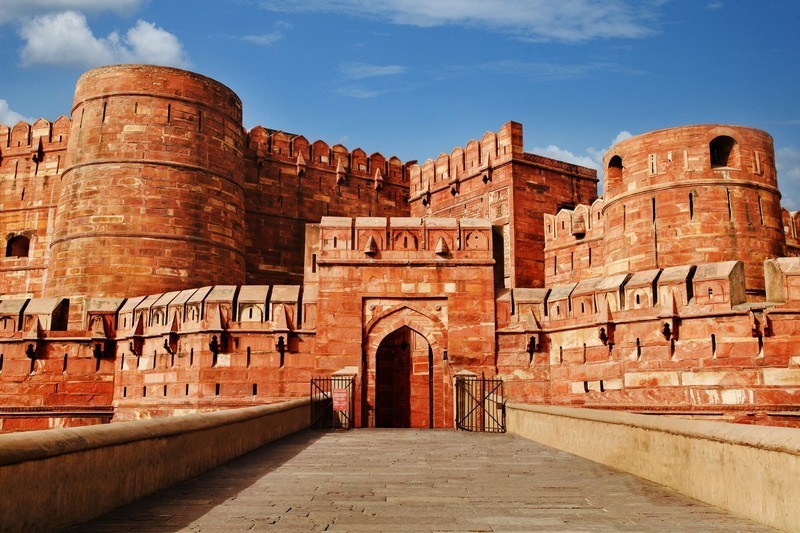
The administrative structure of the Delhi Sultanate (1206–1526 AD) evolved from a centralized military autocracy into a complex bureaucratic system. While maintaining a strong Islamic religious framework, the administration was fundamentally pragmatic, balancing the requirements of a foreign-origin ruling class with the realities of governing a predominantly agrarian, non-Muslim population.
Centralized Autocratic Structure
At the apex of the administration stood the Sultan, who exercised supreme executive, legislative, judicial, and military authority. The nature of his rule was often defined by his personal strength and military charisma rather than institutional constraints.
- The Sultan was the Commander-in-Chief of the army, the final court of appeal, and the ultimate source of all executive appointments.
- Despite the theoretically supreme power, the Sultanate operated under the broad framework of Sharia (Islamic law), though secular decrees known as Zawabit were issued to manage state affairs not explicitly covered by religious law.
- The Sultanate maintained a sophisticated system of espionage (Barid-i-Mumalik) to ensure the loyalty of governors and officials.
Key Central Departments and Officials
The central administration was divided into specialized departments (Diwans) to manage the vast empire.
- Diwan-i-Wizarat: Headed by the Wazir, this was the most important department, overseeing the financial administration and revenue collection of the entire Sultanate.
- Diwan-i-Arz: The military department, headed by the Ariz-i-Mumalik. He was responsible for the recruitment, training, and maintenance of the army, though the Sultan remained the supreme commander.
- Diwan-i-Insha: Handled all royal correspondence and communication between the central and provincial governments.
- Diwan-i-Risalat: Dealt with religious matters, charitable endowments, and diplomatic missions to other kingdoms.
- Diwan-i-Bandagan: Specifically created to manage the large number of slaves (Bandagan) maintained by the Sultans, particularly during the Tughlaq period.
Provincial and Local Governance
The Sultanate was divided into provinces for administrative efficiency, though the nomenclature changed across dynasties.
- Iqta System: The empire was partitioned into Iqtas, governed by Muqtis or Walis. These officials were responsible for maintaining law and order and collecting revenue, of which a portion was retained for the maintenance of their military contingents.
- Shiqs and Parganas: During the Tughlaq and subsequent periods, provinces were divided into Shiqs (led by Shiqdars) and further into Parganas (a cluster of villages).
- Village Administration: The village remained the lowest administrative unit. The Khuts, Muqaddams, and Chaudharis (local hereditary officials) were responsible for collecting revenue and ensuring local order, acting as the primary link between the state and the peasantry.
Evolution of Administrative Dynamics
The Sultanate administration underwent significant shifts based on the personality of the ruling dynasty.
| Dynasty | Nature of Administration | Key Feature |
| Mamluk | Military aristocracy | Focus on consolidation and loyalty to the center. |
| Khalji | Highly centralized autocracy | Market reforms and price control. |
| Tughlaq | Bureaucratic expansion | Establishment of new departments and agricultural focus. |
| Sayyid/Lodi | Decentralized/Tribal | Transition toward Afghan tribal consultative model. |
Agrarian and Revenue Administration
Land revenue was the primary source of state income. The administration of this sector was critical to the stability of the Sultanate.
- Assessment Methods: The state employed methods such as Kankut (estimate based on inspection) and Ray (standardized measurement).
- Alauddin Khalji’s Reforms: He was the first to implement the measurement of land (Masahat) and insisted on collecting land revenue (Kharaj) in cash to maintain his standing army.
- Ghiyasuddin Tughlaq: Relaxed the revenue demand, favoring the state’s share to be collected without excessive pressure on the peasants.
- Firoz Shah Tughlaq: Introduced an elaborate system of taxes, including Kharaj (land tax), Jizya (poll tax on non-Muslims), Zakat (religious tax on Muslims), and Khams (share of war booty).
Judicial and Legal Framework
The judiciary was independent of the executive to a limited degree, with the Sultan remaining the ultimate arbiter.
- Sadr-us-Sudur: The head of the religious and judicial departments, responsible for the appointment of Qazis and the administration of religious endowments.
- Qazi-ul-Quzat: The Chief Justice of the Sultanate, who administered justice based on Sharia in urban centers.
- Rural Justice: In villages, the Panchayat system or local customs (Urf) often settled civil disputes, while criminal cases were handled by the state-appointed local officials.
Nature of the State: Key Trivia
- The Delhi Sultanate was essentially a military state, but it relied on a permanent bureaucracy of Persianized administrators.
- The state was officially a part of the Caliphate, as many Sultans, including Iltutmish and Muhammad bin Tughlaq, sought formal investiture from the Abbasid Caliph to secure political legitimacy.
- The administrative language of the state was Persian, which remained the lingua franca of the administration and the educated elite throughout the period.
- The administrative reforms of the late Sultanate, particularly the Gaj-i-Sikandari under the Lodis, provided the structural base for the more expansive land reforms of the later Mughal period.