
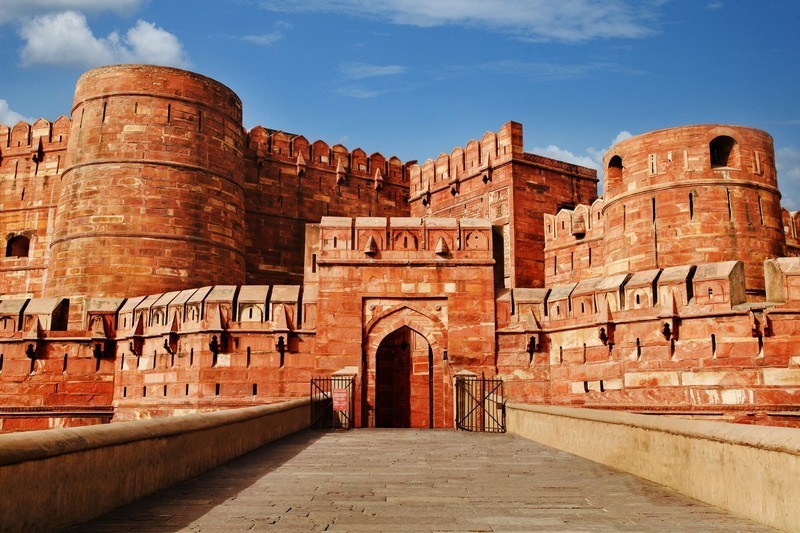
The Alai Darwaza, commissioned by Alauddin Khalji in 1311 CE, serves as the southern gateway to the Quwwat-ul-Islam Mosque within the Qutb Minar complex in Delhi. It is one of the most important structures of the early Delhi Sultanate period, marking a significant evolution in Indian architectural history by introducing authentic Islamic engineering techniques.
Strategic Objectives and Construction
Alauddin Khalji intended to expand the existing Qutb complex to accommodate the growing population of the capital city of Siri. The gateway was built to serve as a grand ceremonial entrance to the enlarged mosque complex, symbolizing the power and reach of the Khalji Empire. The construction reflects the Sultan’s aspiration to integrate his architectural legacy with the established foundations of his predecessors.
Architectural Features and Innovations
The Alai Darwaza is celebrated for being the first building in India to utilize the principles of true Islamic architecture. It introduced structural elements that had not been previously perfected in the region.
- True Arch and Dome: Unlike the ‘corbelled’ arches of the earlier Slave Dynasty, the Alai Darwaza employs the ‘true arch’ (radiating arch), which provides greater structural stability and aesthetic appeal.
- Materials and Decoration: The structure is composed of red sandstone with intricate carvings in white marble. The use of inlaid marble patterns and geometric calligraphy represents a refined aesthetic typical of the period.
- Squinch Arch: The transition from the square base of the room to the circular dome is achieved through the use of squinch arches at the corners, a key feature of early Islamic engineering.
- Jali Work: The gateway features exquisite perforated stone screens (Jali), which enhance ventilation and lighting, adding to the structural elegance of the facade.
Key Facts and Data Summary
| Feature | Details |
| Construction Year | 1311 CE |
| Patron | Alauddin Khalji |
| Location | Qutb Minar Complex, Delhi |
| Style | Early Indo-Islamic |
| Major Innovation | Introduction of the ‘True Arch’ and ‘True Dome’ |
| Material | Red Sandstone and White Marble |
Historical and Architectural Significance
The Alai Darwaza serves as a milestone in the architectural transition from the Rajput-style trabeate construction to the Indo-Islamic arcuate system.
- Structural Perfection: The gateway provides a clear demonstration of how Islamic structural methods allowed for larger, more expansive interior spaces compared to the restrictive beam-and-lintel systems of the past.
- Artistic Integration: The combination of red sandstone and marble, along with the calligraphic Quranic inscriptions, established a standard of ornamentation that influenced subsequent Sultanate and later Mughal architecture.
- UNESCO World Heritage Status: As an integral component of the Qutb Minar complex, the Alai Darwaza is recognized by UNESCO, highlighting its global significance as a well-preserved monument of 14th-century engineering.
- Enduring Influence: The techniques introduced in the Alai Darwaza paved the way for the larger, more complex dome structures seen later in the Tughlaq and Lodhi dynasties, particularly in the development of monumental gateways and mausoleums.
Trivia for Aspirants
- The Alai Darwaza is the first major example of a building constructed by the Khalji dynasty that survives in near-original condition.
- Historians often contrast the Alai Darwaza with the nearby Qutb Minar, noting the evolution in sophistication from the early Slave period style to the more advanced techniques of the Khalji period.
- The inscriptions on the gateway include the titles of Alauddin Khalji, explicitly referring to him as the ‘Second Alexander’ (Sikandar-i-Sani), reflecting his imperial ambitions.
- The structure is essentially a square chamber measuring approximately 35 feet from inside, topped by a dome, demonstrating the Sultanate’s expertise in geometric planning.