
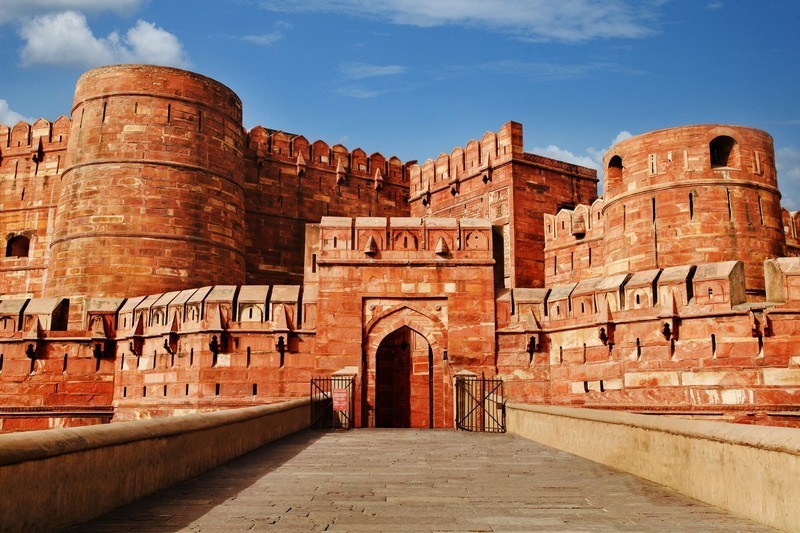
The term Medieval India refers to the period between the end of Ancient India and the beginning of Modern India. While historians differ on specific dates, it is broadly categorized as spanning from the 8th century CE to the 18th century CE. This era marks a significant transition in Indian history, characterized by the synthesis of diverse cultures, evolving political structures, and deep socioeconomic changes.
Chronological Scope of Medieval India
Historians generally divide the medieval period into two distinct phases to better understand the shifting political landscape:
- Early Medieval Period (8th to 12th Century CE): This phase is defined by the rise of regional kingdoms, the tri-partite struggle for Kanauj, and the development of the feudal system. Key dynasties include the Palas, Pratiharas, Rashtrakutas, and the Cholas in the South.
- Late Medieval Period (13th to 18th Century CE): This phase encompasses the establishment and expansion of the Delhi Sultanate, the rise of the Vijayanagara and Bahmani kingdoms, and the zenith and subsequent decline of the Mughal Empire.
Historiographical Perspectives
Historiography in the context of Medieval India has evolved from colonial narratives to modern analytical approaches. Understanding these lenses is crucial for UPSC aspirants:
- Colonial Historiography: Earlier British historians (such as James Mill) categorized the medieval period as the “Muslim Period,” often portraying it as an era of stagnation, religious conflict, and tyranny. This view was used to justify colonial rule as a “civilizing mission.”
- Nationalist Historiography: This perspective sought to counter colonial narratives by highlighting the synthesis of Hindu-Muslim cultures (Ganga-Jamuni Tehzeeb), the resistance against foreign invasions, and the contributions of medieval rulers to Indian art and administration.
- Marxist/Modern Historiography: Contemporary historians (such as Irfan Habib, Satish Chandra, and R.S. Sharma) focus on socioeconomic structures, land revenue systems, the agrarian economy, and the role of the peasantry, shifting the focus away from dynastic politics.
Sources of Medieval History
The reconstruction of Medieval Indian history relies on a diverse range of sources, which are categorized into literary and archaeological evidence:
| Source Type | Examples/Descriptions |
| Persian Chronicles | Tarikh-i-Firoz Shahi (Ziauddin Barani), Tabaqat-i-Nasiri (Minhaj-i-Siraj). |
| Travelogues | Accounts of foreign travelers like Ibn Battuta (Morocco), Marco Polo (Italy), and Niccolò de’ Conti (Italy). |
| Vernacular Literature | Bhakti and Sufi poetry, compositions in Braj, Awadhi, and early Punjabi. |
| Epigraphy | Inscriptions on temples, copper plates (Tamrapatras), and royal edicts. |
| Numismatics | Coins issued by the Delhi Sultans (e.g., Tanka and Jital) and Mughal coinage provide data on economic prosperity and political legitimacy. |
| Monuments | Architecture such as Qutb Minar, Humayun’s Tomb, and Hampi ruins serve as evidence of engineering and aesthetic evolution. |
Key Features of the Medieval Era
- Socio-Cultural Synthesis: The emergence of the Bhakti movement and Sufism bridged gaps between different religious and social strata, promoting a syncretic culture.
- Agrarian Economy: Land remained the primary source of revenue. The introduction of the Iqta system under the Sultanate and the Mansabdari system under the Mughals were sophisticated administrative responses to managing vast territories.
- Urbanization: The period witnessed the growth of fortified cities and trade centers, linked by established land and maritime routes that connected India to Central Asia, the Middle East, and Europe.
- Political Fragmentation vs. Centralization: While the period began with decentralized regional powers, it progressed toward the highly centralized imperial administrations of the Mughals.
Trivia and Important Facts for Prelims
- Term ‘Medieval’: The classification of history into Ancient, Medieval, and Modern is a Western historiographical construct applied to India by British scholars.
- Ibn Battuta: His work, Rihla, is a primary source for the reign of Muhammad bin Tughlaq.
- Official Language: Persian served as the official court language throughout the Delhi Sultanate and the Mughal period, influencing the development of the Urdu language.
- Paper Usage: The introduction and widespread use of paper in the 13th and 14th centuries significantly increased the volume of written documentation available for historical study compared to the ancient period.