
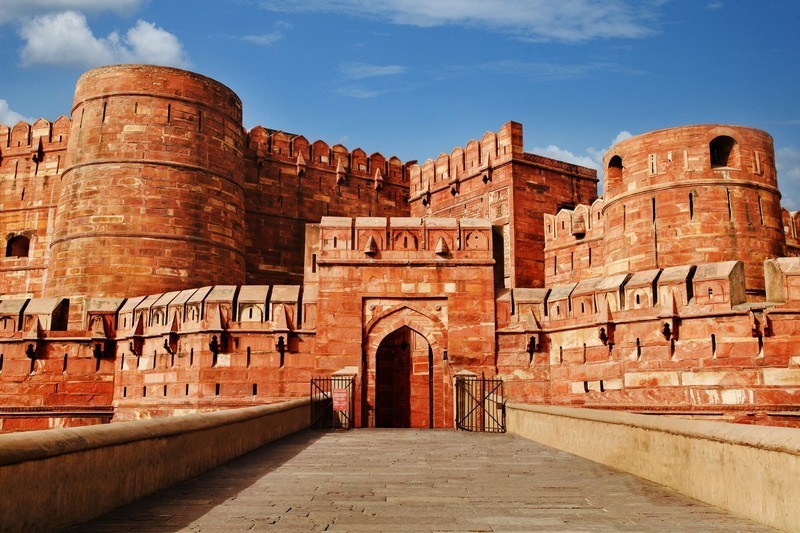
The Brihadeshwara Temple, also known as the Rajarajeshwaram, is located in Thanjavur, Tamil Nadu. Commissioned by the Chola Emperor Rajaraja I, it stands as the pinnacle of Dravidian architecture. Completed around 1010 CE, the temple represents the transition from the Pallava-style rock-cut architecture to the monumental, grand scale of Chola construction. It is a UNESCO World Heritage Site and remains one of the largest temples in India.
Architectural Features and Engineering Marvels
The temple complex is renowned for its scale, engineering precision, and artistic sophistication. It is built entirely of granite, a material not found in the immediate vicinity of Thanjavur, necessitating complex logistics for transportation.
The Vimana and Shikara
The most striking feature of the Brihadeshwara Temple is its massive Vimana (tower over the sanctum), which rises to a height of nearly 66 meters. The Shikara (the crowning dome) is octagonal and carved from a single block of granite weighing approximately 80 tons. Historical records and engineering studies suggest that a long, inclined ramp was constructed to position this massive stone at such a height.
Layout and Components
- The temple layout follows the traditional Mandapa (pillared hall) and Garbha-griha (sanctum sanctorum) structure.
- The Nandi pavilion houses a monolithic, carved Nandi statue, one of the largest in India, dating back to the Nayaka period.
- The temple features a large outer wall with a Gopuram (gateway tower), though the Vimana remains the dominant vertical element.
- The interior walls are adorned with extensive frescoes and inscriptions documenting the history, administration, and endowments of the temple.
Inscriptions and Administrative Role
The temple served as more than a place of worship; it was the epicenter of the Chola state’s administrative and economic life. Thousands of inscriptions on the temple walls provide comprehensive details about:
- Land endowments and tax exemptions granted by the Chola royalty.
- The list of temple employees, including dancers, musicians, priests, and accountants.
- Extensive details on the distribution of land produce and gold coins as offerings.
- The political reach of Rajaraja I, highlighting his conquests and administrative policies.
Evolution under Later South Indian Powers
While the Brihadeshwara Temple was a Chola creation, its management and structural enhancements continued under successive South Indian dynasties, reflecting the continuity of cultural and religious patronage.
Pandyas and Hoysalas
Following the Chola decline, the Pandyas and Hoysalas maintained the temple as a symbol of regional legitimacy. Some minor additions, such as shrines to deities like Subramanya and Ganesha, were integrated into the complex during these periods, reflecting the shifting religious focus of the medieval South.
Vijayanagara and Nayaka Influence
The Vijayanagara Empire and the subsequent Nayaka rulers of Thanjavur played a critical role in preserving and expanding the temple complex.
- Nayaka Additions: The current Nandi pavilion is a significant contribution of the Nayaka period, as the original Chola Nandi was smaller.
- Renovations: The Vijayanagara rulers oversaw extensive renovations, including the restoration of frescoes and the strengthening of structural elements, ensuring the temple remained a vibrant center of activity.
- Maratha Period: In the 18th century, the Marathas of Thanjavur further patronized the temple, ensuring that the legacy of Rajaraja I remained intact during their governance.
Key Historical and Architectural Facts
| Feature | Details |
| Primary Builder | Rajaraja I (Rajaraja Chola) |
| Construction Period | c. 1003–1010 CE |
| Primary Material | Granite |
| Architectural Style | Dravidian (Chola School) |
| UNESCO Recognition | Great Living Chola Temples (1987) |
| Key Inscription | Rajaraja I’s inscriptions detailing administrative tax structure |
Trivia and Technical Highlights
- Shadowless Mystery: It is a popular, though scientifically debated, claim that the shadow of the temple’s main tower does not fall on the ground at noon due to the octagonal shape of the Shikara.
- Single-Stone Capstone: The Kumbam or Shikara is a single piece of granite, representing a landmark achievement in ancient masonry.
- Military Center: The temple complex served as a collection point for the Chola state’s wealth and a center for coordinating military and agrarian logistics.
- Transition of Power: The shift from Chola to Nayaka control is visible in the evolution of the sculptural styles, with later additions moving toward more ornate, hyper-detailed carvings compared to the austere, classical Chola aesthetic.