
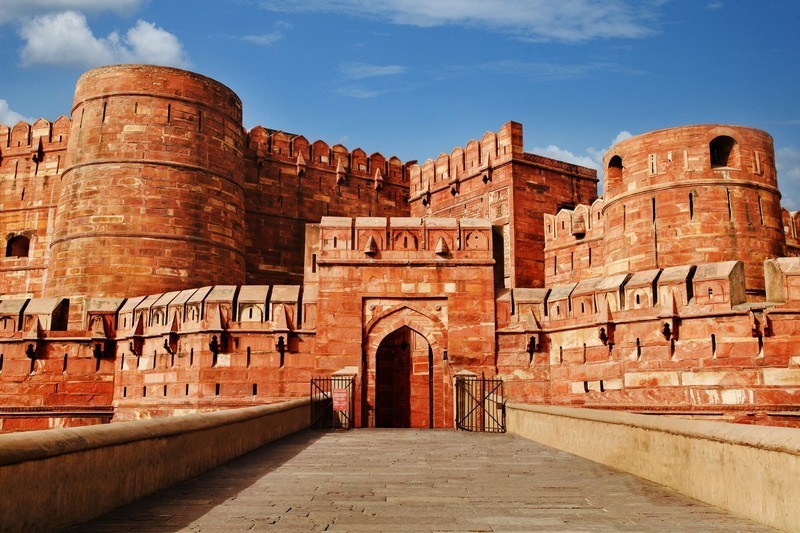
In 1327, Sultan Muhammad bin Tughlaq ordered the transfer of the capital of the Delhi Sultanate from Delhi to Deogir, which was subsequently renamed Daulatabad. This decision remains one of the most debated administrative moves in medieval Indian history, often cited by historians as a primary example of the Sultan’s paradoxical governance.
Rationale Behind the Move
The decision to relocate the seat of power was driven by strategic and administrative considerations rather than mere whim:
- Central Location: Deogir was located near the geographic center of the expanding Sultanate, theoretically allowing for more effective control over the newly conquered territories of the Deccan and South India.
- Security Against Mongols: Delhi was constantly threatened by Mongol invasions from the northwest. Moving the capital to the Deccan placed the Sultanate’s administrative core at a safer distance from the frontier.
- Expansionist Policy: The Sultan aimed to consolidate his authority over the southern kingdoms, which had been militarily subdued but remained politically unstable.
Execution and Administrative Logistics
The relocation process was marked by excessive severity and poor planning, which crippled its success:
- Mass Evacuation: The Sultan ordered the entire official class, the Ulema, and a significant portion of the general populace of Delhi to shift to Daulatabad.
- Forced Migration: According to contemporary chroniclers like Ibn Battuta and Ziauddin Barani, the transfer was implemented by force, causing immense hardship to the residents of Delhi, many of whom died during the 1,500-kilometer journey.
- Development of Infrastructure: The Sultan invested heavily in the road between Delhi and Daulatabad, constructing a road lined with trees and providing rest houses to facilitate travel and communication.
Reasons for Failure
The project failed primarily due to the disconnect between the Sultan’s vision and the reality of the geopolitical landscape:
- Cultural and Political Alienation: The nobility and the people of Delhi felt uprooted and alienated in the Deccan, leading to widespread discontent and resentment toward the Sultan.
- Northern Vulnerability: Leaving Delhi effectively abandoned invited threats to the northern borders. The Sultan realized that the Sultanate could not be effectively governed from the south while the north remained the economic and political heart of the kingdom.
- Resource Depletion: The massive cost of constructing a new capital and maintaining the logistics of the move drained the imperial treasury, contributing to the Sultan’s later economic failures.
Reversal of the Decision
Recognizing the administrative collapse and the growing danger of losing the north, the Sultan reversed the order in 1335:
- Return to Delhi: The royal court and the population were ordered back to Delhi.
- Legacy of the Move: The migration left both cities in a weakened state. Delhi suffered from depopulation and economic decline, while Daulatabad failed to become a viable administrative hub, eventually serving only as a military outpost.
Comparative Impact of the Transfer
The following table summarizes the strategic objectives versus the actual outcomes of the transfer:
| Objective | Actual Outcome |
| Improved control over Deccan | Peripheral kingdoms asserted independence. |
| Strategic depth from Mongols | Delhi remained vulnerable, losing its prominence. |
| Consolidated administration | Administrative chaos and bureaucratic exhaustion. |
| Economic integration | Financial ruin of the treasury and local economies. |
Historian Perspectives
The episode is viewed through different lenses by contemporary and modern scholars:
- Ibn Battuta: The traveler provides a firsthand account of the desolate state of Delhi after the forced migration, emphasizing the severe impact on the city’s social fabric.
- Ziauddin Barani: Criticized the move as an ill-conceived project that depleted the Sultan’s resources and alienated his subjects.
- Modern Interpretation: Some historians argue that the move was a bold, albeit impractical, attempt at centralizing an empire that had become too large for the existing communication and transportation technology of the 14th century.
Trivia and Key Facts
- Daulatabad was previously known as Deogir, the capital of the Yadava dynasty before it was conquered by the Khaljis.
- The project was not a permanent abandonment of Delhi; it was intended to serve as a secondary capital, but the forced relocation of the populace created a humanitarian crisis.
- The failures of the capital transfer, alongside the failed token currency and taxation in the Doab, accelerated the decline of the Tughlaq dynasty’s authority, leading to the rise of independent regional powers like the Vijayanagara Empire and the Bahmani Sultanate.