
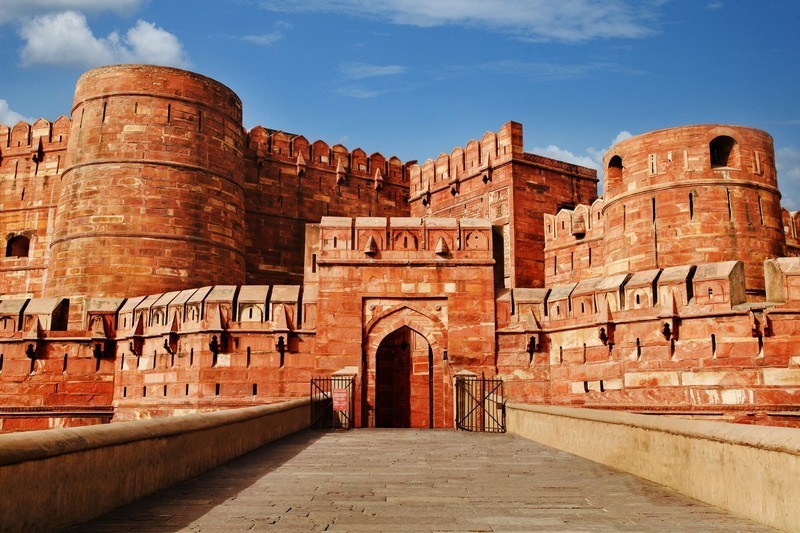
Sikandar Lodi, born Nizam Khan, was the son of Bahlul Lodi. He ascended the throne in 1489 after his father’s death and is widely regarded as the most capable and efficient ruler of the Lodi dynasty. His reign marked a significant attempt to transition the Sultanate from a loose confederation of Afghan tribes into a more centralized, structured imperial administration.
Administrative and Revenue Reforms
Sikandar Lodi implemented critical reforms to stabilize the Sultanate’s economy and ensure more equitable revenue collection, reducing the arbitrary power of local tribal chiefs.
- Introduction of Gaj-i-Sikandari: He introduced a standardized land measurement unit called the Gaj-i-Sikandari, which measured 39 digits. This became the official unit of measurement for land revenue assessment for many decades, even surviving into the Mughal period.
- Revenue Efficiency: By standardizing land measurements, he minimized the ability of local Afghan nobles to inflate or deflate tax demands, thereby securing a more predictable income for the central treasury.
- Promotion of Trade: He abolished internal trade duties (octroi) on food grains, which significantly improved the movement of agricultural produce and boosted market activity across the Sultanate.
- Judicial System: He placed a strong emphasis on justice and appointed Qazis in all major towns to ensure that the administration of civil and criminal law was conducted in accordance with Islamic jurisprudence.
Foundation of Agra and Strategic Consolidation
One of the most consequential decisions of Sikandar Lodi’s reign was the shift in the administrative center of the Sultanate.
- Founding of Agra (1504): Sikandar Lodi founded the city of Agra and shifted the capital from Delhi to this new location.
- Strategic Intent: The move was designed to provide better control over the rebellious Rajput principalities, specifically Gwalior and Dholpur, and to keep a closer watch on the politically volatile regions of the Doab.
- Centralization of Power: By distancing himself from the traditional nobility based in Delhi, he was able to establish a more direct form of governance that bypassed established power centers.
Religious Policy and Orthodoxy
Sikandar Lodi is frequently noted by historians for his rigid adherence to Islamic orthodoxy, which often shaped his social policies and interactions with the non-Muslim population.
- Orthodox Stance: He was a staunch supporter of orthodox Sunni Islam and actively sought to implement the Sharia in both private and public life.
- Destruction of Monuments: His reign witnessed the destruction of several Hindu temples and monuments, particularly in newly conquered territories like Nagarkot and Mandrail, reflecting an assertive religious policy.
- Discriminatory Practices: He enforced restrictions on public religious displays by non-Muslims and maintained a rigorous posture regarding the implementation of religious taxes.
Military and Foreign Policy
Sikandar Lodi successfully expanded the Sultanate’s borders and maintained authority over a vast and often fragmented territory.
- Annexation of Bihar: He incorporated Bihar into the Sultanate, further extending his reach to the eastern borders of the Delhi Sultanate.
- Relations with Rajputana: He maintained an aggressive posture toward Rajput states, particularly Gwalior, which he attempted to annex multiple times, though it remained a resilient power throughout his reign.
- Control over Afghan Nobles: He was effective in keeping the ambitious Afghan tribal chiefs in check, utilizing a blend of diplomacy and administrative strictness that prevented the internal disintegration seen under his son, Ibrahim Lodi.
Key Features of Sikandar Lodi’s Reign
| Feature | Description |
| Reign Period | 1489–1517 AD |
| Capital | Shifted from Delhi to Agra in 1504 AD |
| Key Reform | Gaj-i-Sikandari (Land measurement system) |
| Economic Policy | Abolition of internal duties on food grains |
| Notable Conquests | Bihar, Gwalior (military pressure), Dholpur |
| Religious Stance | Strictly orthodox Sunni interpretation |
Historical Legacy and Trivia
- Patronage of Learning: Despite his orthodox policies, Sikandar Lodi was a patron of literature and music. Under his orders, a Sanskrit work on medicine was translated into Persian and titled Tibb-i-Sikandari.
- Pen Name: He was a poet of some merit and wrote verses in Persian under the pen name “Gulrukhi.”
- Administrative Continuity: The Gaj-i-Sikandari became a foundational tool for the revenue reforms later perfected by Sher Shah Suri and eventually adopted by Akbar.
- Security Measures: He maintained a highly efficient intelligence and espionage system to ensure that his governors and nobles did not conspire against the crown, a mechanism that provided stability during his 28-year reign.