
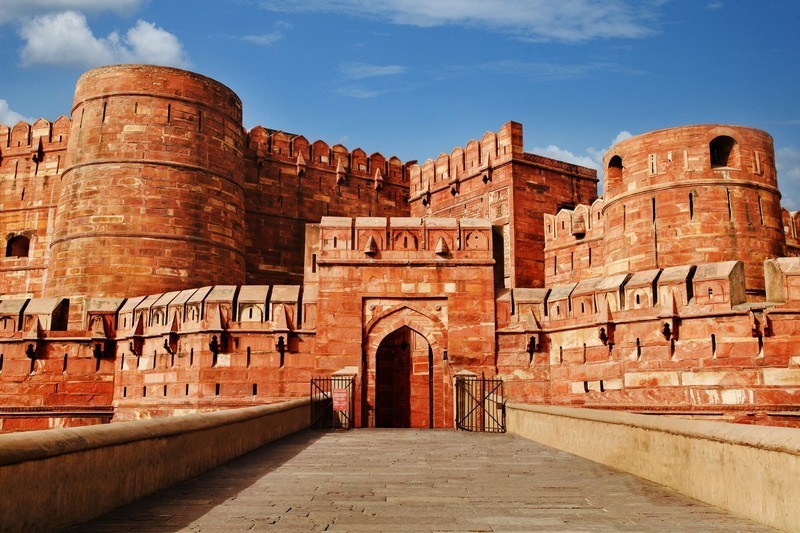
The period immediately preceding the establishment of the Delhi Sultanate (c. 1000–1206 CE) was defined by deep-seated political fragmentation and structural socio-economic patterns. The absence of a centralized pan-Indian authority created a volatile political environment where regional kingdoms competed for hegemony. This era acted as the foundational laboratory for the administrative, revenue, and military systems that the Delhi Sultanate would later inherit and modify.
The State of Political Fragmentation
By the 11th century, the post-Gupta regional order had settled into a decentralized structure characterized by constant internecine warfare. The political landscape was dominated by the Rajput clans in the north and west, and other regional powers elsewhere, all of which struggled to maintain stability against both internal rivals and external threats.
- The Ghaznavid and Ghurid incursions into the northwest forced a transition from the established regional political order toward a more centralized military framework.
- Regional kingdoms like the Chahamanas (Chauhans) of Ajmer, the Gahadavalas of Kannauj, the Chaulukyas of Gujarat, and the Paramaras of Malwa were the primary actors.
- These powers were characterized by a lack of cohesive alliance-building, which facilitated the steady progression of the Ghurid forces toward the Ganga-Yamuna Doab.
Legacy of Administrative and Revenue Systems
The administrative and land revenue mechanisms of the regional kingdoms were robust and well-documented through copper plates and inscriptions. These systems were not destroyed by the incoming Sultanate but were instead integrated into the new regime.
- Hierarchy of Land Rights: The concept of the ‘Samanta’ or feudatory, who held land in return for military service, provided the blueprint for the later ‘Iqta’ system.
- Revenue Categorization: The early medieval state relied on a variety of taxes such as Bhaga (crop share), Bhoga (periodical supply), and Hiranya (cash tax). These categories were standardized and served as the basis for the Sultanate’s revenue administration.
- Local Governance: Village assemblies, such as the Sabha and Ur in the south, and local panchayat-like structures in the north, maintained administrative continuity, ensuring that agricultural production continued despite changes in the ruling dynasty.
- Record Keeping: The established tradition of maintaining land records and revenue registers by hereditary officials (like the Patwari or equivalent) was essential for the Sultanate’s ability to collect taxes in newly conquered regions.
Socio-Economic Foundations of the Period
The socio-economic structure of the 12th century provided a stable, albeit rigid, base for the subsequent medieval state.
- Agrarian Economy: Agriculture remained the primary source of revenue. The early medieval period’s emphasis on forest clearance and the expansion of the agrarian frontier meant that the Sultanate inherited a landmass that was increasingly settled and productive.
- Temple-Centric Economic Hubs: Temples acted as the institutional centers for storage, banking, and irrigation management. The transition of these roles to the Sultanate was gradual, with the new administration often utilizing the existing infrastructure for economic stability.
- Caste and Occupational Stratification: The rigid caste structure, which dictated labor division and production, remained largely intact, providing a predictable workforce for the state’s infrastructure and military requirements.
- Trade Networks: The survival of regional trade networks, managed by specialized mercantile associations like the Ayyavole-500, ensured that commercial goods and currency continued to circulate, supporting the fiscal needs of the incoming regime.
Table: Transition of Administrative Concepts
| Early Medieval Concept | Sultanate Adaptation |
| Samanta / Feudatory | Iqta / Iqtadar |
| Bhaga (Crop Share) | Kharaj (Land Revenue) |
| Hiranya (Cash Tax) | Nagdi (Cash Revenue) |
| Agrahara (Land Grant) | Inam / Waqf / Milk |
| Gramapati (Headman) | Muqaddam / Chaudhary |
Factors Facilitating the Sultanate Consolidation
The ease with which the Delhi Sultanate established its control in the 13th century is partially explained by the conditions prevalent in the early medieval transition.
- Decentralized Military: The reliance on feudal levies meant that regional kings had to gather troops from diverse Samantas before mounting a defense. This resulted in delayed mobilization, whereas the Ghurid army operated under a more centralized command structure.
- Administrative Familiarity: The local officials and record-keepers were accustomed to collecting revenue for a central authority. When the Sultanate replaced the regional kings, the revenue machinery remained largely undisturbed, allowing for the smooth transfer of wealth.
- Urban Continuity: The existence of active market towns and administrative nodes meant that the Sultanate did not need to build new economic centers from scratch, but rather occupied and repurposed existing ones.
- Linguistic and Bureaucratic Continuity: Many administrative terms and revenue categories remained in use in the Persianized bureaucracy of the Sultanate, illustrating a high degree of continuity in the mechanics of governance.
Key Historical Trivia for UPSC Prelims
- The term ‘Chaudhary’ and ‘Muqaddam’ used for village headmen during the Sultanate period had roots in the local administrative titles prevalent in northern India during the early medieval period.
- The transition from the ‘Samanta’ system to the ‘Iqta’ system represented a shift from hereditary land-based military service to a system where the revenue of a region was assigned to an officer for a specific tenure.
- The Gahadavala dynasty of Kannauj left behind some of the most detailed copper plate inscriptions detailing land revenue terminology, which were crucial for the later reconstruction of agrarian history by the Delhi Sultanate.
- The persistence of cowry shells and local base-metal coinage alongside Sultanate-issued Tanka and Jital demonstrates the survival of the early medieval monetary ecosystem during the initial years of Islamic rule.