
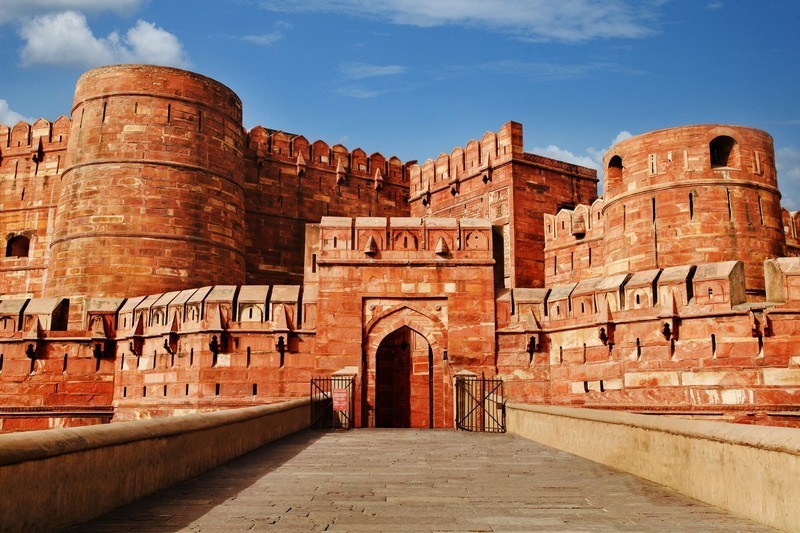
Deva Raya I (reigned 1406–1422 AD) was the fifth sovereign of the Sangama Dynasty under the Vijayanagara Empire. He ascended the throne following a fierce war of succession against his brothers, Virupaksha I and Bukka II. His reign was a crucial transformative period during which the empire shifted from a regional warrior state to a highly centralized, technologically advanced imperial power. Deva Raya I confronted the aggressive expansionism of the Bahmani Sultanate under Sultan Taj ud-Din Firoz Shah and the Velamas of Rachakonda on his northern and eastern frontiers, compelling him to modernize both the military architecture and hydraulic infrastructure of his capital.
The War of the Goldsmith’s Daughter and Regional Conflicts
The geopolitical landscape of Deva Raya I’s reign was dominated by territorial disputes over the fertile Krishna-Tungabhadra Doab.
The Mudgal Campaign
A primary military conflict of his reign is popularly known in historical chronicles as the “War of the Goldsmith’s Daughter” (1406 AD). According to the Persian historian Ferishta, the war began when Deva Raya I attempted to secure a beautiful girl, the daughter of a goldsmith in the Bahmani-controlled territory of Mudgal. This prompted a massive retaliatory invasion by Bahmani Sultan Firoz Shah.
Territorial and Marital Treaty
The Vijayanagara forces suffered a tactical defeat, leading to a peace treaty where Deva Raya I ceded the strategic fort of Bankapur to the Bahmanis. To seal this alliance, he married his daughter to Sultan Firoz Shah, a rare instances of a Vijayanagara monarch entering into a marital alliance with a Muslim sultan.
Victory over the Reddis and Bahmanis
Deva Raya I reversed these geopolitical setbacks by forming a strategic alliance with the Reddi kingdom of Kondavidu. In 1419 AD, when Firoz Shah Bahmani launched a fresh assault on the fort of Pangal, Deva Raya I inflicted a decisive defeat on the Bahmani forces. This victory pushed the northern boundary of the empire firmly back to the Krishna River and asserted Vijayanagara dominance over coastal Andhra.
Administrative Innovation and Military Modernization
Recognizing the tactical superiority of the Bahmani cavalry and archery units, Deva Raya I initiated sweeping reforms within the Vijayanagara military apparatus.
Integration of Turkish Archers
He was the first Vijayanagara monarch to systematically enlist a large contingent of Turkish and Muslim horse-archers (Siraj) into the imperial army. He provided them with land grants (Amaram) and built a dedicated mosque in the capital city to ensure their political loyalty.
Reorganization of the Cavalry
He revolutionized the horse procurement strategy by upgrading state-monopolized trade agreements with Portuguese and Arab merchants at the ports of Bhatkal and Honavar, ensuring a continuous supply of elite Arabian horses.
Hydrological Engineering and Urban Transformation
Deva Raya I transformed the capital city of Vijayanagara from a water-scarce rocky settlement into a thriving, irrigated agricultural metropolis.
The Tungabhadra Dam Project
To resolve the chronic water scarcity in the semi-arid Hampi region, Deva Raya I commissioned the construction of a massive, mortarless stone dam across the Tungabhadra River. The project was engineered under the supervision of the royal architect and engineer, Nicola de Conti, and local hydraulic experts.
The Hiriya Canal System
Water from this dam was channeled into the city via the 15-mile-long Hiriya Canal. This engineering marvel irrigated the vast valley stretching between the Sacred Center and the Royal Center, allowing the city to sustain a permanent population during long military sieges. He also dammed the Haridra River to create a large reservoir for agricultural expansion in the outer provinces.
Cultural Renaissance and Literary Patronage
Deva Raya I was a devout follower of Shaivism, specifically the Virupaksha sect, but he maintained a highly pluralistic court that patronized Sanskrit, Kannada, and Telugu literature.
Court of Pearl (Muttu Mandapa)
The king’s council hall, known as the Pearl Hall, hosted grand literary debates and philosophical arguments between scholars of differing traditions.
Patronage of Srinatha and Haridasa
The celebrated Telugu poet Srinatha frequented his court and composed works during this period. Deva Raya I also extended extensive patronage to Kannada Jain poets, including Madhura, who composed the Dharmanatha Purana, demonstrating his policy of religious tolerance.
Historical Parameters of Deva Raya I’s Reign
| Parameter | Specific Fact and UPSC Relevance |
| Reign Period | 1406 – 1422 AD (Sangama Dynasty). |
| Imperial Titles | Maharajadhiraja, Rajaparamesvara, Purvapaschima Samudradhishvara. |
| Key Inscriptions | The Hassan and Sringeri Copper Plate Inscriptions, which record his extensive land grants (Agraharas) to scholars and temples. |
| Monetary Reform | Minted gold Varahas and fractional coins (Pratapas and Katis) featuring images of Shiva-Parvati, clearing distinguishing his coinage from his predecessors. |
| Foreign Chronicle | Nicolo de Conti, an Italian traveler, visited Vijayanagara in 1420 AD during his reign and estimated the city’s circumference at 60 miles, detailing its fortifications and the festival of Deepavali. |
| Architectural Milestones | Extended the core structure of the Virupaksha Temple and initiated the early structural configuration of the Vitthala Temple complex. |
Architectural and Fortification Matrix
Deva Raya I significantly upgraded the defensive infrastructure of the capital city. Following the guidelines of ancient Vastu Shastra and military treatises, he reinforced the seven concentric rings of fortified walls surrounding Vijayanagara. He replaced the earthen ramparts with massive, wedge-shaped granite blocks fitted together without mortar. These walls enclosed agricultural lands, orchards, and water bodies, ensuring that the imperial center could remain entirely self-sufficient during prolonged blockades by rival northern sultanates.
Last Modified: June 22, 2026