
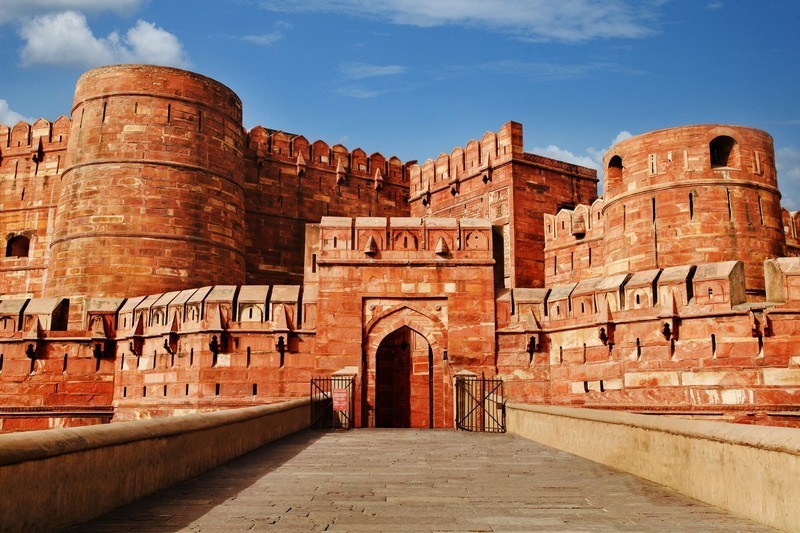
Khalisa land, or ‘Land of the Crown,’ referred to territory under the direct administration of the central government, where revenue was collected directly by state officials rather than through intermediaries like Iqtadars or hereditary chiefs. The income generated from Khalisa lands went directly into the royal treasury (Khazana-i-Amira) to meet the expenses of the Sultan’s court, the standing army, and the central bureaucracy.
Economic Significance of Khalisa
The expansion and contraction of Khalisa lands were strategic tools used by the Sultans to regulate the economy and consolidate central authority.
- Direct Revenue Control: By converting Iqta lands into Khalisa, the Sultan bypassed local intermediaries, ensuring that the total agricultural surplus reached the central treasury.
- Fiscal Stability: During periods of war or state expansion, Sultans increased the size of Khalisa land to ensure a steady supply of cash for the payment of soldiers in the standing army.
- Standardization: Administration in Khalisa lands was more uniform, as officials were appointed, paid, and transferred directly by the central Diwan-i-Wizarat.
Strategic Use by Sultans
The conversion of land into Khalisa was a powerful political instrument to check the influence of the nobility.
- Alauddin Khalji’s Centralization: Alauddin Khalji brought a large portion of the Doab region (between the Ganges and Yamuna) under Khalisa. This was a deliberate effort to curb the power of the nobility, who were often granted these fertile lands as Iqtas.
- Ghiyasuddin Tughlaq’s Balance: He maintained a balance between Khalisa and Iqta lands to ensure that while the nobility remained loyal, the central treasury was not starved of revenue.
- Muhammad bin Tughlaq’s Expansion: During his administrative experiments, he significantly expanded the Khalisa land to support his various projects and the massive expansion of the state’s standing army.
- Firoz Shah Tughlaq’s Policy: Firoz Shah Tughlaq is noted for not focusing on large-scale expansion of Khalisa lands, preferring to stabilize the existing system and appease the nobility through generous land grants and permanent Iqtas.
Administration of Khalisa Land
Administration in Khalisa lands required a robust bureaucratic presence to handle revenue assessment and collection without the assistance of local feudal lords.
- Revenue Officials: Revenue assessment was handled by officials known as Amils and Munsifs, who worked under the direct supervision of the Wazir.
- Direct Assessment: Land revenue in Khalisa areas was often determined through Masahat (measurement) of land, ensuring that the state received its share based on actual productivity rather than estimated yields.
- Role of the Audit: Since Khalisa revenue was crucial for the state’s survival, the accounts of these lands were subject to rigorous audits by the Mushrif-i-Mumalik and the Mustaufi-i-Mumalik to prevent corruption among centrally appointed collectors.
Impact on Army and Society
The Khalisa system served as a direct link between the state’s fiscal policy and the military’s effectiveness.
- Sustenance of Standing Army: The revenue from Khalisa lands was the primary source for paying the salaries (naqd) of the central standing army, especially the soldiers who were not part of any noble’s contingent.
- Reduced Noble Power: Increasing Khalisa land diminished the number of Iqtas available for the nobility, thereby limiting their ability to build private armies or local patronage networks.
- Peasant Interaction: In Khalisa lands, the peasantry had a more direct relationship with state officials. While this eliminated the tyranny of some local Iqtadars, it also meant that the state enforced strict revenue collection methods without the flexibility sometimes offered by local landlords.
Comparative Summary: Khalisa vs. Iqta
| Feature | Khalisa Land | Iqta Land |
|---|---|---|
| Administration | Direct (Central Officials) | Indirect (Iqtadars) |
| Revenue Destination | Royal Treasury | Iqtadar’s personal and military expenses |
| Control | High (Sultan’s direct oversight) | Moderate (Dependent on Iqtadar’s loyalty) |
| Nature | Non-transferable | Conditional assignment (Transferable) |
Key Historical Facts and Trivia
- Revenue Source: Khalisa land was the primary source of cash for the state treasury, which was essential for paying for the “Dagh” (branding) and “Chehra” (descriptive rolls) systems.
- Doab Region: The fertile Doab region was the most coveted area for conversion into Khalisa land because it guaranteed the highest agricultural surplus.
- Linguistic Usage: All records pertaining to Khalisa land, including revenue assessments (Jama) and actual collections (Hasil), were maintained in Persian by the staff of the Diwan-i-Wizarat.
- Political Tension: The aggressive conversion of Iqtas into Khalisa land was often a primary cause of rebellion among the nobility, who viewed it as an encroachment on their hereditary and customary rights.
- Legacy: The concept of Khalisa land established under the Sultanate was further refined and expanded by Sher Shah Suri and later by the Mughal Emperor Akbar, who used it as a core component of the imperial revenue system.