
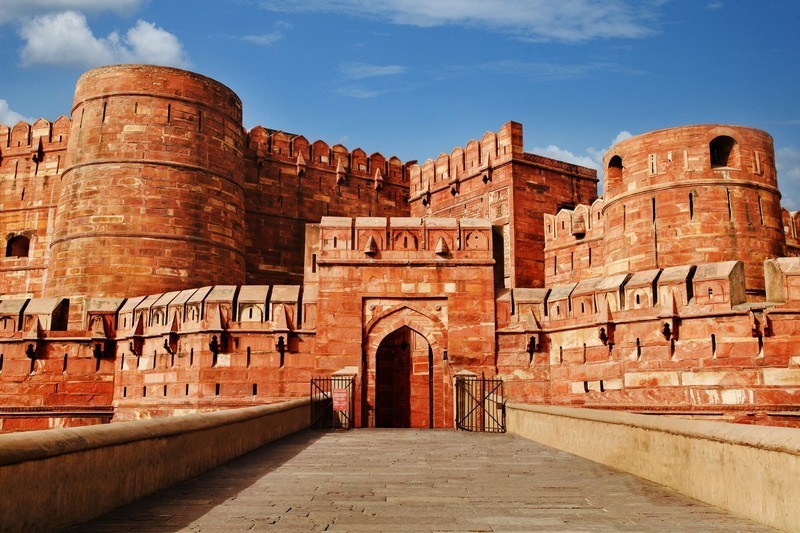
Architecture in Medieval India (c. 8th–18th century CE) serves as a profound historical record, reflecting the synthesis of indigenous Indian craftsmanship with Central Asian, Persian, and Islamic technological influences. Unlike court chronicles, which are often prone to subjective political bias, monuments provide empirical evidence of technological advancement, religious patronage, administrative reach, and socioeconomic prosperity.
Technological Evolution: The Trabeate to Arcuate Shift
The architectural landscape of the medieval period is defined by the evolution of construction techniques. This transition is a direct indicator of changing political regimes and the movement of skilled labor across the subcontinent.
- Trabeate Style: The pre-medieval Indian architecture predominantly utilized the beam-and-lintel (trabeate) method, characterized by the use of stone slabs supported by pillars. This style continued to dominate in temple architecture, particularly in South India and the Deccan.
- Arcuate Style: Following the establishment of the Delhi Sultanate in the early 13th century, the arcuate technique—involving the true arch and the dome—was introduced. This allowed for the construction of larger open spaces and massive vaulted ceilings.
- Synthesis: The fusion of these styles created a distinct Indo-Islamic architectural identity, visible in the Qutb Complex in Delhi, where early Islamic arches were constructed using materials sourced from local demolished temples.
Urban Planning and State Power
Medieval cities and fortified complexes are primary evidence of state-sponsored urbanization and defensive military strategy.
- Fortification and Defense: Massive fortifications, such as the Golconda Fort, Chittorgarh, and Daulatabad, demonstrate the strategic importance of hill-forts in medieval warfare. These sites provide data on military engineering, water management, and the concentration of political power.
- Planned Cities: Excavations and surviving structures at Hampi (Vijayanagara), Firozabad, and Fatehpur Sikri reveal advanced civic planning. These cities often contained dedicated zones for markets (bazaars), religious institutions, and specialized craft industries.
- Hydraulic Engineering: The presence of step-wells (baolis), artificial reservoirs (tanks), and qanats (underground water channels) in arid regions like Rajasthan and Gujarat showcases the state’s role in resource management and public welfare.
Temples as Socioeconomic Hubs
In the medieval period, temples were more than religious structures; they were the central pivots of the regional economy.
- Economic Centers: Temple inscriptions frequently document the role of the temple as a bank, employer, and landholder. Donations of land and gold were managed by temple authorities to provide capital for local agriculture and trade.
- Social Stratification: The architecture of temples often mirrors the social hierarchy of the time. The layout of temple complexes, including dedicated halls for music and dance, provides evidence of the patronage extended to artists, scholars, and the Devadasi tradition.
- Regional Identity: Architectural styles such as the Dravida style (South India) and the Nagara style (North India) continued to evolve, serving as symbols of regional political legitimacy and cultural continuity.
Comparative Utility: Monuments vs. Literary Chronicles
| Aspect | Architectural Monuments | Literary Chronicles (Tarikhs) |
| Primary Focus | Material reality, technology, aesthetics | Political narrative, dynastic genealogy |
| Bias | Neutral; physical evidence | Subjective; courtly/religious bias |
| Reach | Public/Physical access | Restricted/Elite access |
| Reliability | Highly empirical and verifiable | Requires cross-referencing |
Architectural Examples for UPSC Prelims
- Qutb Complex (Delhi): Represents the earliest major phase of the Indo-Islamic architectural transition.
- Hampi (Karnataka): Documents the immense wealth and urban design of the Vijayanagara Empire, showcasing a blend of Hindu temple architecture and secular palace construction.
- Humayun’s Tomb (Delhi): The first major example of the Mughal garden-tomb, marking the beginning of the influence of Timurid and Persian architectural styles in India.
- Brihadisvara Temple (Thanjavur): A Chola-era monument that functions as a massive repository of epigraphic records detailing village administration and donations.
- Fatehpur Sikri (Uttar Pradesh): Akbar’s planned capital, reflecting the synthesis of diverse regional influences including Gujarati and Rajasthani motifs.
Historiographical Significance
Archaeological study of medieval architecture allows historians to challenge the “clash of civilizations” narrative.
- Material Integration: The frequent use of local artisans by Islamic rulers to build mosques and tombs proves a deep level of integration and cultural synthesis.
- Economic Scale: The quality of material (red sandstone, marble, semi-precious stones) and the size of structures provide a clear estimate of the tax-collecting capacity and economic surplus of the respective dynasties.
- Environmental Adaptation: Architectural features like jalis (stone lattices) and chhatris (domed pavilions) demonstrate how medieval builders adapted to India’s tropical climate, merging functional necessity with aesthetic form.
Trivia for Prelims
- The term “Indo-Saracenic” was a style later developed by the British to combine Gothic and Islamic architectural elements, but it is distinct from the original medieval Indo-Islamic styles.
- The use of lime mortar became a significant factor in the structural stability of the arcuate buildings, contrasting with the dry masonry techniques used in much of ancient Indian architecture.
- Many medieval monuments were not static; they were frequently renovated or expanded by successive rulers to signal continuity of authority, as seen in the various additions made to the Alai Darwaza at the Qutb Minar site.
- Epigraphic records are often integrated into the architecture itself, with Quranic calligraphy in mosques and Prashastis on temple pillars acting as both art and historical record.