
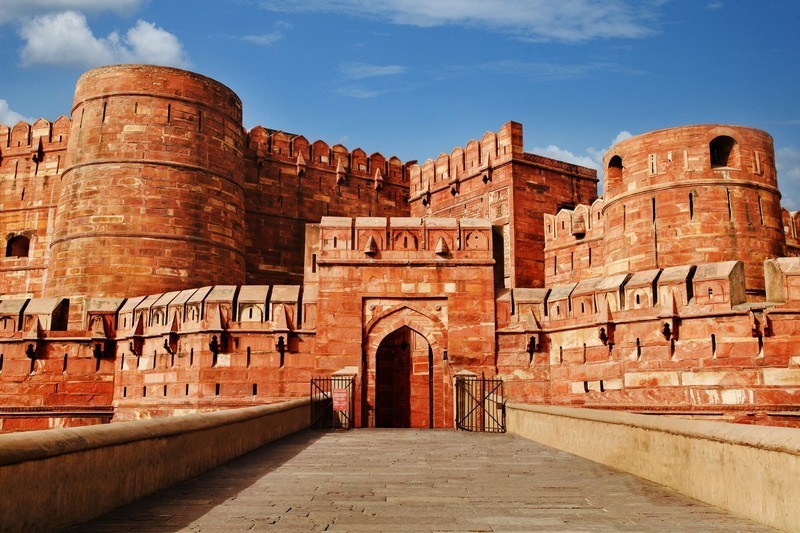
Jalaluddin Firuz Khalji (reigned 1290–1296 CE) was the founder of the Khalji dynasty in the Delhi Sultanate. His accession to the throne marked the ‘Khalji Revolution,’ which ended the eighty-year rule of the Ilbari Turks (Slave dynasty) and shifted power toward the Afghan-origin nobility.Rise to Power and AccessionJalaluddin served as a senior commander under the last Slave Sultan, Kaiqubad. As the power of the Ilbari dynasty waned, Jalaluddin took advantage of the political vacuum.He assassinated the last Ilbari ruler, Kaiqubad, and ascended the throne at the age of 70 at Kilokhri, a suburb of Delhi.The transition was not immediately accepted by the Turkish nobility, who viewed the Khaljis as non-Turks and outsiders.Jalaluddin chose to rule from Kilokhri rather than Delhi for the initial years to solidify his authority among the skeptical populace and nobles.Administrative and Military PoliciesJalaluddin is noted for his remarkably benevolent, and often considered weak, administrative style, which stood in stark contrast to the rigid autocracy of his predecessors.Policy of Pacification: He famously believed that a ruler should not resort to unnecessary bloodshed, famously stating that he was an old man and could not afford to shed the blood of Muslims.Military Campaigns: Despite his age, he conducted several campaigns. Notable among these were the expeditions to Ranthambore and Mandore.Dealing with Rebellion: He pardoned many rebels and conspirators, including the noble Malik Chajju, which led to accusations of weakness among his own ranks.Repulsion of Mongols: In 1292 CE, he successfully repelled a major Mongol invasion led by Abdullah, a grandson of Hulagu Khan. Many of these Mongols later settled in Delhi, creating a locality known as ‘Mughalpura.’Key Administrative FeaturesAspectDescriptionCapitalKilokhri (initially)Religious PolicyGenerally tolerant; avoided extreme persecution.NobilityFaced opposition from old Turkish nobles, eventually promoting more diverse officials.Military StrategyFocused on consolidation; avoided aggressive territorial expansion compared to his successor.Significant Events and ConflictsThe reign of Jalaluddin was characterized by a specific shift in political focus towards the Deccan and internal power struggles.Sidi Maula Rebellion: A major dervish, Sidi Maula, was involved in a conspiracy to overthrow the Sultan. His execution caused a significant stir, as he was a popular figure, and his death was followed by a drought in Delhi, which the common people interpreted as a divine sign.Alauddin’s Deccan Expedition: During Jalaluddin’s reign, his nephew and son-in-law, Alauddin Khalji, who was the governor of Kara, led a daring raid into the Deccan (Devagiri) in 1294 CE. This was the first Muslim invasion of the Deccan, yielding immense wealth.Assassination: The wealth brought from Devagiri created a rift. In 1296 CE, during a meeting arranged at Kara to congratulate Alauddin on his success, Jalaluddin was treacherously assassinated by his nephew.Legacy and Historical AssessmentJalaluddin Khalji’s reign is often categorized as a transitional phase in the history of the Delhi Sultanate.Transition of Power: He ended the dominance of the Turkish nobility, broadening the base of the Sultanate’s administration.Establishment of the Dynasty: His death paved the way for the ascension of Alauddin Khalji, who would transform the Sultanate into a centralized, expansionist empire.Historical Critique: While contemporary historians like Ziauddin Barani viewed him as a weak ruler, modern historians often see his policies as an attempt to introduce a more humane element into the harsh political culture of medieval India.
Last Modified: June 19, 2026
Hello Guest ! Register or Login
₹0.00