
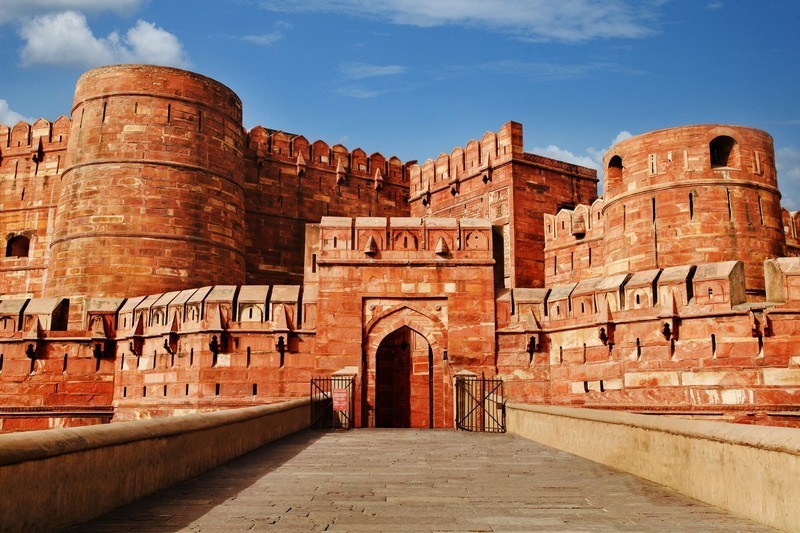
The Adina Mosque, situated in Pandua (historic Firuzabad) in the Malda district of West Bengal, represents the architectural zenith of the early Bengal Sultanate. Built during the regional state formations of medieval India, it serves as a primary source for understanding the consolidation of independent Indo-Islamic rule away from the Delhi Sultanate.
Commission and Imperial Ideology
- The Builder: The mosque was commissioned by Sultan Sikandar Shah (1358–1390 CE), the second ruler of the founding Ilyas Shahi Dynasty.
- Date of Construction: Epigraphic evidence fixes the completion of the structure to 776 AH (roughly 1374–1375 CE).
- Assertion of Sovereignty: Its construction followed the second unsuccessful invasion of Bengal by Sultan Firuz Shah Tughlaq of Delhi. By building the largest mosque in the subcontinent, Sikandar Shah visually proclaimed his absolute independence and religious legitimacy to the Islamic world.
- Royal Inscriptions: The foundational inscription on the western wall refers to Sikandar Shah with exalted imperial titles, including “The Exalted Sultan” and “The Caliph of the Faithful,” deliberately bypassing the spiritual authority of the contemporary Abbasid Caliphate.
Structural Dimensions and Spatial Layout
The Adina Mosque deviated from traditional small-scale regional buildings, adopting a grand, monumental scale modeled after the classic hypostyle (multi-columned) mosques of Damascus and Cairo.
Spatial Design Matrix
| Architectural Feature | Structural Specifications and Characteristics |
| Overall Footprint | Rectangular plan measuring roughly 507 feet in length and 285 feet in width. |
| Central Courtyard | A massive open-air rectangular courtyard (Sahn) measuring 400 feet by 154 feet, functioning as the congregational core. |
| Domestic Bay Network | The courtyard was enclosed by cloistered walks (Riwaqs) featuring 400 small identical brick domes supported by stone pillars. |
| Sanctuary (Prayer Hall) | Located on the western side, it measured five bays deep and featured a monumental central nave that divided the hall into northern and southern wings. |
The Badshah-ka-Takht (The Royal Gallery)
- Designated Isolation: Located in the northern wing of the primary prayer hall, this elevated stone platform allowed the Sultan and his immediate entourage to pray safely away from the general public.
- Architectural Support: The gallery is elevated three steps above the floor level and rests on short, heavy, fluted basalt columns salvaged from pre-existing structures.
- Exclusive Access: The gallery was accessed from the exterior via two private northern doorways protected by defensive ramparts.
Architectural Engineering and Material Composition
The engineering of the Adina Mosque demonstrates a transition period where imported Islamic architectural styles adapted to Bengal’s challenging geography and wet climate.
Material Reuse and Spolia
- Basalt and Granite Foundations: The lower courses of the walls and the main interior pillars consist of dark basalt and granite blocks. Most of this stone was salvaged from the ruins of older Hindu temples and palaces of the Sena and Pala dynasties in nearby Lakshmanavati (Gaur).
- Exposed Brick Superstructure: Due to the scarcity of natural stone quarries in the deltaic floodplains, the upper walls, massive arches, and 400 domes were engineered using high-fired, small red bricks bound with local lime-surkhi mortar.
Key Stylistic and Decorative Elements
- The Central Nave and Great Arch: The central prayer hall featured a monumental barrel-vaulted roof that rose higher than the rest of the mosque. The front facade of this nave opened into the courtyard via a giant central archway, structurally reminiscent of the Sasanian Iwan at the Taq Kasra in Ctesiphon.
- Terracotta and Calligraphic Ornamentation: The western Qibla wall features intricate relief carvings. It contains 39 highly stylized niches (Mihrabs) decorated with deep terracotta plaques of lotus designs, hanging lamp patterns, and geometric arabesques.
- Tughra Inscriptions: The borders of the main Mihrab are carved with fragments from the Quran alongside the royal eulogy of Sikandar Shah, written in the intricate, flowing Tughra script.
Administrative and Socio-Religious Role
Urban Center of Firuzabad
- The Imperial Capital: Shamsuddin Ilyas Shah moved the administrative capital of Bengal from Gaur to Pandua, renaming it Firuzabad. The Adina Mosque formed the socio-religious anchor of this new urban landscape, surrounded by administrative offices, mints, and markets.
- Sufi Associations: The mosque operated in close connection with nearby Sufi establishments (Khanqahs), particularly those of the Chishti order saints like Alaul Haq Pandavi, who provided spiritual legitimacy to the Ilyas Shahi rulers.
Dynastic Funerary Complex
- Sikandar Shah’s Tomb: Attached to the exterior of the northern part of the western wall is a square chamber that originally contained the sarcophagus of Sultan Sikandar Shah. This spatial association converted the congregational mosque into a dynastic funerary monument, a practice later copied by other regional sultanates in Jaunpur and Gujarat.
UPSC Prelims Historical Trivia
- Subcontinental Record: Despite being built in a remote, riverine province, the Adina Mosque remained the largest single mosque structure built anywhere in India for centuries, surpassing the imperial mosques of Delhi, Lahore, and Agra in its overall dimensions.
- The Elephant Motif and Local Syncretism: Close physical examination of the stone steps leading to the Badshah-ka-Takht reveals carved depictions of elephants and human figures from older Hindu and Buddhist friezes. Rather than being destroyed, these stones were positioned facedown or built directly into the floor, showcasing how local materials were incorporated into Islamic structures.
- The Structural Collapse: The central barrel vault of the main nave collapsed during an earthquake in the 19th century. Today, only the structural pillars and the western Qibla wall stand fully intact, managed under the protection of the Archaeological Survey of India (ASI).