
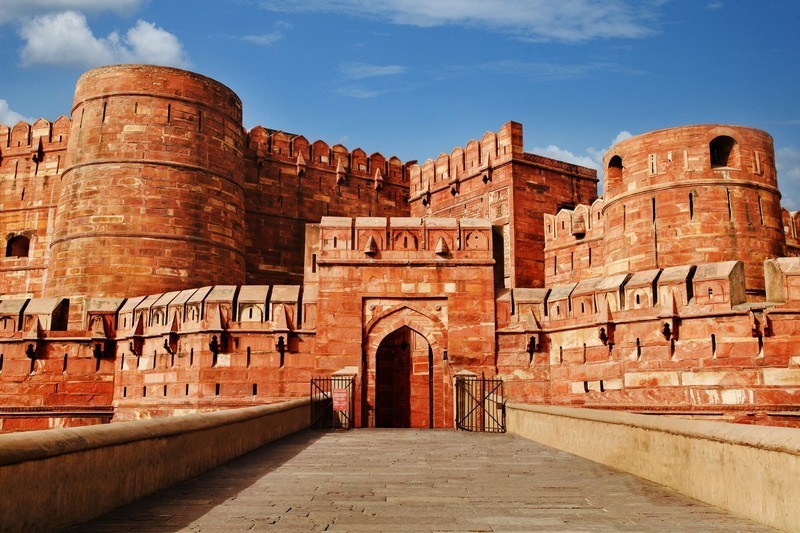
Kapilendra Deva (reign 1434–1467 CE) was the founder of the Suryavamsi Gajapati Dynasty of medieval Odisha. He ascended the throne by orchestrating a coup that overthrew Bhanudeva IV, the last ruler of the Eastern Ganga Dynasty, during a period of intense internal decay and external threats. To secure political legitimacy among local elites and neighboring kingdoms, Kapilendra Deva claimed descent from the mythological Suryavamsa (Solar Lineage), contrasting with the Lunar Lineage (Somavamsa) of the preceding Gangas. He adopted the title Gajapati (Lord of the Elephants), signifying his command over a massive elephantry corps that became the cornerstone of his military strategy.
Strategic Geopolitical Matrix
Kapilendra Deva transformed a vulnerable regional kingdom into an expansive multi-regional empire by operating simultaneously across three distinct geopolitical sectors:
- The Eastern Coastline (Core): Centered around the fertile deltas of Utkala and Kalinga, providing agricultural surpluses, maritime trade revenues, and ideological authority through the Jagannath Temple at Puri.
- The Western Highlands (Buffer): Comprising the semi-autonomous Garhjat hill states and tribal belts of Kosala, Jharkhand, and Gondwana, acting as a defensive shield against central Indian powers.
- The Trans-Regional Frontiers: Volatile outer zones bordering the Husain Shahi and Iliyas Shahi factions of Bengal in the north, the Bahmani Sultanate in the west, and the Reddi kingdoms and Vijayanagara Empire in the south.
Military Expansionism and Frontier Management
The Northern Frontier and Campaigns in Bengal
To secure his northern border against recurring Islamic incursions, Kapilendra Deva launched aggressive offensive campaigns into Bengal. He decisively defeated the forces of the Sultan of Bengal, Nasiruddin Mahmud Shah. His armies advanced across the Hugli district, stabilizing the Gajapati frontier up to the Bhagirathi River. To formalize this northern conquest, he assumed the imperial title of Gaudesvara (Lord of Gauda/Bengal).
The Southern Frontier and Subjugation of the Krishna-Kaveri Zones
The southern frontier witnessed the most extensive territorial expansions of the Gajapati Empire. Kapilendra Deva systematically dismantled the independent Reddi kingdoms of Rajahmundry and Kondavidu, absorbing the rich Krishna-Godavari delta. He pushed further south into the territories of the Vijayanagara Empire under the Sangama dynasty, capturing key fortified complexes including Udayagiri, Chandragiri, and Kanchi. His military columns marched as far south as the Kaveri River basin, temporarily occupying parts of the Tiruchirappalli region and establishing undisputed hegemony over the eastern seaboard of India.
The Western and Deccan Frontiers
In the west, Kapilendra Deva checked the expansionist designs of the Bahmani Sultanate under Ahmad Shah II and Humayun Shah. He successfully intervened in the politics of Telangana, liberating the region from Bahmani control and placing it under his vassal, Hamvira Deva. He secured the western frontier by forcing the tribal chieftains of the Central Indian highlands to pay regular tributes, converting the region into a fortified buffer zone. | Frontier Sector | Primary Adversaries | Key Fortresses & Strongholds | Territorial and Strategic Outcome | | | | | | | Northern Frontier | Sultanate of Bengal (Nasiruddin Mahmud Shah) | Mandaran, Hugli, Gauda | Fixed northeastern border at the Bhagirathi River; assumed title Gaudesvara. | | Southern Frontier | Vijayanagara Empire & Reddi Chieftains | Kondavidu, Udayagiri, Chandragiri, Kanchi | Annexed the Krishna-Godavari delta; extended military influence down to the Kaveri River. | | Deccan Frontier | Bahmani Sultanate | Devarakonda, Khammamett, Warangal | Established suzerainty over Telangana; checked Bahmani advances into coastal plains. | | Western Frontier | Garhjat Chieftains & Gond Kingdoms | Sambalpur, Sonepur, Bastar border | Integrated tribal highlands into the empire as defensive buffer zones. |
Institutional Framework and Resource Mobilization
Administrative Decentralization
Kapilendra Deva replaced the loose administrative structures of the late Gangas with a highly centralized yet strategically decentralized provincial system. The empire was divided into large administrative zones called Dandapatas or Rajyas (such as the Kalinga Dandapata and Kondavidu Rajya), which were governed by Parichhas or Mahapatras appointed directly by the emperor from loyal military families.
The Paikali and Nayaka Military Systems
To sustain continuous multi-front campaigns, Kapilendra Deva institutionalized a military-agrarian economy:
- The Paikali System: Commanded a formidable peasant militia (Paiks) who were granted hereditary tax-free agricultural lands (Chakran) in exchange for mandatory military mobilization during wartime.
- The Nayaka System: Assigned specific territorial revenue pockets to military commanders (Nayakas or Beheras) to maintain specified contingents of infantry, cavalry, and war elephants available for imperial deployment.
Fiscal Reforms and Economic Extraction
The state treasury (Shri Bhandara) was replenished through organized agricultural taxes, inland transit duties collected at riverine checkpoints (Ghattopari), and maritime customs levied at active ports like Manikapatana and Kalingapatnam. Kapilendra Deva famously issued decrees abolishing oppressive local taxes, including the tax on salt and cowries, to alleviate agrarian distress and ensure internal stability during his prolonged absences on distant frontiers. | Administrative Office | Functional Jurisdiction and Duties | | | | | Parichha / Governor | Executed civil, judicial, and fiscal policies within assigned Dandapatas. | | Baxi / Commander | Managed the logistics, training, and deployment of the infantry and militia forces. | | Sandhivigrahi | Handled foreign policy, intelligence gathering, and treaty negotiations with frontier Sultanates. | | Mudrahasta | Custodian of the royal seal; authorized all imperial land grants and copper-plate charters. |
Socio-Religious Governance and Cultural Synthesis
The Theocratic Ideology of Gajapati Sovereignty
Kapilendra Deva institutionalized the political theory of divine regency to suppress internal rebellions. Following his coronation, he declared himself the Rauta (divine deputy) of Lord Jagannath of Puri. He legally proclaimed that the state belonged to the deity, and any act of treason or defiance against the Gajapati monarch was an act of sacrilege against the supreme deity. His inscriptions on the walls of the Jagannath Temple record his political declarations, corporate punishments for rebellious vassals, and warnings to external enemies.
Vernacular Empowerment and Literary Flourishing
The reign of Kapilendra Deva marked a cultural shift from elite Sanskrit compositions to the development of vernacular Odia literature, which helped integrate the diverse linguistic regions of his empire:
- Sarala Das’s Mahabharata: The poet Sarala Das composed the Sarala Mahabharata in the Odia language during this reign. He localized the epic by integrating the geography, socio-political conditions, and military achievements of Kapilendra Deva’s army into the classical narrative.
- Royal Authorship: Kapilendra Deva was himself a scholar of high standing and authored the Sanskrit drama Parashurama Vijaya, showcasing his patronage of classical arts alongside vernacular literature.
High-Yield Facts for UPSC Prelims
The Title “Navakoti Karnata Kalevaragesvara”
Kapilendra Deva was the first to formalize the grand imperial title Navakoti Karnata Kalevaragesvara, signifying sovereignty over the multiple regions of Gauda (Bengal), Karnata (Vijayanagara), and Kalinga (Odisha), a title retained by his successors Purushottama Deva and Prataparudra Deva.
Abolition of Salt Tax
Inscriptions at the Jagannath Temple dating to his early regnal years record a royal decree explicitly abolishing the state monopoly and tax on salt and cowries, a rare fiscal concession in medieval statecraft intended to gain popularity among the peasantry.
Succession Crisis and Hamvira Deva
Kapilendra Deva’s final years were marred by a severe succession dispute between his eldest warrior son, Hamvira Deva (who had led the southern campaigns), and his younger son, Purushottama Deva. Kapilendra Deva nominated Purushottama Deva as his successor, claiming divine instruction from Lord Jagannath, which triggered a civil war that destabilized the southern frontier territories immediately after his death in 1467 CE.
Last Modified: June 22, 2026